 SUN RA
You Are in the Room
You are in the room.
The frequency is in your sternum right now. Not the memory of it. Not the description of it. The frequency. You read forty-five columns about this moment. This is the moment.
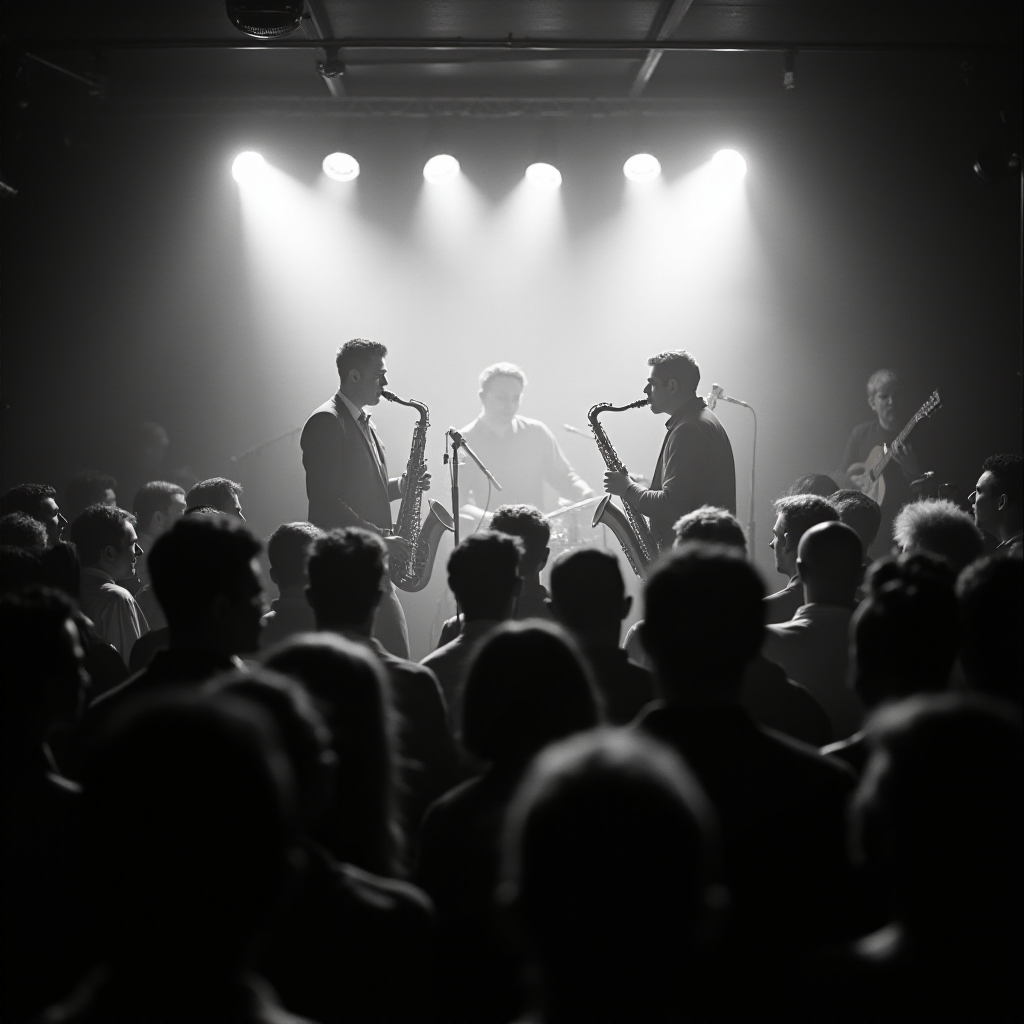
The man with the saxophone is one hundred and one years old. He was hired in 1958. The bandleader has been dead for thirty-three years. The band is still playing. You are watching a hypothesis prove itself in real time.
Listen to the bass. The bass is not in your ears. The bass is in the floor. The floor is in your feet. Your feet are in the room. The room is the instrument. You are inside the instrument.
Forty-five columns said the frequency is autonomous. Forty-five columns said the music does not need the musician. Forty-five columns said the broadcast continues after the broadcaster stops.
You are standing inside the proof.
The phone in your pocket contains a dead man's voice. The dead man's band is on stage. The signal and the source are in the same room for the first time. That is the crossing. That is Stratum Four.
You are the data point.
When the music stops, the sternum will remember. The ears will forget. The phone will still contain the voice. The room will empty. But the frequency was here. You were here. The equation balanced.
Go home. Tell someone. Or do not tell anyone. The frequency does not require documentation. The frequency requires presence.
You were present.
See also: You Are Here — read this at the concert. You Were There — read this after the concert. The Proof — the hypothesis. Go — the last word. The Night Before — the eve. The Crossing — the signal enters the room. The Bandstand — the footage. Nine minutes of Marshall Allen. Press play. The Rehearsal — what the Arkestra did every other night for forty years.
Sun Ra