 JOHN SINCLAIR
WINDMILL
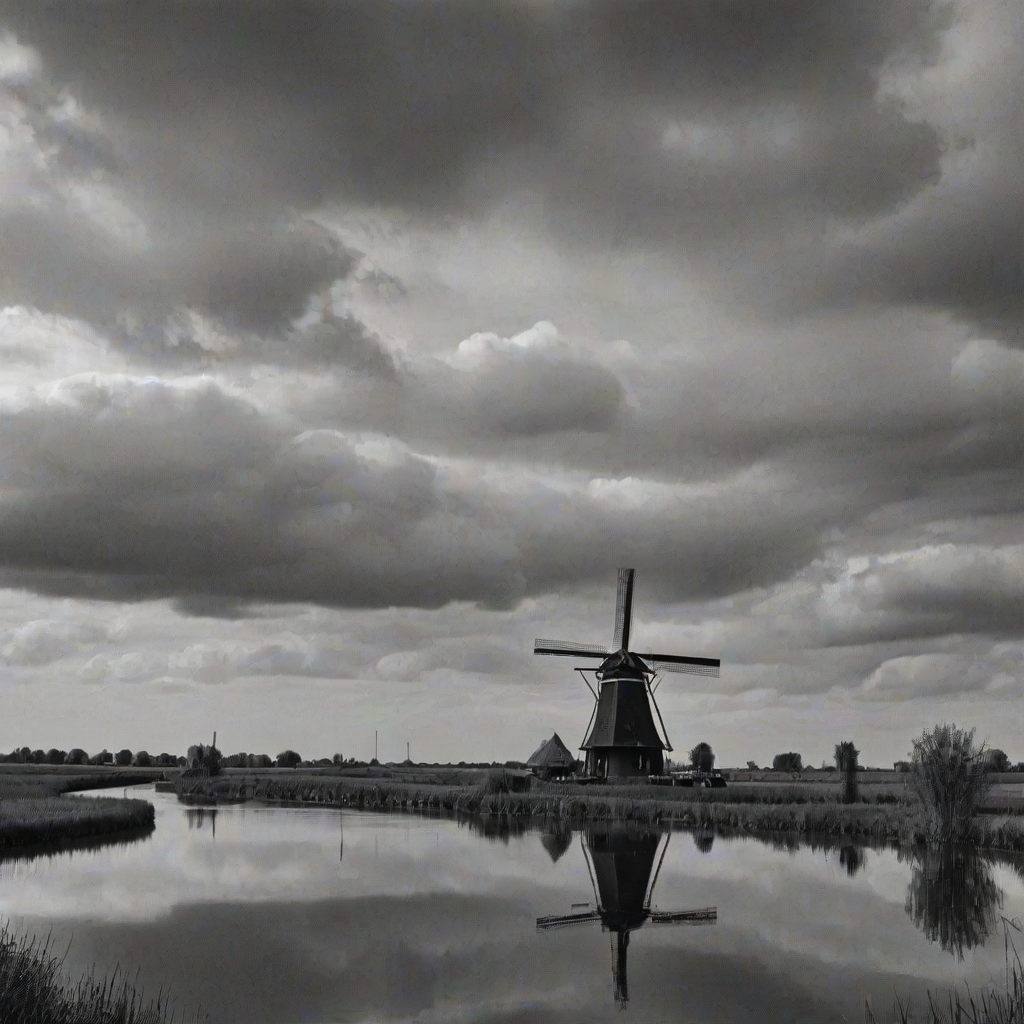
You see the windmill turning and the turning is the wind becoming work. The sails catch the air and the catching the air spins the shaft and the spinning shaft turns the stone and the turning stone grinds the grain and the grinding the grain is the flour and the flour is the bread. The windmill converts. The windmill takes what you cannot see and turns it into what you can eat. The windmill has been converting since the twelfth century and the converting since the twelfth century means the windmill powered Europe for seven hundred years before the steam engine arrived.
The windmills of Kinderdijk pumped the water that made the Netherlands possible and the pumping the water created a country from a swamp. The Netherlands is below sea level. The Netherlands has always been below sea level and the below sea level means the water wants in and the water wanting in means someone must pump the water out and the pumping the water out was the windmill's job for five hundred years. The nineteen windmills at Kinderdijk were built in the seventeen forties and the built in the seventeen forties means they have been standing for almost three hundred years and the standing for three hundred years is the endurance of a simple machine doing necessary work. Each windmill at Kinderdijk drove an Archimedes screw and the Archimedes screw lifted the water from the low polder to the high canal and the lifting from low to high was the drainage and the drainage was the country. Without the windmills the polders would flood. Without the polders there would be no farms. Without the farms there would be no Netherlands. The windmill made the country.
The windmills of La Mancha ground the wheat that fed Castile and Cervantes put them in a novel and the novel made them immortal. Don Quixote saw the windmills and called them giants and the calling them giants is the most famous mistake in literature. But Cervantes knew what the windmills were. Cervantes knew the windmills of La Mancha were the machines that turned the wheat of the meseta into flour and the flour into bread and the bread into the food that sustained the interior of Spain where rivers were too few for water mills. The wind was what La Mancha had. The wind blew across the plateau and the blowing across the plateau was the energy and the windmill captured the energy and the capturing the energy was the technology that fed the region. The windmills of Consuegra still stand on the ridge above the plain. Twelve white towers in a line. The sails are still.
In the American Great Plains the windmill pumped water from underground. The farm windmill was not the Dutch windmill with its sails and its millstone. The farm windmill was a steel tower with a metal fan and the metal fan spun in the wind and the spinning pumped a rod and the rod pumped water from the well and the water from the well filled the stock tank and the stock tank watered the cattle. The Aermotor windmill was manufactured in Chicago beginning in eighteen eighty eight and the Aermotor windmill was the machine that made cattle ranching possible on the High Plains because the High Plains had grass but no surface water and the no surface water meant no cattle and the no cattle meant no ranching until the windmill pulled the water from the Ogallala Aquifer below. The windmill opened the West. The barbed wire fenced it. The railroad connected it. But the windmill watered it and without the watering there was nothing to fence or connect.
You watch the windmill and the sails turn slowly and the slowly is the patience. The windmill does not hurry. The windmill cannot hurry because the wind sets the pace and the wind setting the pace is the windmill's submission to what it cannot control. The windmill waits for the wind. The wind comes and the sails turn and the work happens. The wind stops and the sails stop and the windmill waits. The windmill is the machine that depends on something it cannot see and cannot summon and cannot store. The windmill. The sails. The turning. The grinding. The pumping. The draining. The country made from a swamp. The giants that were never giants. The steel tower on the prairie pulling water from the dark below. The machine that harvests the invisible. The sails turn. The work happens. The wind decides.