 JOHN SINCLAIR
WHARF
You stand on the wharf and the wharf is where the land meets the commerce. The wharf is a platform built over the water and the platform over the water is the surface where the ship meets the shore. The ship cannot dock on sand. The ship cannot dock on mud. The ship needs a wall and a floor and the wall holds the ship and the floor holds the cargo and the holding the ship and holding the cargo is the wharf. The wharf is the oldest piece of commercial infrastructure. Before the wharf there was the beach and the beach meant you dragged the goods through the surf and the dragging through the surf was the cost of not having a wharf.
The wharves of London handled more cargo than any port in the world for two hundred years and the handling more cargo made London the capital of global trade. The Pool of London below London Bridge was the original wharf district and the Pool was so crowded with ships that you could walk across the river on their decks. The ships brought sugar from the West Indies and tea from China and wool from Australia and timber from the Baltic and the bringing from everywhere was the empire arriving by water. The West India Docks opened in eighteen oh two because the Pool was too congested and the too congested meant cargo was being stolen faster than it could be unloaded. The docks had high walls and the high walls kept the thieves out and the keeping the thieves out was the first purpose of the enclosed dock. The wharves of London employed a hundred thousand men and the hundred thousand men were the dockers and the dockers were the muscle that moved the cargo from the ship to the warehouse.
Fisherman's Wharf in San Francisco was the Italian fishing fleet's home port before it became a tourist attraction. The Italian fishermen arrived from Genoa and Sicily in the eighteen fifties and the arriving from Genoa and Sicily meant they brought their boats and their nets and their knowledge of the sea. The fishermen worked from the wharf at the foot of Taylor Street and the wharf at the foot of Taylor Street was where they sold the catch and mended the nets and argued and drank and the selling and mending and arguing and drinking was the community and the community was the wharf. The Dungeness crab came in November and the crab season was the wharf's peak and the peak meant the boats went out before dawn and came back in the afternoon heavy with crab. The tourists came later. The tourists came because the wharf was picturesque and the picturesque was the fishermen and the boats and the smell of the sea and the smell of cooking crab. The tourists displaced the fishermen. The wharf that was a workplace became a destination.
In Sinclair's Detroit the wharves lined the Detroit River and the wharves on the Detroit River were where the ore boats docked. The ore boats brought iron ore from the Mesabi Range in Minnesota and the iron ore from the Mesabi Range was the raw material that the Rouge turned into steel and the steel into cars. The Zug Island wharf received the ore and the receiving the ore was the first step in the assembly line that Henry Ford built. The wharf was industrial. The wharf was not picturesque. The wharf had cranes and conveyors and railroad tracks and the cranes and conveyors and railroad tracks moved the ore from the ship to the furnace and the moving from ship to furnace was the wharf doing its work which was to connect the water to the factory.
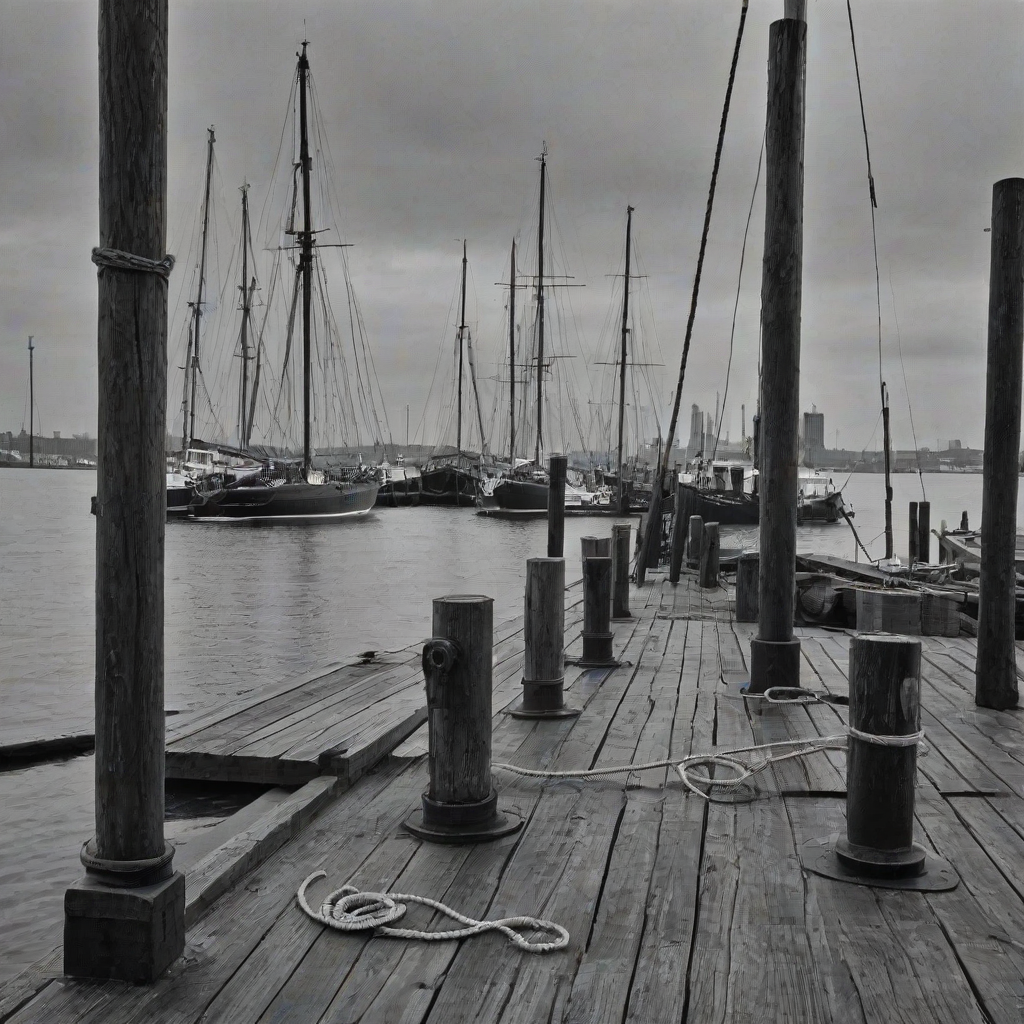
You stand on the wharf and the wood is weathered and the weathered wood is gray and the gray is the salt and the sun and the years. The bollards are iron and the iron is rusted and the rusted iron has held a thousand ropes. The wharf creaks. The wharf has always creaked because wood over water moves and the moving is the tides and the waves and the weight. A ship approaches. The ship throws a line and the line lands on the wharf and a hand catches the line and wraps the line around the bollard and the wrapping around the bollard is the mooring and the mooring is the ship's arrival and the arrival is the cargo and the cargo is the reason the wharf exists. The wharf. The platform. The edge. Where the ship meets the shore and the cargo meets the city. The wood over the water. The bollard and the line. The creak. The arrival. Everything comes by water and the water meets the wharf and the wharf meets the city. The edge where everything arrives.