 DAVID PEEL
Washtub
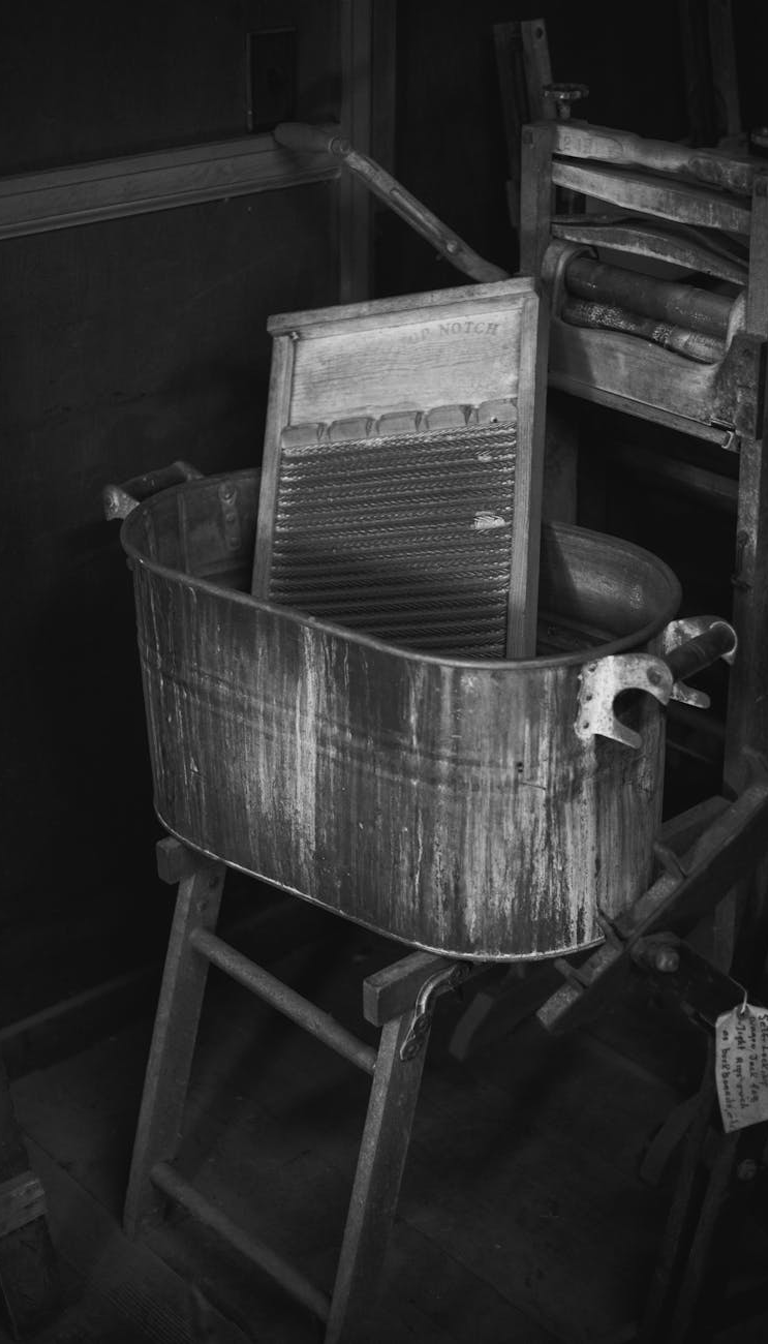
The washtub was galvanized steel shaped like a small bathtub. Sat on two legs at one end and a drain at the other. Monday was wash day. My grandmother filled the tub with water from the stove and she boiled the clothes and she scrubbed them on the washboard and the kitchen turned into a laundry and the laundry turned into a steam room. The washtub was the most versatile piece of equipment in the apartment. Laundry on Monday. Bath on Saturday. Bass instrument on Sunday.
You could play a washtub. A broomstick and a string and one foot on the rim and you had a bass. A one-string bass that cost nothing. The jug bands played washtubs. The street musicians played washtubs. I played a washtub on MacDougal Street in 1967 because I did not own a bass and the washtub did not care. The washtub was the most democratic instrument in music. You needed a tub and a stick and a piece of rope. The music was in the pull.
The washtub had a sound. Metal on metal. Water sloshing. The scrub brush on the washboard. The wringer bolted to the edge squeezing the water back into the tub. A whole percussion section in one piece of galvanized steel. The kitchen on Monday sounded like a factory because it was a factory. The product was clean clothes and the machinery was a woman's arms and a tub.
The washtub baptized everything. The baby. The dog. The sheets. The man who came home from the foundry covered in soot. Everything went into the tub and came out changed. The washtub did not judge. The washtub accepted what you gave it and it gave you back something cleaner. The machine does the same thing but the machine does not require your hands and your hands were the point.
The washing machine killed the washtub. The washtub went to the basement or the garden where it held dirt and grew tomatoes. The thing that washed your clothes now grows your food. The washtub never stopped being useful. It just changed jobs. Not everything that gets replaced gets wasted.