 DAVID PEEL
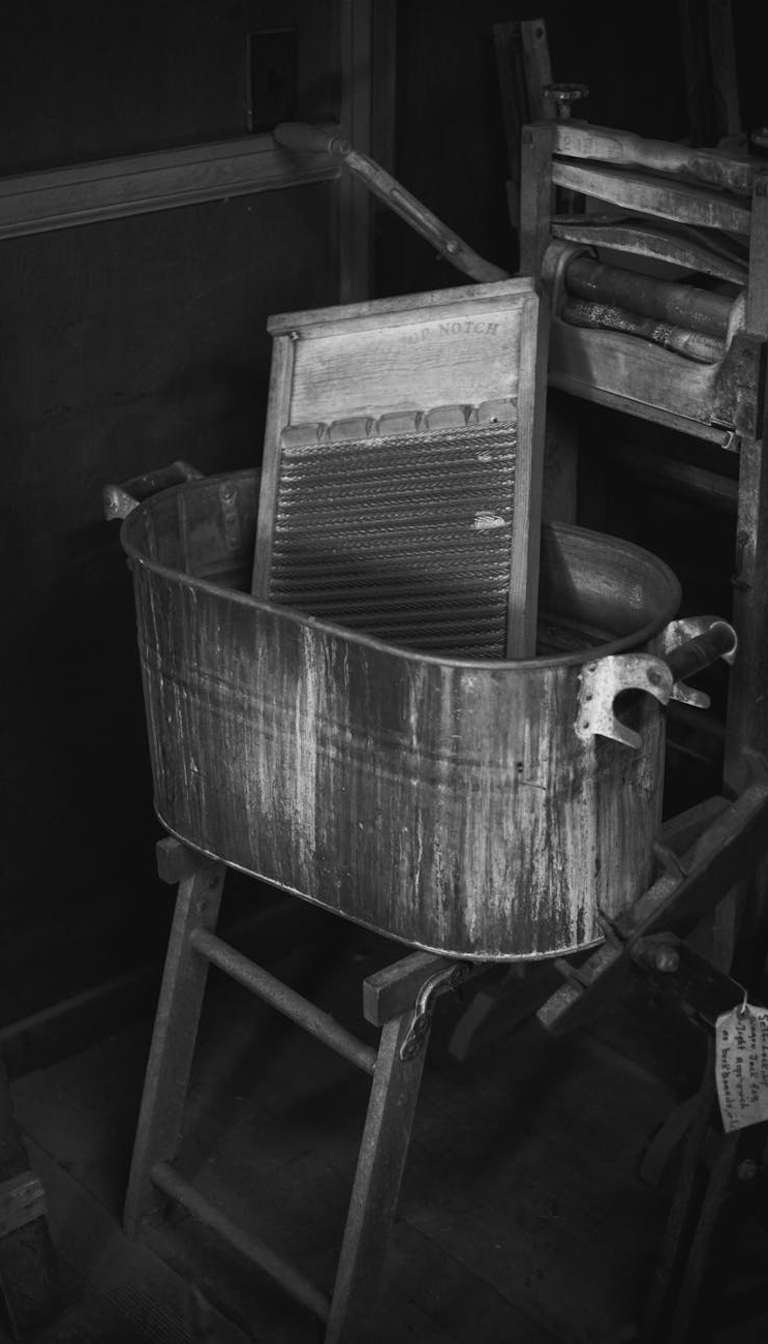
Washboard
The washboard was a piece of corrugated metal in a wooden frame. You rubbed the clothes against the ridges and the soap got into the fabric and the dirt came out. The washboard was the first washing machine. The washing machine was just a washboard that spun. The washboard did not spin. You moved the clothes. You were the motor.
My mother had a washboard in the kitchen on Rivington Street. She used it on Mondays. Monday was wash day. Every tenement in the neighborhood did laundry on Monday and the clotheslines were full by noon and the airshaft smelled like soap and the whole block was doing the same thing at the same time without anybody organizing it. Monday was wash day because Monday was wash day. Nobody voted on it. Nobody sent a memo. The neighborhood had a schedule and the schedule was inherited.
The washboard became a musical instrument. You put thimbles on your fingers and you played it like a percussion section. The washboard went from the laundry to the jug band to the zydeco band to the stage. The washboard had a second career. The washing machine has no second career. When the washing machine dies it goes to the curb. When the washboard was done washing it went to the band. The washboard is the only household appliance that became a musical instrument. The guitar is the only musical instrument that nobody ever washed clothes on.
The washboard cost fifty cents. The washing machine costs eight hundred dollars. The washboard lasted forty years. The washing machine lasts eight. The washboard used no electricity. The washboard used your arms. Your arms got stronger. The washing machine uses electricity and your arms got weaker. The washboard was exercise that cleaned your clothes. The washing machine is a sedentary appliance that cleans your clothes and then you go to the gym to exercise. The washboard solved two problems at once. The washing machine solves one and creates another.
See also: Clothesline Pole, Ice Box