 JOHN SINCLAIR
VINYL
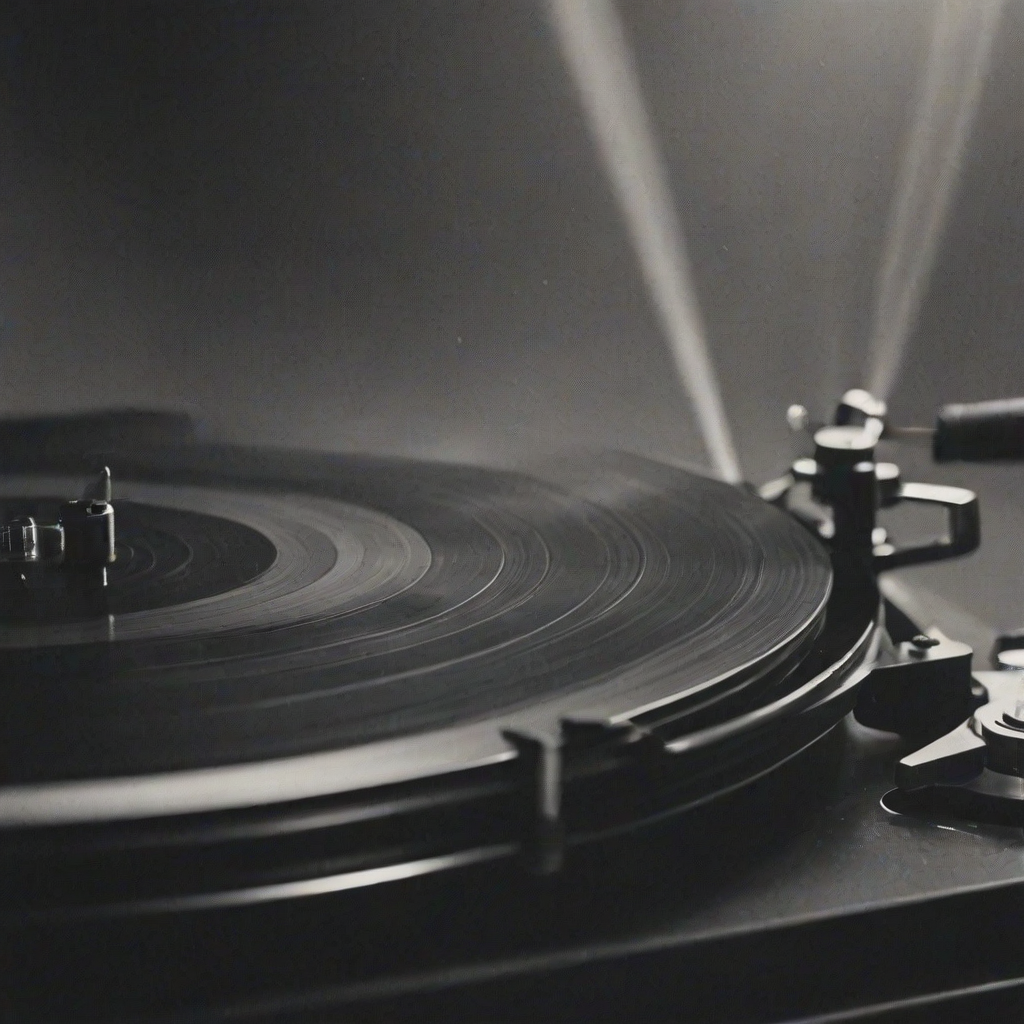
The groove is a physical thing. You can see it. You can touch it with the tip of your finger and feel the music before you hear it. A record is a spiral carved into plastic and the spiral contains every note and every silence and every breath the musician took in the room. Thomas Edison recorded Mary Had a Little Lamb on a tinfoil cylinder in eighteen seventy seven and the recording lasted about a minute and the tinfoil wore out after a few plays and it did not matter because the point was not the recording. The point was that sound could be frozen. The point was that a moment could be stored in a groove and the groove could give the moment back. That was the revolution. Not the fidelity. Not the duration. The fact that time could be carved into a surface and replayed.
Emile Berliner switched from cylinders to flat discs in eighteen eighty seven because flat discs could be stamped from a master. One performance became a thousand copies and a thousand copies became a million and a million copies meant that a singer in New York could be heard in a kitchen in Mississippi by someone who would never see New York. The disc was the first democratization of performance. Before the disc you had to be in the room. After the disc the room came to you. Enrico Caruso recorded for Victor in nineteen oh two and sold a million records and people who could never afford the opera heard the greatest tenor alive in their parlor and the parlor became the concert hall and the concert hall never recovered.
The twelve inch long playing record arrived in nineteen forty eight when Columbia Records figured out how to cut microgrooves at thirty three and a third revolutions per minute and fit twenty three minutes on a side. The LP changed music because the LP changed time. You were no longer limited to three minutes. You could build a forty six minute argument. Miles Davis recorded Kind of Blue on a single session in nineteen fifty nine and the album became the best selling jazz record in history not because of the songs but because of the spaces between the songs. The LP gave musicians room to breathe and the breathing was the art. The single was a sentence. The album was a novel.
Sam Goody opened his first record store in New York in nineteen fifty one and the record store became the third place. Not home. Not work. The place where you went to find out who you were going to become. You flipped through bins alphabetically and every letter was a door. You asked the person behind the counter what was good and the person behind the counter was the algorithm before there were algorithms. The recommendation was human and the human had listened to everything in the store and the human could hear what you needed before you could say it. The record store clerk was the most underappreciated cultural institution in America. When the stores closed the clerks disappeared and nobody replaced them. The algorithm replaced them and the algorithm does not hear what you need. The algorithm hears what you have already heard and gives you more of it.
You can still buy vinyl. Sales have risen for seventeen consecutive years. Young people are buying records they have never heard on a format they did not grow up with because the format carries something the file does not. The record is an object. The file is not. The record has weight and a sleeve and liner notes and a smell and a scratch from the time you dropped it and the scratch is part of the record now. The scratch is part of the story. The file has no scratches. The file has no story. The file is perfect and perfection is the enemy of character. You do not love a record because it sounds perfect. You love a record because it sounds like yours. The groove wore down in the places where you played it most and the wearing down is the proof that you were there. The needle remembers where you listened hardest.