 JOHN SINCLAIR
UTILITY POLE
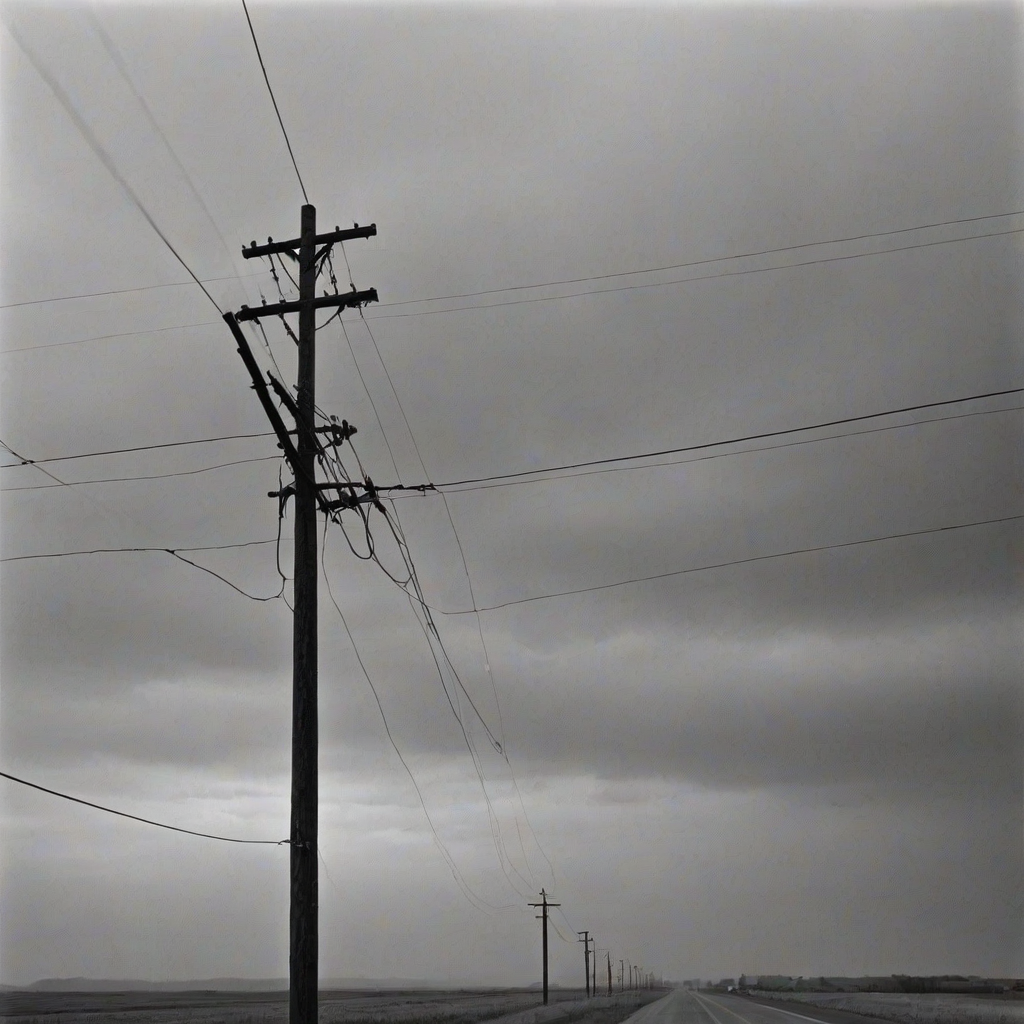
You look up and the wires cross the sky like a musical staff waiting for notes. The utility pole stands on the corner and the standing is so ordinary that you have never once looked at a utility pole on purpose. The utility pole is the most invisible structure in the city. The utility pole carries the electricity that powers your lights and the telephone that carries your voice and the cable that carries your entertainment and the carrying is everything. The utility pole carries civilization on its crossarms and the crossarms are made of wood and the wood is usually pine or cedar because pine and cedar resist rot and the resisting rot is important when you are holding up civilization.
The first utility pole went up in New York in eighteen forty four to carry telegraph wire for Samuel Morse and the wire was the first time a message traveled faster than a horse. Before the utility pole information moved at the speed of a rider. After the utility pole information moved at the speed of electricity and the speed of electricity is the speed of light and the speed of light changed everything because the speed of light meant that New York could talk to Philadelphia in seconds and the seconds replaced the days and the replacing of days with seconds is the invention of the modern world. The utility pole made the modern world and the modern world does not know its name.
The Great Blizzard of eighteen eighty eight dropped utility poles across the Northeast like matchsticks and the dropping killed the telegraph and the telephone and the power and the killing of the power was the killing of the city. New York buried its wires after the blizzard because the burial was the admission that the sky was too crowded. The sky had become a web of wires and the web was ugly and the ugly was dangerous because when the ice came the wires snapped and the snapping wires whipped through the streets carrying current and the current killed. London buried its wires earlier. Paris buried its wires earlier. New York waited for a disaster because New York always waits for a disaster and the waiting for a disaster is the city's way of making decisions.
In Tokyo the utility poles carry everything. Power and phone and fiber optic and traffic signals and streetlights and the everything is stacked on the pole like a totem and the totem tells you the history of the neighborhood's technology. The oldest wire is at the top. The newest wire is at the bottom. You can read a utility pole in Tokyo the way you read tree rings. Each wire is a decade. Each decade is a technology. The utility pole in Tokyo is the autobiography of electricity written in copper and fiber and the autobiography is still being written because someone is always adding another wire and the adding never stops because the demand for connection never stops.
You drive down a road in Mississippi and the utility poles line both sides and the lining is the rhythm and the rhythm is the road's heartbeat. The utility poles are spaced forty yards apart and the forty yards is the standard and the standard was set by the telephone company in nineteen oh three and the standard has not changed because the distance between poles is the distance that a wire can span without sagging and the sagging has not changed because gravity has not changed. The utility pole is the one thing in the city that answers only to gravity. Not to fashion. Not to zoning. Not to the market. The utility pole stands where physics says it must stand and the standing where physics says is the utility pole's dignity. The quiet dignity of holding up the wire. The quiet dignity of being ordinary. The quiet dignity of being the thing no one sees that makes everything you see possible.