 JOHN SINCLAIR
UNION HALL
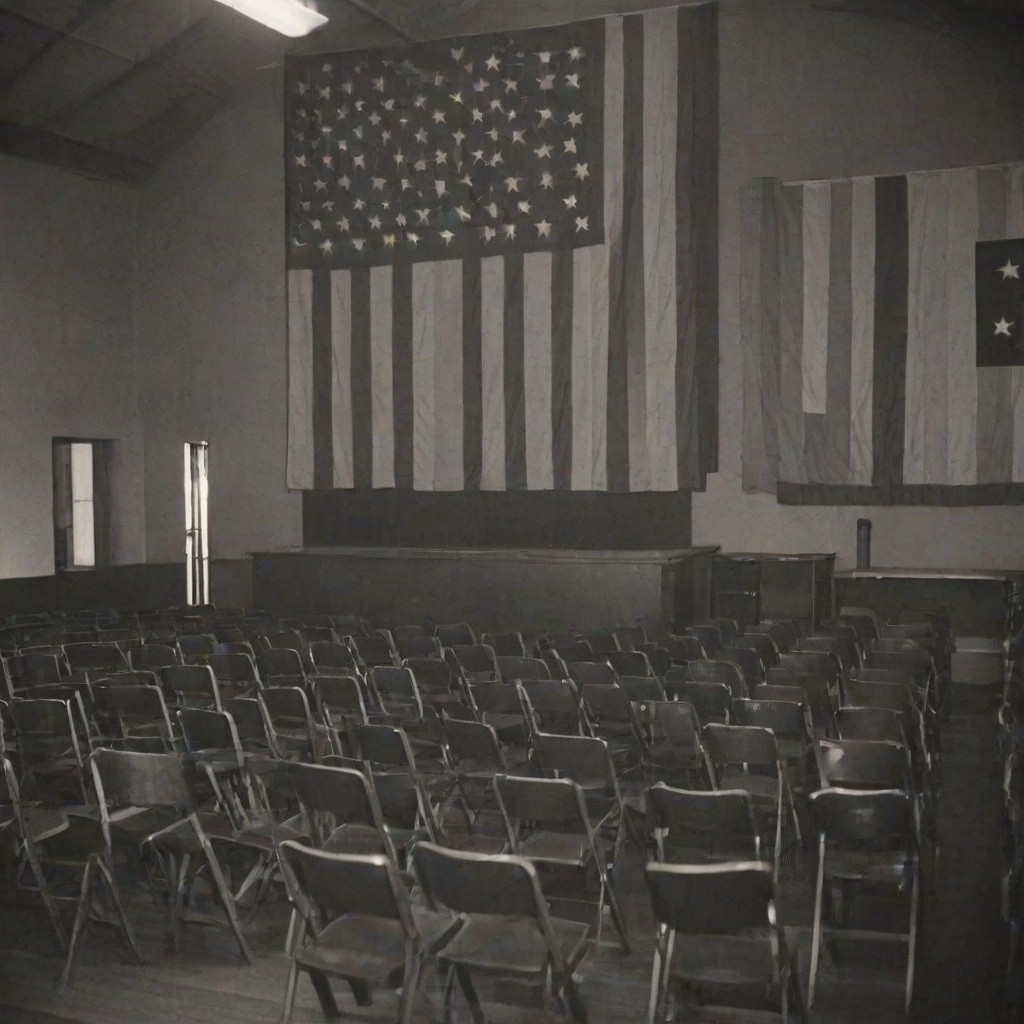
You walked in and the room was full of folding chairs and the folding chairs were the furniture of democracy because the folding chair is the chair that says we are here temporarily and the temporarily is the meeting and the meeting is the power. The union hall smelled like coffee and cigarettes and mimeograph ink and the mimeograph ink was the smell of organization because the flyer was the technology and the technology was the announcement that said meeting Tuesday seven PM bring your dues card. The union hall had a stage and a podium and a microphone and the microphone was the instrument that turned one voice into authority and the authority was that when the president of the local spoke the room listened because the president of the local had been elected by the room.
Samuel Gompers founded the American Federation of Labor in eighteen eighty six in Columbus Ohio and the founding was the recognition that a single worker asking for a raise is a nuisance but a thousand workers asking for a raise is a negotiation. The Knights of Labor had come before and the Industrial Workers of the World came after but Gompers understood the thing that made the union hall necessary which was that workers needed a room that belonged to them. The factory belonged to the owner. The office belonged to the manager. The street belonged to the police. The union hall belonged to the workers and the belonging was the first property that most working people ever owned collectively. The Triangle Shirtwaist Factory fire on March twenty fifth nineteen eleven killed one hundred and forty six garment workers in New York City and the killing was the proof that the boss would let you burn and the letting you burn was the argument that filled every union hall in America for the next forty years. The fire escapes were locked. The doors opened inward. The women jumped from the ninth floor because jumping was better than burning and the jumping was the image that organized more workers than any speech ever delivered from any podium in any union hall.
The union hall was where the sit-down strike was planned. In nineteen thirty six workers at the Fisher Body Plant Number One in Flint Michigan sat down at their machines and refused to leave and the refusing to leave was the invention and the invention was that you do not have to walk out to strike. You can sit down. The sit-down strike was planned in the union hall of UAW Local 156 and the planning in the union hall was the strategy and the strategy defeated General Motors in forty four days. Walter Reuther was beaten by Ford's security men at the Battle of the Overpass in nineteen thirty seven and the beating was photographed and the photographing was the evidence and the evidence was that the company would use violence against workers who wanted to organize and the using violence was the argument that the union hall answered with solidarity.
The union hall was the school that the company never built. The union hall had a bulletin board and the bulletin board had the contract and the contract was the law of the workplace posted where every worker could read it. The union hall had a grievance committee and the grievance committee was the court that the worker could access without a lawyer. The steward was the person who knew the contract better than management knew the contract and the knowing the contract better was the power because the power was knowledge and the knowledge was free. The union hall hosted the Christmas party for the members' children and the Christmas party was the community. The union hall hosted the retirement dinner and the retirement dinner was the recognition that thirty years at the plant deserved a room full of people who clapped. The union hall was the place where the worker was not a number on a payroll but a member with a voice and the voice had a vote and the vote elected the officers and the officers negotiated the contract and the contract was the dignity written on paper.
The union hall is vanishing because the union is vanishing. Union membership in America was thirty five percent of the workforce in nineteen fifty four. Union membership is ten percent today. The vanishing is not because workers stopped needing representation. The vanishing is because the laws changed and the companies changed and the economy changed and the changing meant the union hall that once stood on every Main Street in every factory town now stands empty or converted to a church or a martial arts studio. The folding chairs are stacked against the wall or they are gone. The podium is gone. The microphone is gone. The bulletin board with the contract is gone. But the union hall understood something about work that America is remembering which is that the worker alone is weak and the workers together are strong and the strong requires a room and the room requires folding chairs and the folding chairs require people willing to sit in them on a Tuesday night and the willing to sit on a Tuesday night is the democracy and the democracy is still the power and the power still starts with a meeting.