 DAVID PEEL
Typewriter Ribbon
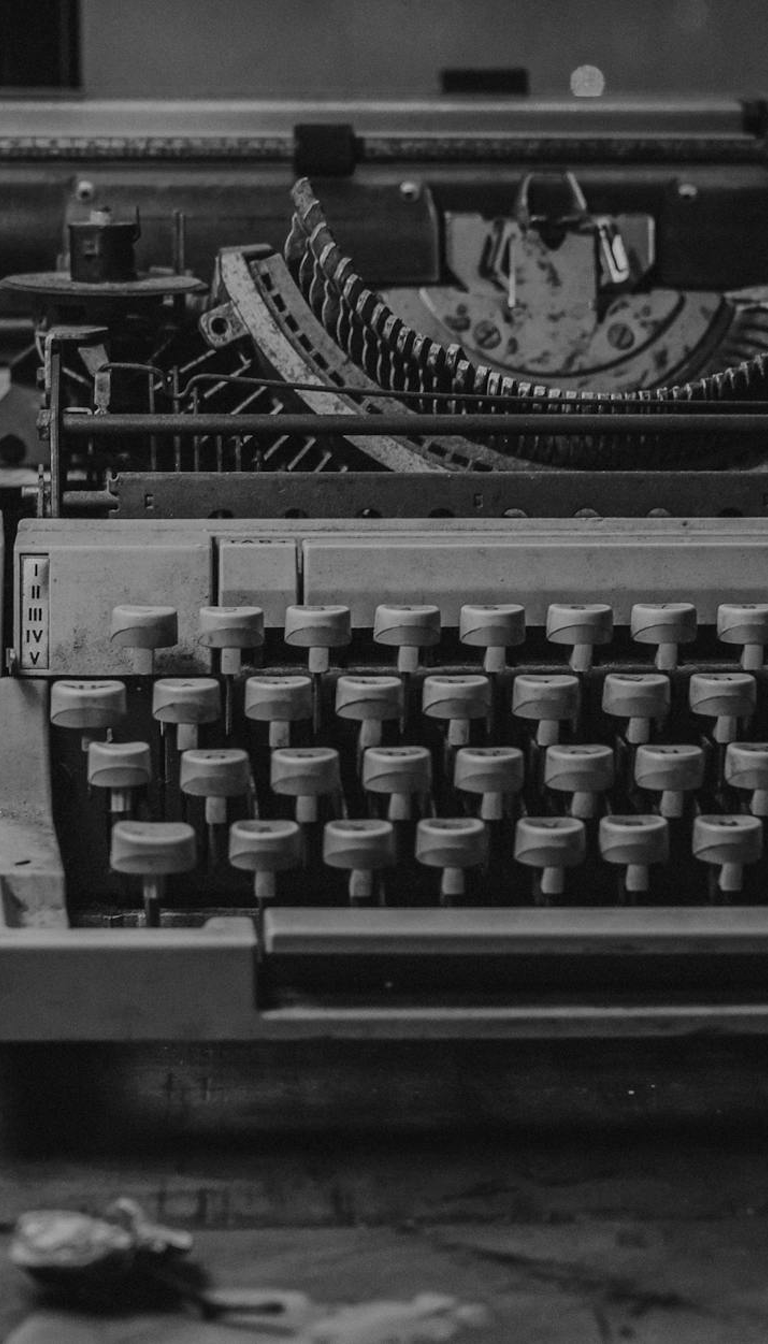
The typewriter ribbon was the blood of the machine. A spool of ink-soaked fabric that ran through the carriage and made the letters appear on the paper. When the ribbon ran out the letters got lighter and lighter until you were typing ghosts. A faded typewriter ribbon was a clock. You could tell how much someone had written by how much ribbon was left. The ribbon measured work the way a candle measures time.
You bought typewriter ribbons at the stationery store. The man behind the counter asked what model and you said Remington or Royal or Smith Corona and he reached under the counter and pulled out a small tin box and the box had a spool inside and the spool had a ribbon and the ribbon was black or black-and-red and the red was for corrections or emphasis or love letters. Nobody used the red by accident. The red was deliberate. The red meant this matters.
I typed my first song lyrics on a Royal portable on East Seventh Street. The ribbon was already half gone when I got the machine and by the time I finished the words were barely visible. The last verse of the first song I ever typed was lighter than the first verse. The machine was telling me it was running out of patience. The typewriter ribbon did not care about your inspiration. The typewriter ribbon cared about physics. Ink on fabric. Fabric through the carriage. When the ink is gone the fabric is just cloth and cloth does not write.
Changing a ribbon was surgery. You opened the carriage and removed the old spool and threaded the new ribbon through the guides and around the posts and you got ink on your fingers. Every typist had ink stains on their fingers. The ink was proof of work. The ink said I have been typing. The ink said I have something to say. Now the proof of work is a word count at the bottom of a screen and the word count does not stain your fingers and the fingers do not carry the evidence home.
The typewriter ribbon is in a museum now. The stationery store is closed. The Remington is in an antique shop on Atlantic Avenue priced at four hundred dollars and the ribbon that comes with it is dried out and the keys stick and nobody will ever type on it again. The ribbon was the most honest part of the machine. It gave you everything it had and when it had nothing left it showed you. It did not pretend. It did not autocorrect. It faded and you saw it fading and you knew the work was costing something. That is what the screen does not show you. The cost.
See also: Newspaper Stand, Cigar Store