 DAVID PEEL
Truss
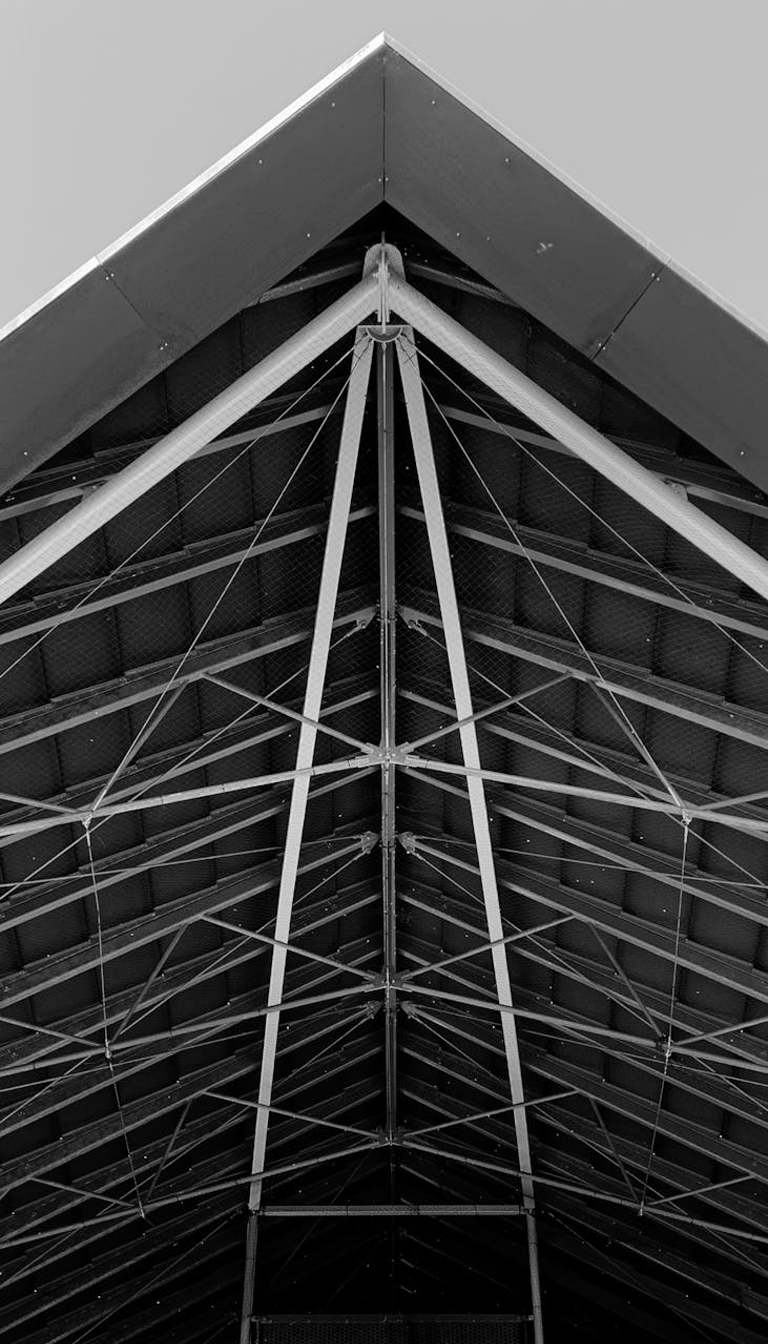
The truss was a triangle made of wood or steel. Two diagonal members and a horizontal member bolted or pegged together into the shape that cannot be deformed. The square collapses. The circle rolls. The triangle holds. The truss is the only shape in engineering that is honest about what it can do. The triangle says I will not move. The triangle is the only shape that keeps its promise.
The truss held the roof. Every barn and church and bridge that had to span a distance without a column in the middle used a truss. The truss turned a wide room into a clear room. No posts in the middle. No columns breaking up the space. The truss said you can have the whole room. The whole room was the gift. The modern office puts columns wherever the engineer says. The columns are not a gift. The columns are a compromise.
The truss was named. The Howe truss and the Pratt truss and the Warren truss and the Fink truss. Each one arranged the diagonals differently and each arrangement handled the load differently and the carpenter chose the truss the way a doctor chooses a treatment. The Howe truss for the barn. The Pratt truss for the bridge. The Warren truss for the factory. Every truss was a prescription. The prefabricated truss plate they stamp at the factory is one prescription for every building. One prescription for every patient is malpractice.
The truss was beautiful. The covered bridges of New England were trusses. You could see the geometry. Every diagonal was a line in a proof and the proof was that the bridge held. The beauty was the math. The math was visible. The modern building hides the structure behind a wall and the wall says there is nothing structural happening here. Something structural is always happening. Hiding it is not the same as removing it.
They stamp trusses now. A machine stamps metal plates with teeth into precut lumber and the truss comes off the line like a product. The stamped truss works. The stamped truss holds the roof. But the stamped truss has no carpenter's name on it. The hand-built truss had the carpenter's mark on every joint because the carpenter was proud of the joint and the joint was the whole point. A joint is where two pieces of wood agree to become one piece of structure. The stamped plate does not ask for agreement. The stamped plate forces it.