 DAVID PEEL
Trowel
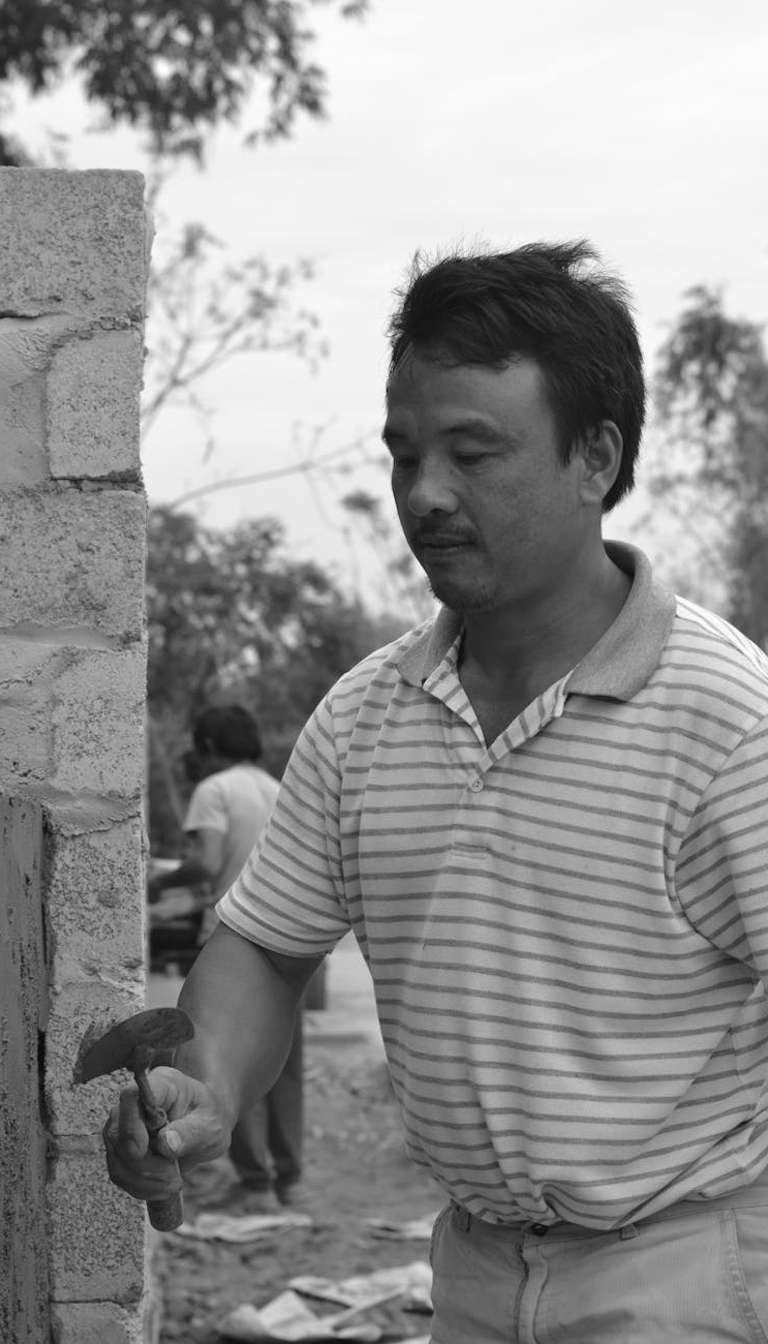
The trowel was a flat blade with a handle. The blade was steel. The handle was wood or plastic. The mason held the trowel in the right hand and the mortarboard in the left and the two tools worked together the way a knife and fork work together. The trowel scooped the mortar and spread the mortar and scraped the mortar and tapped the brick into place. The trowel was the mason hand extended. The mason had ten fingers and the trowel was the eleventh.
The pointing trowel was narrow. The margin trowel was wide. The brick trowel was triangular. The gauging trowel was oval. Each shape had a purpose. The pointing trowel fit into the mortar joint. The margin trowel spread mortar on a flat surface. The brick trowel scooped mortar from the board and threw it onto the wall. The gauging trowel mixed small batches of plaster. Four trowels. Four shapes. Four purposes. The mason carried all four the way a surgeon carries a scalpel and a clamp and a retractor and a suture needle. Different tools for different cuts.
The brick trowel throw was a skill that took years to learn. The mason scooped a line of mortar onto the blade and then snapped the wrist and the mortar flew off the blade and landed on the wall in a bed. The bed was even. The bed was the right thickness. The bed was the right length. The throw deposited the mortar without the mason having to walk to the wall and place it by hand. The throw was efficiency. The throw was also art. A good throw made a clean bed. A bad throw made a mess. You could tell the mason experience by watching the throw.
The trowel wore down. The blade started six inches wide and after twenty years of scraping mortar and tapping brick the blade was four inches wide. The steel wore away one molecule at a time. The mason did not buy a new trowel when the blade wore down. The mason kept the worn trowel because the worn trowel fit the mason hand. A new trowel was a stranger. A worn trowel was a partner. The worn blade was thinner and lighter and more responsive than the new blade. The wearing was not damage. The wearing was optimization.
They make stainless steel trowels now. The stainless blade does not rust and does not wear down as fast and does not develop the patina that the carbon steel blade developed. The carbon steel trowel turned dark gray after a month. The gray was the oxidation layer. The oxidation layer actually protected the steel underneath. The mason oiled the trowel at the end of each day and the oil sealed the oxidation and the blade lasted forever. The stainless trowel does not need oil. The stainless trowel does not need maintenance. The stainless trowel does not need the mason to care for it. The carbon steel trowel needed the mason to care for it and the caring was the relationship and the relationship was the craft.
See also: Mortarboard, Jointer