 JOHN SINCLAIR
TRAIN STATION
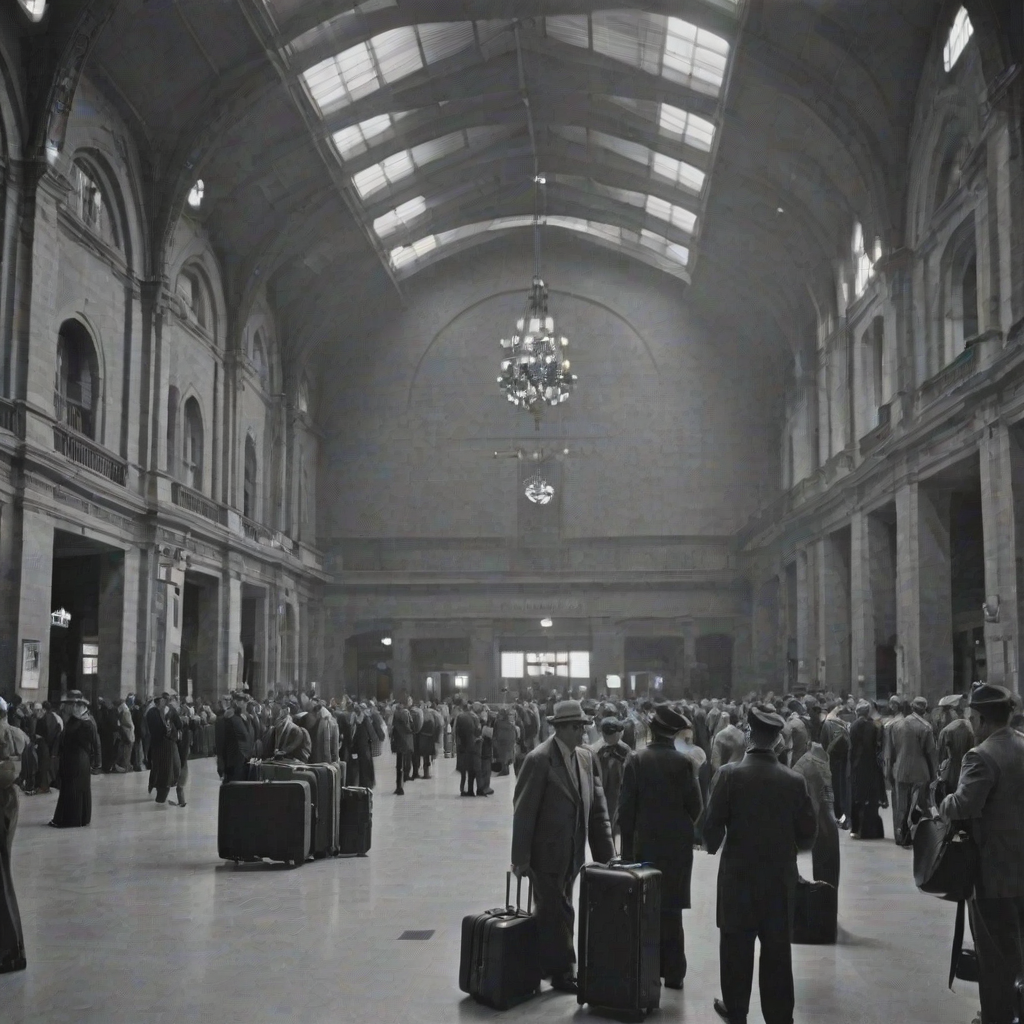
You stood in the train station and the ceiling was higher than any ceiling needed to be. The height was the point. The height said you are leaving and the leaving is important and the importance deserves a room that makes you feel small because the journey you are about to take is larger than you are. The train station was the cathedral of American transportation. The train station had marble floors and bronze chandeliers and arrival boards that clicked when the letters changed and the clicking was the sound of possibility rearranging itself. The train station was built to make you believe that travel was noble and the nobility was not a lie. The nobility was a promise that the country made to itself in eighteen fifty and kept for about a hundred years and then broke.
Cornelius Vanderbilt opened Grand Central Depot in New York in eighteen seventy one and the opening was the announcement that the railroad was the most powerful industry in America. The current Grand Central Terminal opened in nineteen thirteen and the terminal had a ceiling painted with twenty five hundred stars arranged in the constellations of the zodiac and the constellations were painted backwards because the artist Paul Helleu said the ceiling represented God's view of the sky from outside the universe. The main concourse was two hundred and seventy five feet long and one hundred and twenty feet wide and one hundred and twenty five feet high and the dimensions were the ambition of a country that believed it could build a room large enough to hold everyone who was going somewhere. Daniel Burnham designed Union Station in Washington D.C. in nineteen oh seven and the waiting room was the largest room in the world when it opened and the largest room in the world was the statement and the statement was that the capital of a democracy needed a room where every citizen stood under the same ceiling. Pennsylvania Station in New York opened in nineteen ten and Charles McKim modeled it on the Baths of Caracalla in Rome and the modeling on Rome was the confidence that said America is the next great civilization and the next great civilization deserves a train station that looks like an empire built it.
The train station was where America learned what it meant to move. Before the railroad the fastest a human could travel on land was the speed of a horse. The railroad made distance a product you could buy. The Transcontinental Railroad was completed at Promontory Summit Utah on May tenth eighteen sixty nine and the completing meant you could travel from New York to San Francisco in seven days and the seven days replaced six months and the replacing of six months with seven days was the compression of the continent into a commute. The train station became the center of every city because the railroad was the reason every city existed. The streets radiated out from the station like spokes from a hub and the radiating was not a metaphor. The train station was literally the center and the center was the economy and the economy was the railroad and the railroad was the country. Pullman porters were Black men who served white passengers in sleeping cars and the serving was the only job available to many Black men after the Civil War but the job also created the first Black middle class in America. A. Philip Randolph organized the Brotherhood of Sleeping Car Porters in nineteen twenty five and the organizing was the first major Black labor union and the first major Black labor union was the seed that grew into the civil rights movement because the porters carried not just luggage but newspapers and ideas from city to city and the carrying of ideas was the network that connected Black communities across the country.
The waiting room was the room where everyone was equal for twenty minutes. The banker and the farmer sat on the same bench and looked at the same clock and waited for the same train and the sameness was temporary but the temporary was real. The waiting room had a newsstand that sold magazines and newspapers from cities you had never visited and the selling of newspapers from cities you had never visited was the education and the education was that the world was larger than your town. The waiting room had a lunch counter where you could eat a sandwich that tasted the same in Cleveland as it tasted in Kansas City and the sameness of the sandwich was the standardization that the railroad brought to everything it touched. The Red Caps carried your bags and the carrying was the service and the service was the democracy that said even if you could not afford a porter on the train you could have someone carry your bags through the station. The stationmaster wore a uniform and the uniform was the authority and the authority was that the trains ran on time and the running on time was the discipline that the railroad imposed on a country that had previously run on sun time and the running on sun time meant that noon in Cleveland was not noon in Pittsburgh and the railroad said that is over and the over created the time zones in eighteen eighty three.
The train station is not vanishing. The train station is transforming into something smaller than it was. Amtrak carries thirty two million passengers a year and the thirty two million is a fraction of what the railroads carried in nineteen twenty when they carried one point two billion. Penn Station was demolished in nineteen sixty three and the demolition was the crime that created the historic preservation movement because a country that could destroy the Baths of Caracalla to build Madison Square Garden was a country that had lost its mind. The demolition of Penn Station saved Grand Central Terminal because the outrage created the Landmarks Preservation Commission and the commission said never again and the never again was kept. Union Station in Washington still stands. Grand Central still stands. The stars are still on the ceiling and the stars are still backwards and the backwards is still beautiful. The train station that survives is smaller than it was but the ceiling is still high and the height still says the same thing it said in eighteen seventy one. You are leaving and the leaving is important and the importance deserves a room that makes you feel small because the journey is larger than you are and the larger than you are is still the promise and the promise still echoes off the marble.