 JOHN SINCLAIR
TOWN SQUARE
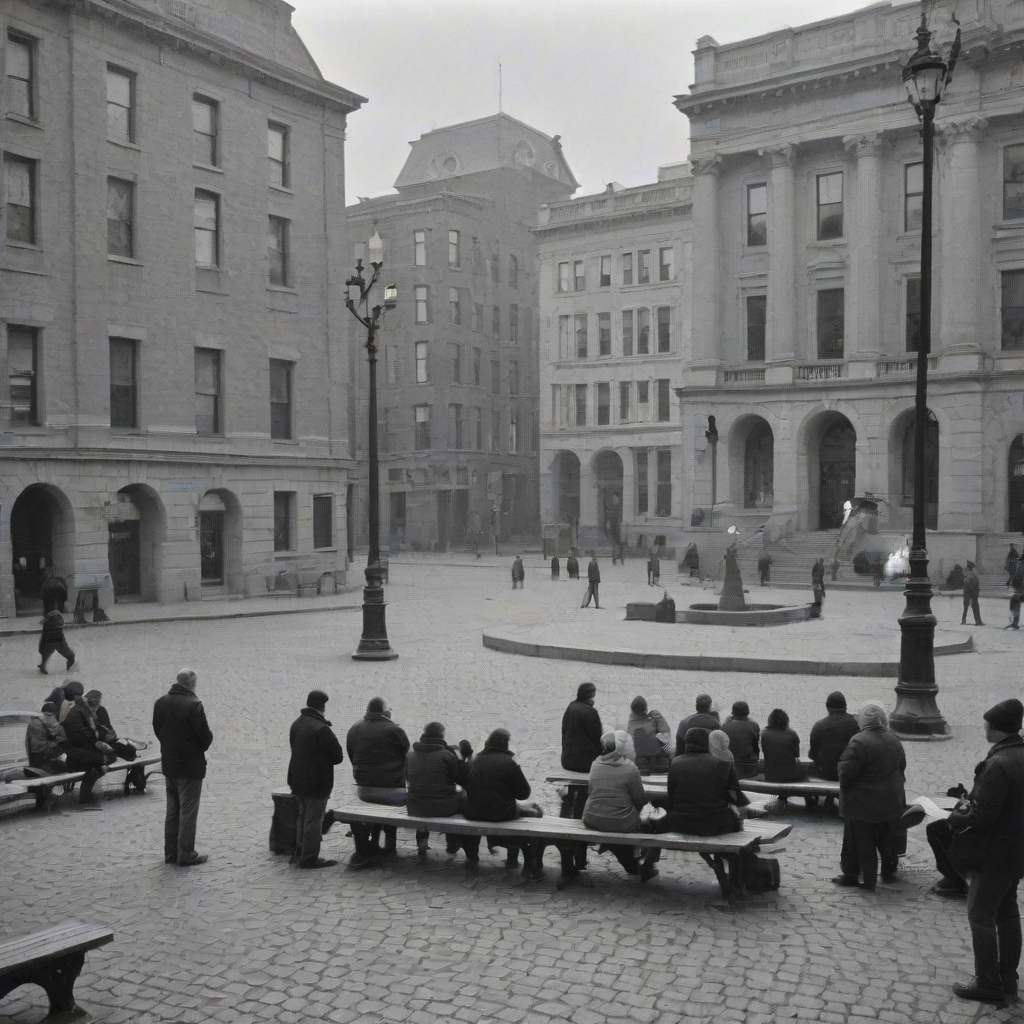
You stand in the town square and the square is the center and the center is where the city began. Every city began with a square. The square came before the street. The square came before the building. The square was the clearing in the forest or the flat place by the river where people stopped walking and started talking and the talking became the market and the market became the town and the town built a square to remember where the talking started. The town square is the city's memory of itself. The town square is the city's first word.
The agora in Athens was the first town square and the first town square was the first democracy because the agora was where you argued in public. Socrates argued in the agora. Socrates was executed for arguing in the agora. The agora did not protect Socrates because the square does not protect anyone. The square exposes you. The square puts you in the open where everyone can see you and the everyone seeing you is the vulnerability and the vulnerability is the point. You cannot whisper in a square. You can only speak and the speaking in a square is the public speech and the public speech is the foundation of the public life and the public life is the foundation of the republic and the republic is the foundation of the word republic which means the public thing. The thing that belongs to everyone. The square.
Tiananmen Square held a million people in June of nineteen eighty nine and the million people wanted democracy and the wanting democracy in a square named Gate of Heavenly Peace is the irony that history writes when it is paying attention. One man stood in front of a column of tanks on June fifth and the standing in front of a tank in a square is the square doing what squares do. The square gathers people and the gathering becomes the protest and the protest becomes the image and the image becomes the history. The Chinese government cleared the square with soldiers and the clearing with soldiers is also what squares do. The square that gathers the protest also gathers the repression. The square does not choose sides. The square provides the stage. What happens on the stage is up to you.
In every small town in America there is a square with a courthouse and the courthouse is in the center of the square and the center of the square is the center of the town and the center of the town is the law. The courthouse square in the American small town is the law surrounded by commerce. The stores face the courthouse. The stores need the courthouse because the courthouse brings the people and the people bring the money and the money is the economy and the economy of the small town is built around the square. The square in the small town is the heart and the heart pumps people through the stores and the stores feed the town and the town maintains the square and the maintaining is the cycle. The town square that dies means the town is dying. The boarded-up stores around an empty square. That is the diagnosis.
You sit in the town square at noon and the square is full and the fullness is the health. Pigeons. Children. A man playing guitar. A woman selling flowers. The sitting in the square at noon is the oldest leisure in the world. The Romans sat in the forum. The Parisians sit in the Place des Vosges. The people of Marrakech sit in the Jemaa el-Fnaa and the Jemaa el-Fnaa has been a gathering place for a thousand years and for a thousand years people have sat there and watched other people and the watching other people is the entertainment that existed before entertainment existed. The town square is the original screen. The town square is the place where you watch the show and the show is the city living its life and the living its life is the only show that never ends.