 JOHN SINCLAIR
TOLL BOOTH
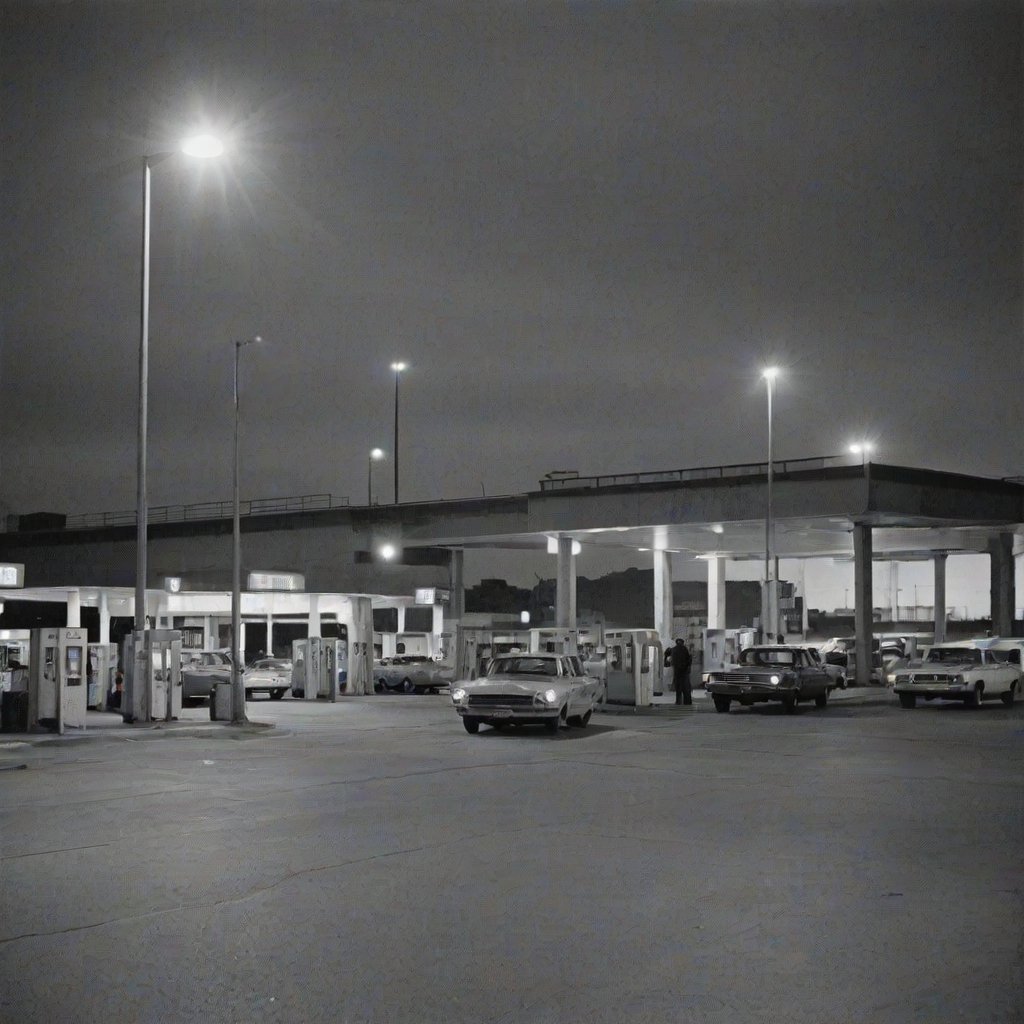
You stop at the toll booth and you pay to cross from here to there. The toll booth does not care where you are going. The toll booth does not care why. The toll booth only cares that you have the exact change or a card or a transponder that beeps when you drive through at speed. The toll booth is the most honest transaction in America because the toll booth does not pretend that movement is free. Movement costs money. The toll booth just tells you how much.
Robert Moses built the parkways on Long Island in the nineteen twenties and thirties with overpasses that were deliberately too low for buses. The buses could not fit. The buses carried poor people and Black people and the people who did not own cars and Moses did not want them at Jones Beach. He wanted Jones Beach for the people who could afford automobiles. The overpasses were nine feet high instead of fourteen and the buses were twelve feet tall and the math was the policy. Moses did not have to write a law. He poured the law in concrete. The toll booth on the parkway was redundant because the overpass had already done the work.
The George Washington Bridge toll plaza is the border between New Jersey and Manhattan and every morning a hundred thousand cars cross that border and pay for the privilege of sitting in traffic on the other side. The bridge costs seventeen dollars westbound and nothing eastbound because the city decided that leaving is free but coming back will cost you. The toll booth is a tax on ambition. You pay to get to the place where you believe your life will be better and the toll booth takes a piece of your belief on the way in.
In the nineteen fifties the Interstate Highway Act built forty one thousand miles of road through the middle of America and the highways did not go around the Black neighborhoods. The highways went through them. They demolished Overtown in Miami and the Fillmore in San Francisco and Black Bottom in Detroit and Tremé in New Orleans. The highway was a wall made of speed. You could drive over a neighborhood at sixty miles an hour and never know it used to be there. The toll was not money. The toll was homes and churches and corner stores and the barbershop where your father got his hair cut every Saturday. The highway collected that toll and never gave change.
You drive through the toll booth and the arm goes up and you accelerate into whatever is next. The toll booth is a door that opens when you pay. The toll booth is the point where the city admits that geography is economics. The distance between where you live and where you work is not measured in miles. The distance is measured in what it costs to cross. The people who live closest to the jobs pay the least to get there and the people who live farthest pay the most and that is not an accident. That is a design. The toll booth does not design the inequality. The toll booth just collects on it.