 DAVID PEEL
Tin Roof
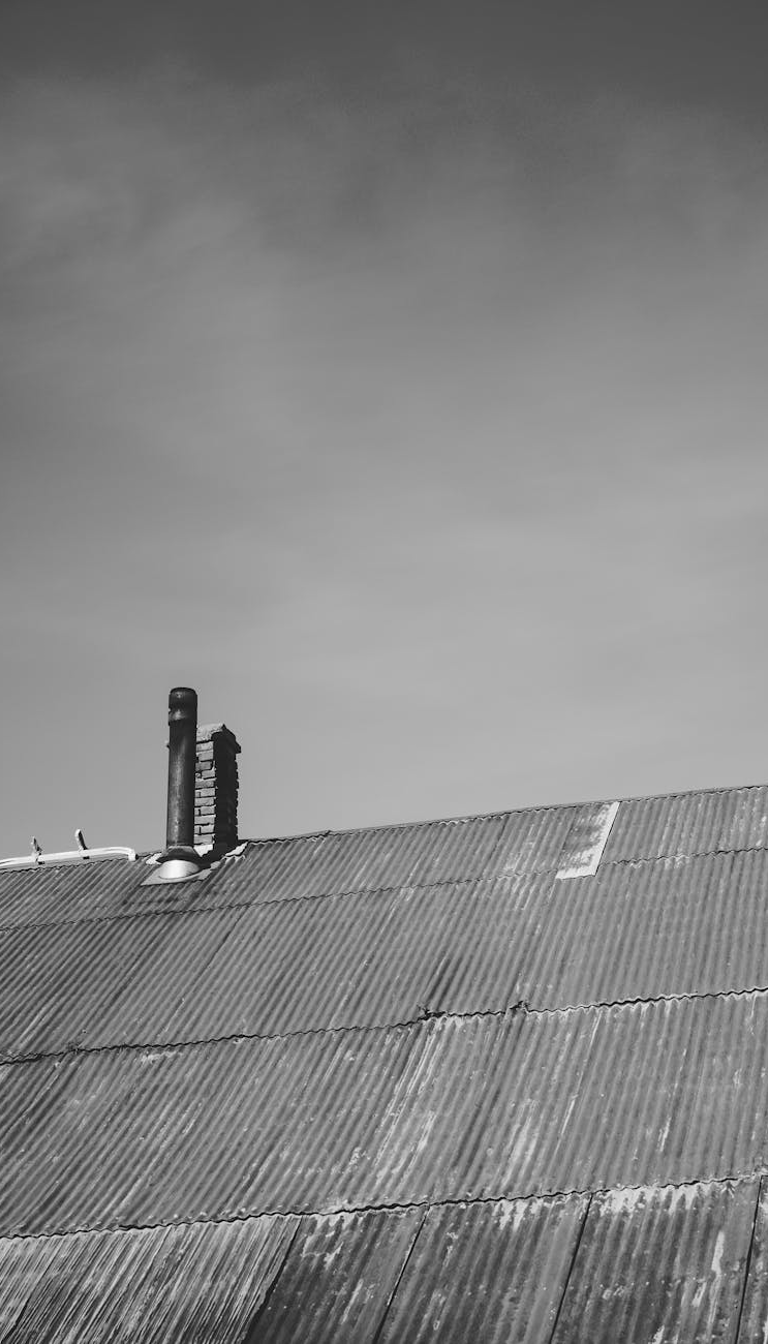
The tin roof was the cheapest way to keep the rain out. Sheets of corrugated metal laid overlapping like fish scales. The tin roof was honest. It did not pretend to be slate or tile or anything other than what it was. A sheet of metal between you and the sky. The rain hit the tin and the tin sang. Every raindrop was a note and a storm was a concert and you lay in bed and listened to the sky play your building.
The tin roof expanded in the heat. Summer mornings the metal popped and cracked as the sun hit it. The building woke up with sounds like knuckles cracking. The tin stretched and the nails held and the metal groaned against the wood underneath. By afternoon the roof was too hot to touch. You could fry an egg on a tin roof in August and that was not a metaphor. People tried it.
The tin roof rusted. The galvanizing wore off and the iron underneath turned orange and the orange turned brown and the brown turned into holes. The rain that used to play the roof now came through it. The tin roof was a clock. New tin was silver. Old tin was rust. Dead tin was a bucket in the living room catching drips. You could read the age of a building by the color of its roof from the street.
Hail on a tin roof was the loudest sound in the neighborhood. Louder than traffic. Louder than the train. The hail hit the tin and the tin amplified and the building became a drum. You could not talk. You could not think. You could only listen. Hail on a tin roof was the sky saying I am louder than anything you have built and the building agreeing.
They put rubber membranes on the roofs now. The rain hits the rubber and the rubber absorbs the sound and the building is quiet. Nobody hears the storm. Nobody hears the heat. Nobody hears the building wake up in the morning. The tin roof was the loudest part of the building and the loudest part was the best part and they replaced it with silence because silence is easier to sell.
See also: Roof Tar, Slate Roof