 DAVID PEEL
Tie Wire
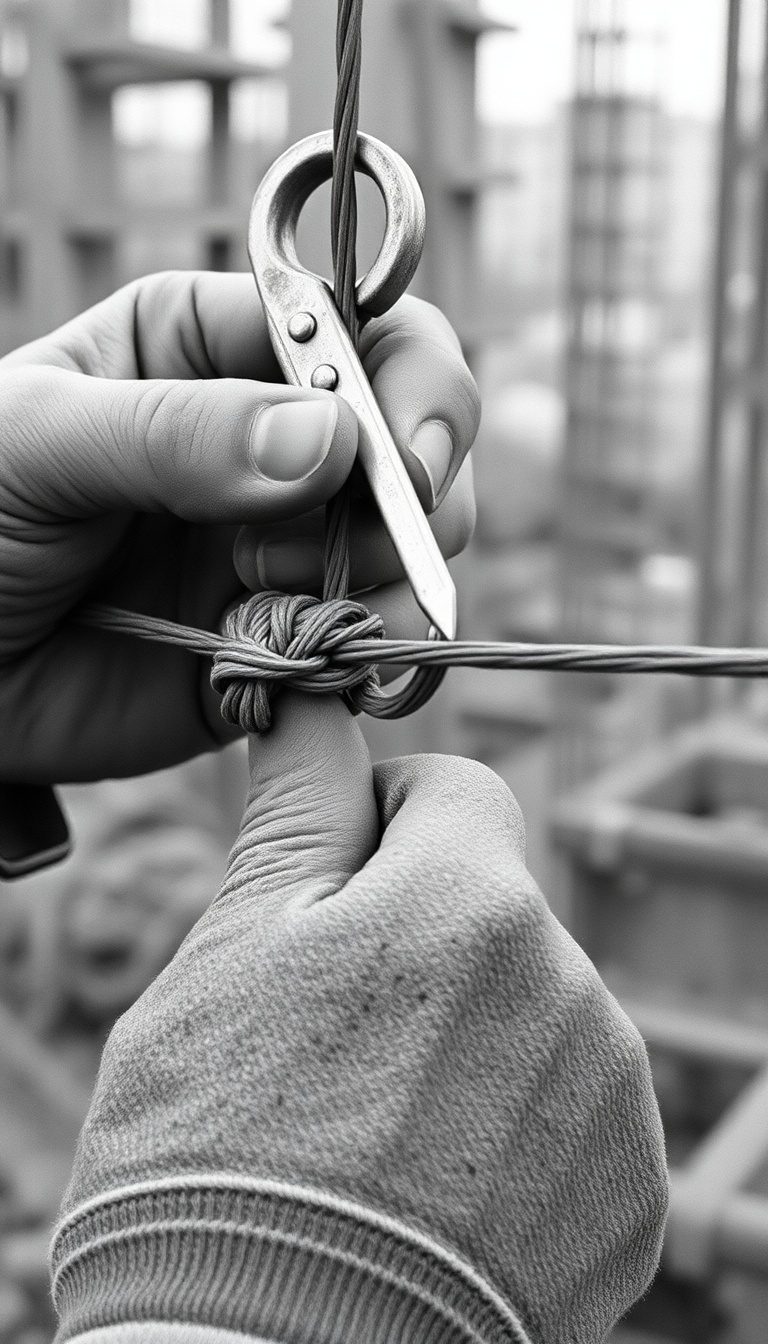
Tie wire was a spool of soft black annealed steel wire that the ironworker carried on his belt. The wire was sixteen gauge. The spool hung on a hook on the belt and the wire fed out as the ironworker worked. The ironworker pulled a length of wire and looped it around two bars of rebar where they crossed and twisted the wire with a hook. The hook was a piece of bent steel rod with a handle. The ironworker spun the hook and the wire twisted tight and the two bars were tied together. The whole thing took two seconds. Pull. Loop. Twist. Cut. Next intersection. Pull. Loop. Twist. Cut. The ironworker tied a thousand intersections a day.
The tie did not weld the bars. The tie did not bolt the bars. The tie just held the bars in position. The bars needed to be in the right place when the concrete poured and the tie wire kept them there. The tie wire was a promise. The promise was that the bar would not move before the concrete arrived. After the concrete arrived the promise was kept and the wire was no longer needed. The wire stayed inside the concrete forever but it did no work forever. The wire worked for one hour. The hour between the last tie and the first concrete. That was the wire's entire career. One hour of holding and then a lifetime of sitting inside a wall doing nothing.
The ironworker's hands were black from the wire. The annealing process left a coating on the wire and the coating transferred to the gloves and the gloves transferred to the hands and the hands were black by ten in the morning. The black hands were the mark of the trade. You could tell the ironworker from the carpenter by the hands. The carpenter's hands were yellow from sawdust. The ironworker's hands were black from wire. The plumber's hands were purple from flux. The electrician's hands were clean because the electrician wore rubber gloves. The hands told you what the man did for a living. The hands were the resume.
The tie wire was the cheapest material on the job site. A dollar a spool. The spool lasted a day. A dollar a day to hold a building together while it was being born. The rebar cost thousands. The concrete cost thousands. The formwork cost thousands. The tie wire cost a dollar and without the dollar the thousands were wasted because the rebar would shift and the engineer's design would fail. The cheapest thing on the job held the most expensive thing on the job in place. The building started with a dollar spool of wire and an ironworker who could twist it fast enough to stay ahead of the concrete truck.