 JOHN SINCLAIR
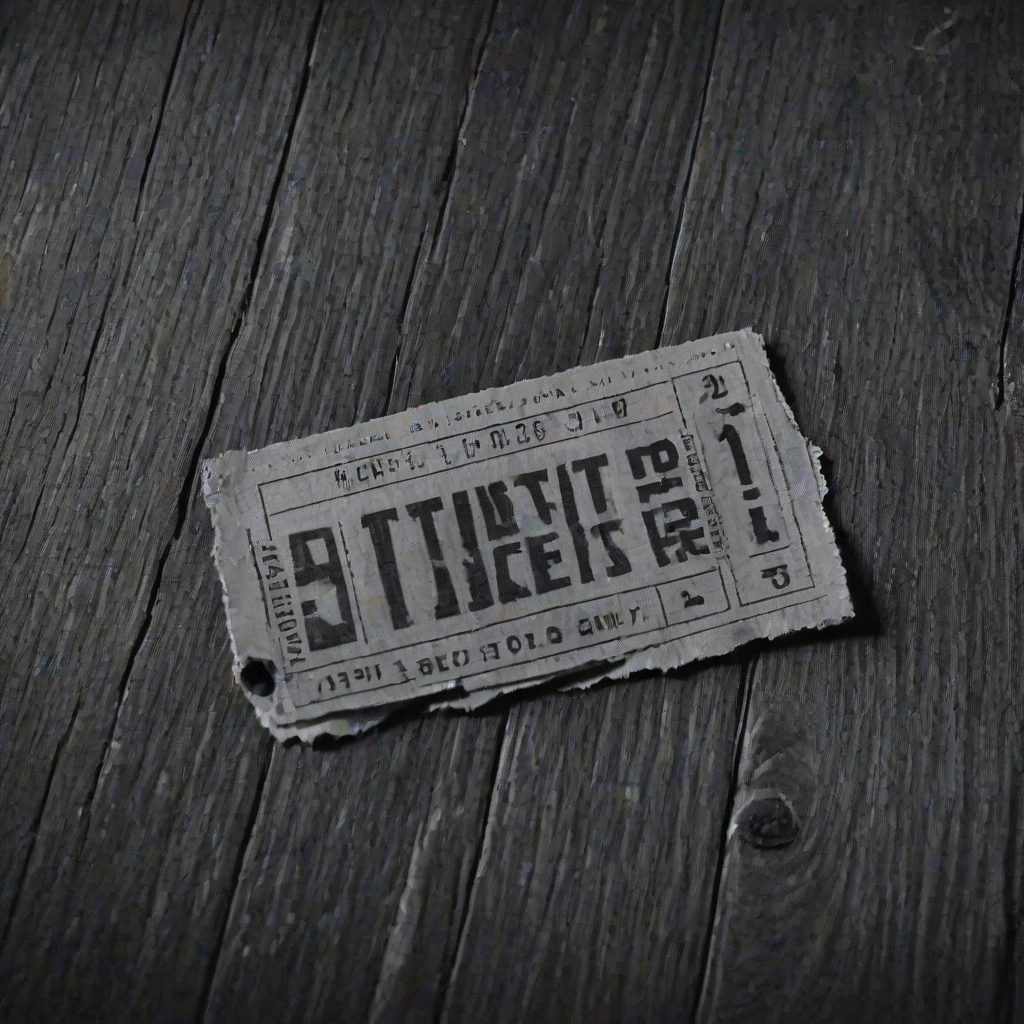
TICKET STUB
The ticket stub is proof that you were in the room. Not a photograph. Not a memory. A piece of cardboard with a date and a seat number and a tear along the perforation where someone ripped it and handed half back to you and said enjoy the show. The stub is the receipt for an experience that cannot be repeated. You cannot go back to the Fillmore on March third nineteen sixty eight and hear Big Brother and the Holding Company because that night happened once and Janis Joplin sang it once and the room heard it once and the only evidence that you were part of that once is a piece of torn cardboard in a shoebox in your closet. The stub does not play the music back. The stub says you were there. Sometimes that is enough.
The ticket as we know it started with the railroads. Before the railroad you bought passage by talking to a man at a dock or a coach station and the man remembered your face or he did not. The railroad moved too many people to remember faces. The railroad needed paper. The first printed tickets were small cards that proved you had paid and told the conductor where you were going and when the conductor punched the ticket the punch was the verification. The theater borrowed the system. P.T. Barnum sold reserved seat tickets at the American Museum in New York in the eighteen forties because Barnum understood that selling a specific seat was worth more than selling general admission. The seat number turned the crowd into individuals. You were not just in the audience. You were in row G seat fourteen. The ticket gave you a location inside the experience.
Ticketmaster was founded in nineteen seventy six by two Phoenix computer scientists who thought that selling tickets through a centralized computer system would be more efficient than selling them at box offices. They were right. They were also building a monopoly but nobody called it that for twenty years. By nineteen ninety four Ticketmaster controlled seventy percent of major venue ticketing in the United States. Pearl Jam filed a complaint with the Department of Justice because Ticketmaster was adding service fees that doubled the face value of concert tickets. The DOJ investigated and did nothing. Pearl Jam tried to tour without Ticketmaster and discovered that Ticketmaster had exclusive contracts with almost every venue that held more than three thousand people. The band could not play the buildings. The buildings belonged to Ticketmaster. That was the moment the ticket stopped belonging to the person who bought it and started belonging to the company that sold it.
The stub survived because the stub was analog. You tore it and you kept it and you put it in a book or taped it to a wall or threw it in a drawer and found it eleven years later and remembered the night. The stub was a bookmark in your life. I saw the Ramones at CBGB. I saw Coltrane at the Village Vanguard. I saw Aretha at the Apollo. The sentence is not complete without the place and the stub is the proof of the place. Now the ticket is a QR code on your phone and the QR code disappears after the scanner reads it and you have nothing. You have a memory and memories are unreliable. The stub was reliable. The stub had a date that did not change and a venue that did not move and a price that told you what the night was worth before it happened. The QR code tells you nothing after the fact. The QR code is a door that locks behind you.
You can still find ticket stubs at estate sales and flea markets and in the boxes that people leave behind when they die. Someone saw Duke Ellington at the Cotton Club. Someone saw Bob Dylan at Newport in nineteen sixty five the night he plugged in and half the audience booed. Someone saw the Beatles at Shea Stadium and could not hear a single note over the screaming and kept the stub for sixty years because the stub was louder than the memory. The stub outlasts the band. The stub outlasts the venue. The Fillmore closed and reopened and closed again and the stubs from every era are still in shoeboxes proving that those rooms existed and those nights happened and those people were alive and playing. You cannot scan a memory at the door. You cannot hold a download in your hand. The stub is small and torn and faded and it is the most honest souvenir that any night ever produced.