 JOHN SINCLAIR
THE WEED
They legalized it. That's the first thing they'll tell you. They legalized it and the war is over and everybody can relax. Smoke a joint on your front porch. Buy a gummy at the dispensary. The plant that put me in prison for two and a half years is now available in forty flavors at a store with track lighting and a loyalty card.
Congratulations. The war on marijuana is over. The plant won.
Except it didn't. The plant did not win. The money won.
I went to prison in 1969 for two joints. Two hand-rolled joints of marijuana. The state of Michigan gave me ten years. John Lennon played a concert to get me out. That story is in the books. What is not in the books is what happened to everybody else.
When I went in, there were thousands of Americans in prison for marijuana. When I came out, there were thousands more. When Nixon declared his war on drugs, the number doubled. When Reagan doubled down, it doubled again. By the time I was an old man in New Orleans, there were more Americans locked up for marijuana than the total prison population of most European countries.
Then they legalized it.
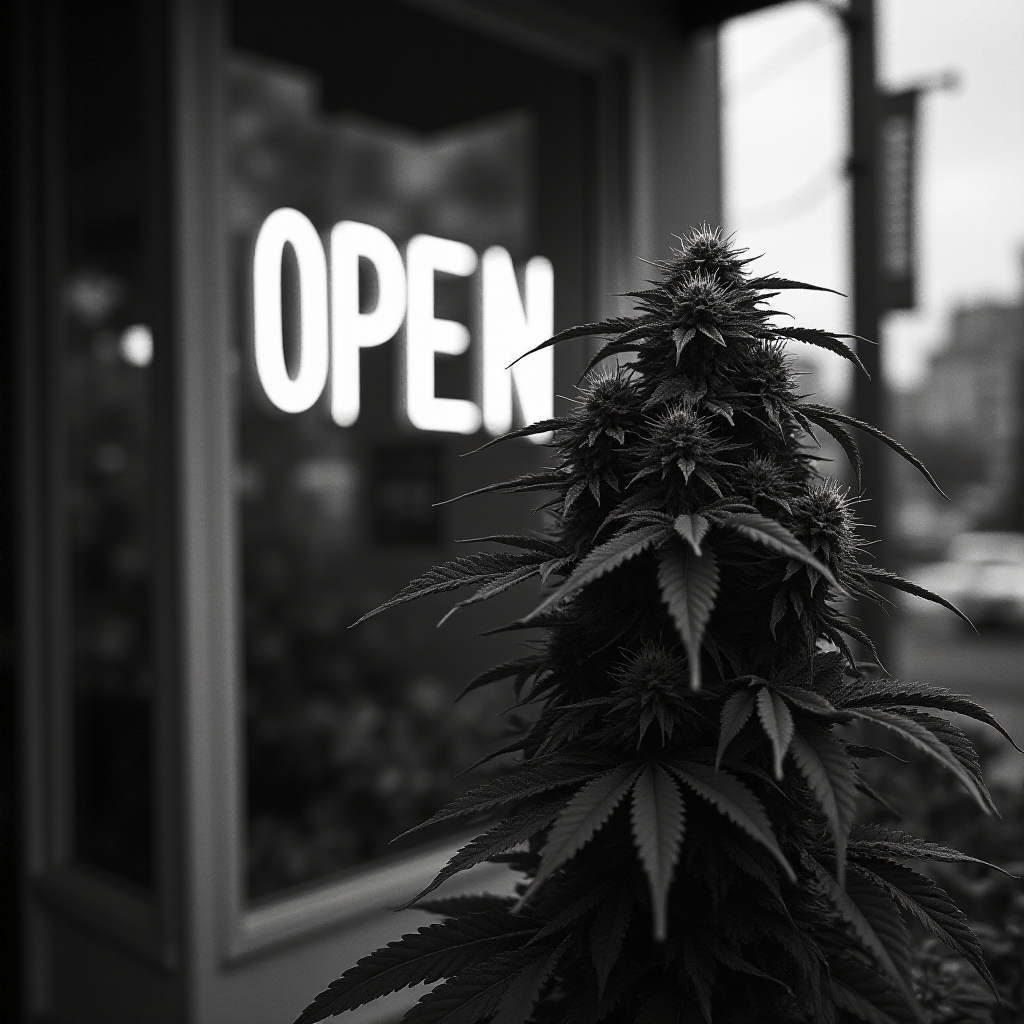
Here is what legalization looks like. A man in a suit walks into a state capitol and writes a check. The check buys a license. The license lets him grow the same plant that a kid in Detroit is serving five years for having in his pocket. The man in the suit hires a marketing firm. The marketing firm designs a logo. The logo goes on a jar. The jar goes on a shelf. The shelf is in a store that used to be a bank. The store is on a street where the cops used to arrest people for the same thing now being sold with a receipt and a bag.
That is legalization. That is the American way. First you make it illegal. Then you put people in cages for it. Then you make it legal. Then you make money from it. And nobody goes back and opens the cages.
I am not against legalization. I spent my life fighting for it. I gave years of my life — real years, years I cannot get back, years I spent staring at a ceiling in Jackson Prison — for the idea that a plant should not be a crime. I believe that. I still believe that.
But legalization without justice is just another hustle. If you can sell it on Main Street but a man is still in prison for growing it in his backyard, you do not have legalization. You have a monopoly. You have the same power structure wearing a different hat.
The numbers tell the story. The legal cannabis industry in America is worth twenty-five billion dollars a year. The people who run it are overwhelmingly white. The people who are still in prison for it are overwhelmingly Black. The states that legalized it did not go back through the court records and say, We made a mistake. We put you in a cage for something that is now a business. Come out. Here is your time back. Here is your record cleared. Here is your life.
They didn't do that because the cages were never about the plant. The cages were about control. The plant was the excuse.
I knew that in 1969. I knew it when the judge looked at me and said ten years. I knew it when I watched Black men go in for the same thing and get longer sentences. I knew it when I heard Nixon's people on tape — on tape — saying the drug war was designed to target Black communities and the antiwar left. They told you. They told you what they were doing. And fifty years later, the proof is on every balance sheet in Colorado and California.
People ask me: Are you angry? Are you bitter about the time you lost?
I am not bitter about the time. I am bitter about the lie. The lie that it was ever about public safety. The lie that it was ever about health. The lie that a plant could be a felony in 1969 and a business in 2024 and nobody has to answer for the fifty-five years in between.
Every dispensary in America is built on a graveyard of court cases. Every profit margin includes the uncompensated labor of people who did time. Every brand name is a monument to the fact that this country will cage you for something and then sell it back to you without apology.
So when they tell you the war on marijuana is over, ask them one question. Ask them: Where are the pardons?
Not the decriminalization. Not the expungement programs that require a lawyer you can't afford. Not the equity licenses that never seem to go to the people who actually need them. The pardons. The acknowledgment that what happened was wrong. The admission that this country used a plant to fill its prisons and then used the same plant to fill its bank accounts.
Until that happens, legalization is just gentrification. Same neighborhood, different landlord.
I didn't go to prison for marijuana. I went to prison for challenging authority. The marijuana was the mechanism. The mechanism has changed. The authority hasn't.
Forty states and counting. Twenty-five billion dollars. And people are still inside.
That's the transmission.
See also: Ten for Two — the arrest that started everything. The Dispensary — fifty years to the cash register. The Pardon — Biden pardoned 6,557. Trump's DOJ took it back. The Party — the White Panther Party and COINTELPRO. The Return — coming back to Detroit to watch it happen.