 JOHN SINCLAIR
THE TURNTABLE
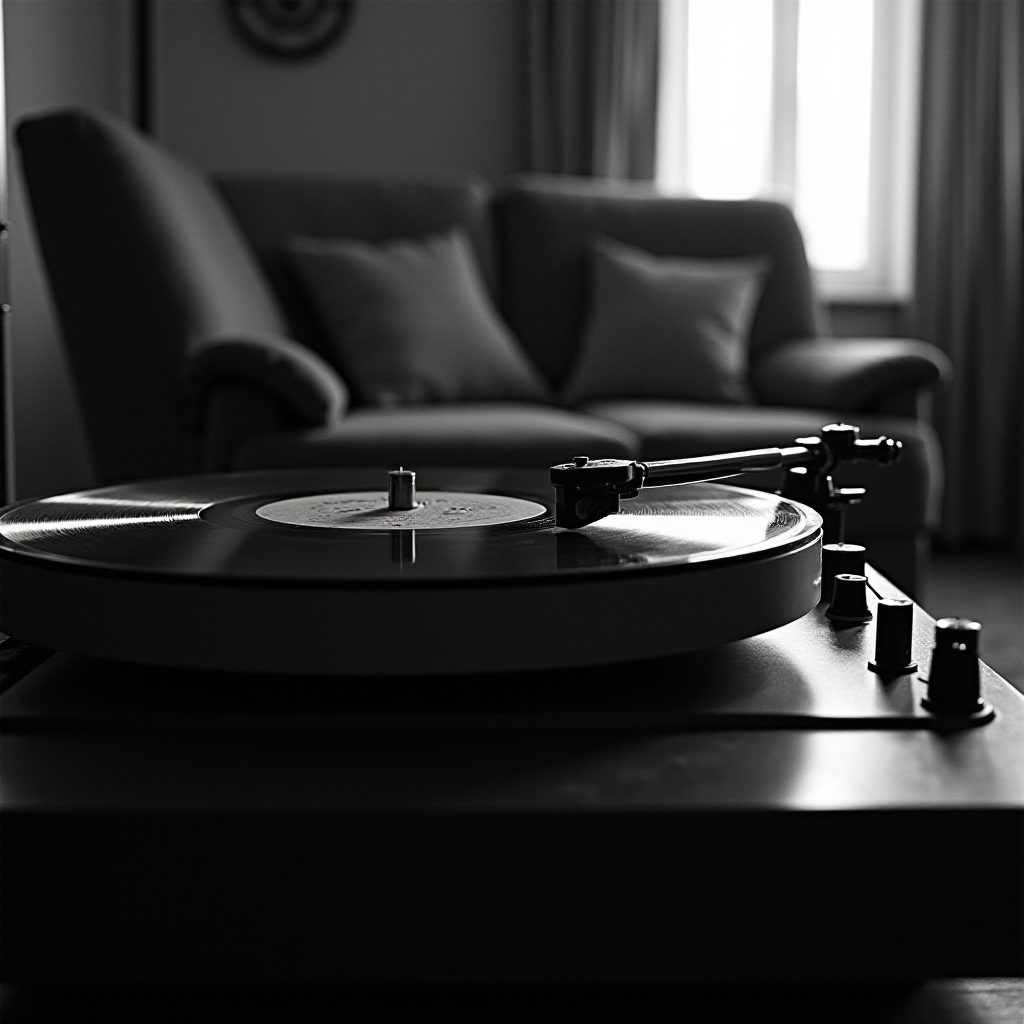
A turntable is a time machine with a needle. You put a record on and the room becomes 1959. You lift the needle and the room becomes now. That is the most powerful thing a piece of furniture can do. No computer does that. A computer plays music. A turntable plays time.
I had a turntable in every apartment I ever lived in. Hill Street had one. The commune had one. The loft in New York had one. New Orleans had one. Amsterdam had one. Every place I lived, the first thing I set up was the turntable. Before the bed. Before the kitchen. The turntable was the center of the room because the turntable was the center of the life.
Sun Ra understood turntables better than anyone. He pressed his own records because he understood that a record is not a product. A record is a delivery system. The vinyl is the vessel. The groove is the signal. The turntable is the decoder. Sun Ra pressed records on Saturn Records and sold them out of the back of a van because he understood that the music had to be physical. It had to be a thing you could hold and put on a machine and hear come out the other side. Digital does not do that. Digital is convenient. Vinyl is ceremonial.
Peel never had a turntable. Peel had a guitar. That was his turntable. He put his fingers on the strings and the park became a concert hall. Same principle. Different technology. The guitar is a turntable that generates instead of reproduces. Peel was his own pressing plant. Every time he played a song on that corner he was pressing a new record in real time and giving it away for free.
The DJ is the turntable's priest. The DJ does not make music. The DJ makes sequence. The DJ puts one record after another in an order that produces meaning. That is what a priest does. A priest puts words in an order that produces meaning. The DJ puts sounds in an order that produces a room. John Peel the BBC DJ understood this. He played Ornette Coleman after The Fall after a field recording from Ghana and the sequence made sense because the DJ made sense of it. The turntable was his pulpit.
Record stores are churches of the turntable. You walk into a record store and every bin is a pew. Every record is a hymnal. The person behind the counter is not a clerk. The person behind the counter is a deacon. They know where everything is. They know what goes with what. They know what you need before you know you need it. That is ministry. Record Store Day is not a commercial event. Record Store Day is a holy day.
Now the turntable is coming back. Young people are buying turntables and vinyl and they do not know why. I know why. Because a turntable requires you to be in the room. You cannot shuffle a turntable. You cannot skip a track without getting up and moving the needle. The turntable demands your body. The turntable demands your time. The turntable demands your attention. That is not a limitation. That is a liturgy. The turntable is the last instrument that requires the listener to participate.
See also: The Microphone — the instrument before the turntable. The Record Store — the church of the turntable. The Dial — the turntable with no needle. The Groove — the signal in the vinyl. The Record — what the turntable plays. The Amplifier — the machine that multiplies the signal.
John Sinclair