 JOHN SINCLAIR
THE TRIAL
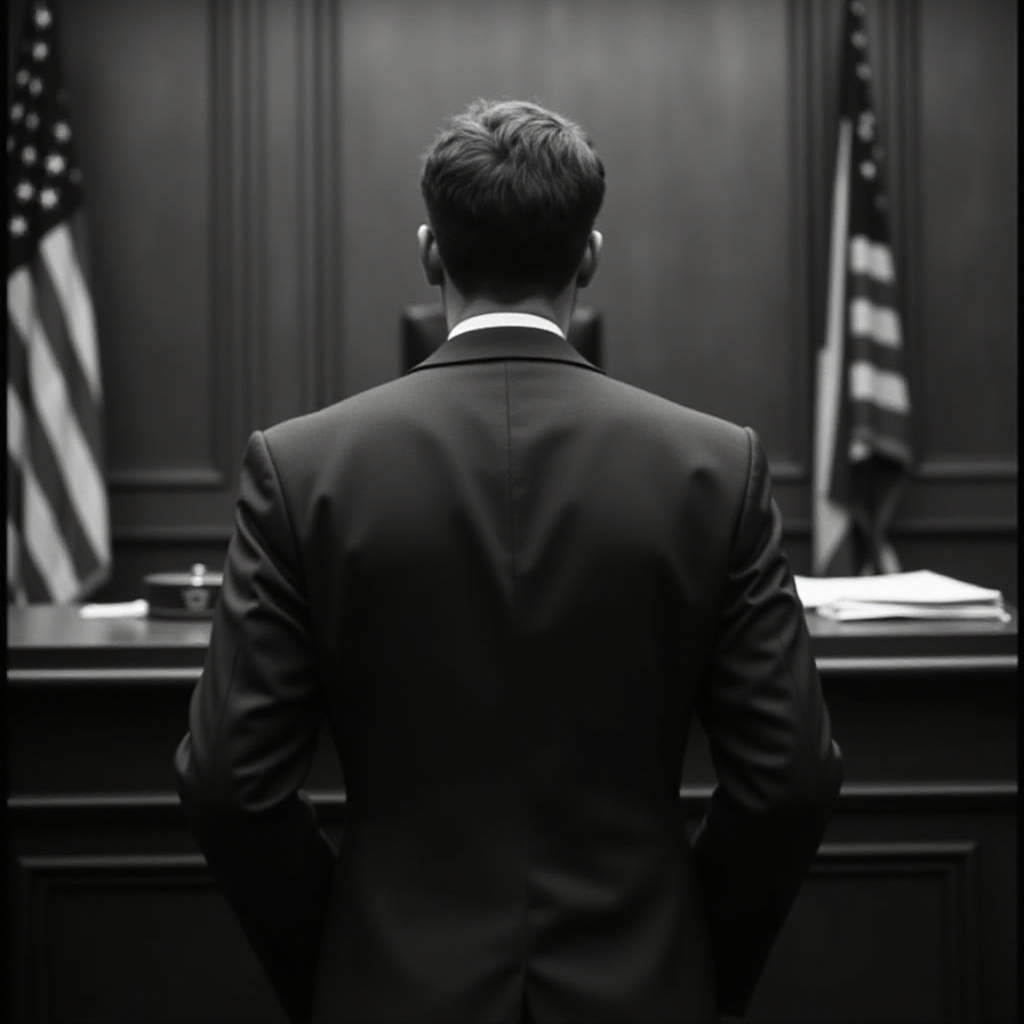
The judge's name was Robert Colombo. He sat behind his bench in a courtroom in Detroit and he looked at me and he said something that I have never forgotten. He said: "John Sinclair has been out to show that the law means nothing."
That was the moment. Not the sentencing. Not the ten years. The moment was when the judge told me, and the court, and the record, that my crime was not marijuana. My crime was defiance.
July 28, 1969. Recorder's Court, Detroit, Michigan. I was twenty-seven years old. I was wearing a suit because my lawyer told me to wear a suit. I did not own a suit. Somebody found one for me. It did not fit.
The charge was possession of marijuana. Two joints. Not two pounds. Not two bales. Two joints that I handed to an undercover officer at a party because she asked me for them. She was a cop. I didn't know she was a cop. I would have given her the joints anyway because I believed that marijuana should be shared and that the laws against it were unjust and I was willing to say so in public, which is exactly what the judge was punishing me for.
They did not give me ten years for marijuana. I need to be precise about this because the precision matters. They gave me nine and a half to ten years under Michigan's narcotics statute, which classified marijuana as a narcotic, which it is not, and which imposed mandatory minimum sentences for possession, which meant the judge had no discretion even if he wanted discretion, which he did not.
Judge Colombo wanted to make an example. He said so. He said this was not an ordinary drug case. He said I was trying to impose my lifestyle on the community. He said I was a danger. Not because I was violent. I had never committed a violent act in my life. I was a danger because I was effective. I was organizing. I was managing a rock and roll band that played politics. I was publishing a newspaper. I was running a commune. I was visible and I was loud and I was not going to stop.
The ten years was not a sentence. It was a silencing.
My lawyer was Justin Ravitz. Good man. Fighter. He argued that the marijuana laws were unconstitutional, that the classification of marijuana as a narcotic was scientifically indefensible, that the mandatory minimum was cruel and unusual. The judge listened to all of it and then he gave me the maximum.
The courtroom was full. Our people were there. The MC5 people, the commune people, the underground press people. They watched a judge put a poet in a cage for two cigarettes and call it justice. Some of them cried. Some of them got angry. Some of them went home and started organizing harder because they understood something that the judge did not understand. You cannot silence a frequency by removing the transmitter. You just make the remaining transmitters louder.
Jackson Prison. That's where they sent me. Maximum security. The hardest prison in Michigan. Not because I was a maximum security threat. Because they wanted me to understand what they could do.
I understood. I understood it on the first night when the door closed and the sound it made was not like any sound I had ever heard. It was the sound of a future being cancelled. Ten years. I was twenty-seven. They were planning to keep me until I was thirty-seven. They were planning to take the years when a man does his best work, his most vital work, and fill them with concrete and metal and the smell of industrial cleaner.
I wrote. That's what I did. I wrote poems. I wrote letters. I wrote political statements. I wrote to anyone who would read. The mimeograph machine was gone but the words were not. You can take a man's machine but you cannot take his language. I wrote on whatever paper I could find and I sent it out through whatever channels existed and the words kept going because words are harder to cage than bodies.
The appeal took two and a half years. Two and a half years of legal briefs and court dates and motions and delays while I sat in a cell and the world outside kept turning without me. The MC5 was falling apart. The commune was struggling. The movement was evolving into something I could not see from where I was.
Then John Lennon got involved. Then Stevie Wonder got involved. Then Allen Ginsberg, Phil Ochs, Bobby Seale. They put together a rally. The John Sinclair Freedom Rally. December 10, 1971. Crisler Arena in Ann Arbor. Fifteen thousand people. Lennon wrote a song for the occasion. "It ain't fair, John Sinclair, in the stir for breathing air." He played it live. Fifteen thousand people sang along.
Three days later, the Michigan Supreme Court released me on bond. Three months after that, they ruled the marijuana laws unconstitutional. The case that changed everything was my case. The case that changed everything started with a judge who wanted to silence a man and accidentally created a martyr.
Judge Colombo was right about one thing. I was trying to show that the law meant nothing. Not all law. The marijuana law. The law that classified a plant as a narcotic and a poet as a criminal and a community as a threat. That specific law meant nothing because it was designed to control people, not protect them, and the proof is that fifty years later the same state that locked me up sells the same plant in stores with track lighting and loyalty cards.
The law meant nothing. The frequency meant everything.
I think about that courtroom sometimes. The suit that didn't fit. The judge's face. The sound of the gavel. My lawyer's voice getting louder as the verdict got closer. The silence in the room when the number came — nine and a half to ten years — and then the sound that replaced the silence, which was not crying and not shouting but something between the two, a sound that a community makes when it watches one of its own get swallowed by the machine.
That sound is still in my ears. It never left. It is the frequency underneath everything I have done since. Every transmission, every radio show, every poem, every rally. Underneath all of it is the sound of that courtroom in 1969 when a judge tried to cancel a future and failed.
That's the transmission.
See also: Ten for Two — the arrest. The Rally — Lennon's concert to free me. The Poem — writing in the cell they put me in. The Cell — what prison sounds like from the inside. Forty Pages — the FBI was watching before the courtroom.