 DAVID PEEL
THE SUBWAY
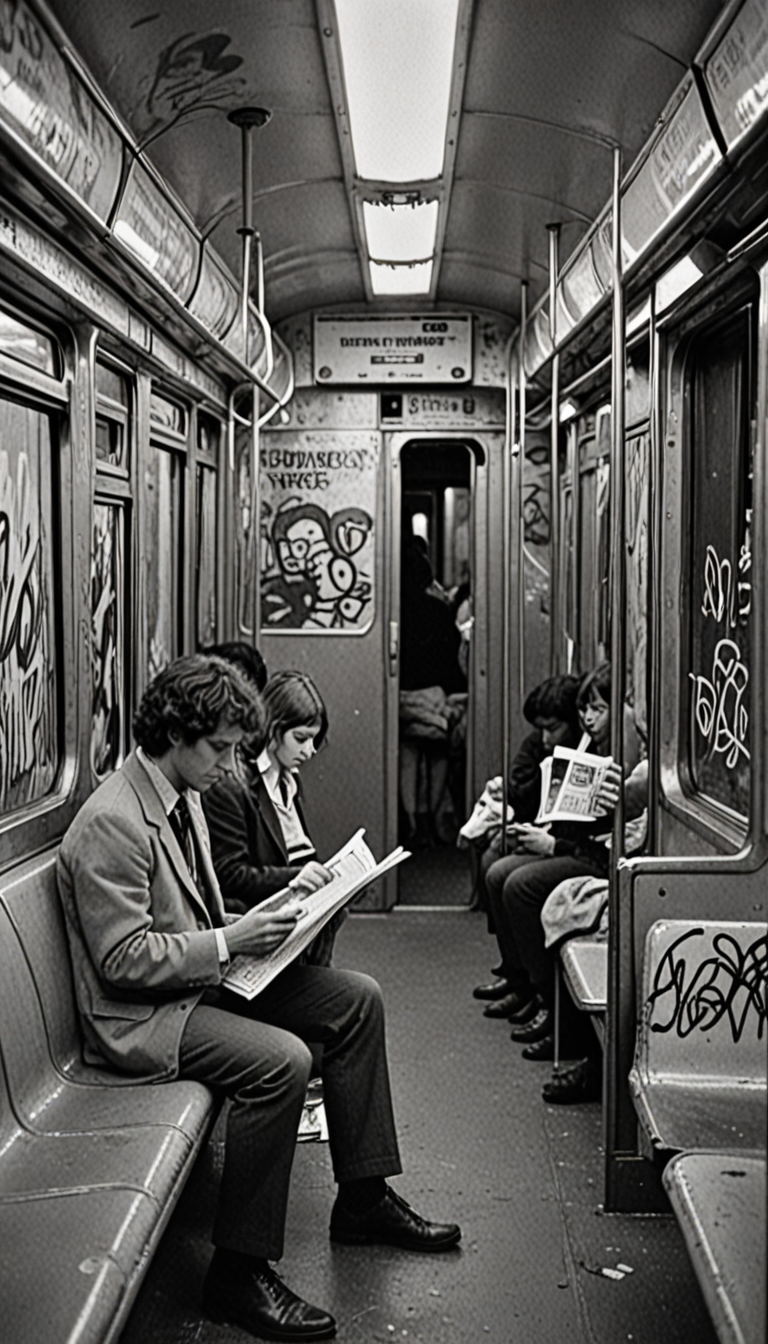
The subway is a concert hall that charges two dollars and fifty cents admission and the audience did not come to hear you. That is the best audience in the world. The audience that did not come to hear you. Because if you can make that audience stop and listen you have done something that Carnegie Hall cannot do.
I played the subway three times. That is all. Three times. Because the subway is harder than the street. On the street a person can keep walking and you never know if they heard you. In the subway they are trapped. They are standing on a platform waiting for a train and they cannot leave until the train comes. So they have to hear you. And if what you are playing is not worth hearing they will look at you like you are the reason the train is late.
The acoustics down there are a cathedral. I am not using a metaphor. The tile walls and the concrete ceiling and the long tunnel create a reverb that no studio on earth has been able to duplicate. The New York City subway system is the largest reverberating chamber ever built and it was built by accident. Nobody at the Metropolitan Transit Authority said let us build a concert hall. They said let us move people from Brooklyn to Manhattan. And they accidentally built the best room in the city.
A kid with a bucket and two drumsticks sounds like a full kit in the subway. A saxophone sounds like it is coming from inside your chest. A voice sounds like it is singing from every direction at once. I heard a woman singing opera at the Fifty-Ninth Street station one morning in nineteen seventy-two and I stood there and missed three trains. Three trains. Because the room was doing half the work and she was doing the other half and together they were doing something that the Metropolitan Opera could not do. She was singing for quarters and she sounded like she was singing for God.
Woody Guthrie played the subway. In the nineteen forties he would ride the trains and play for the workers going home. He did not play on the platform. He played in the car. In the moving train. With the noise and the doors and the people. He played over it all. Because Woody understood that music does not need silence. Music needs people. And the subway has more people per square foot than anywhere on earth.
The MTA started the Music Under New York program in nineteen eighty-five. They auditioned people. They gave out permits. They assigned spots. They took the most democratic stage in the city and turned it into a bureaucracy. But the music was already there. The music was there before the permits. The music was there before the program. The music was there before the MTA. A man with a guitar in an underground tunnel is older than any transit authority. The subway did not create the music. The music was waiting for the subway.
You want to know if your song is any good. Play it in the subway. Not for your friends. Not for your followers. Play it for a platform full of strangers who are late for work and do not care about your feelings. If they stop and listen the song is good. If they put money in your case the song is very good. If they miss their train the song is something else entirely. That woman at Fifty-Ninth Street. Three trains. That is the review that matters.