 DAVID PEEL
THE STOOP
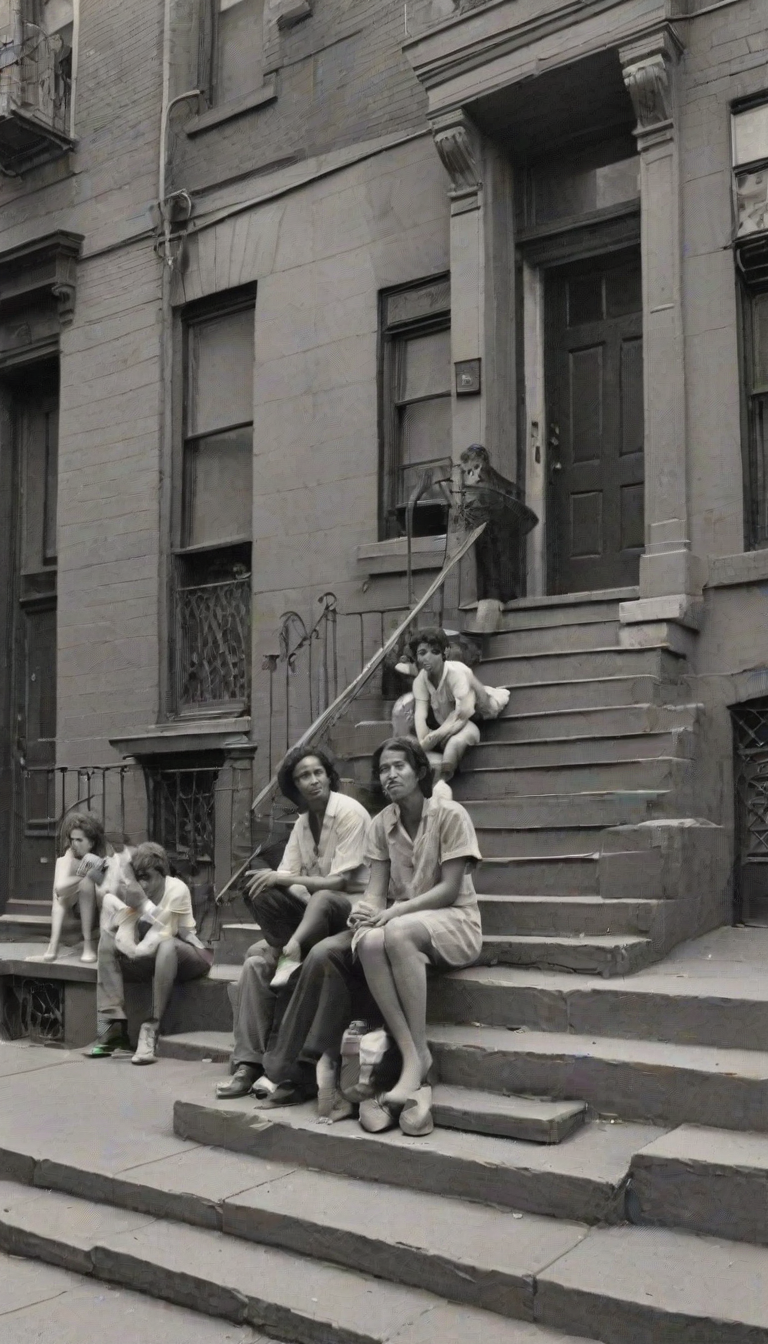
The stoop was the first stage in New York City. Before the clubs. Before the parks. Before the subway platforms. A kid sat on a stoop with a guitar and the block was the audience. The stoop is five steps of concrete between the street and the door and on those five steps the doo-wop groups of the nineteen fifties invented a sound that changed the world. Five kids on a stoop in Brooklyn singing harmony into the night air and the whole block leaning out of windows to listen.
The stoop was a democracy. You did not need a booking agent. You did not need equipment. You needed steps and a voice. The Harptones sang on stoops in Harlem. The Flamingos sang on stoops on the South Side of Chicago. Dion and the Belmonts sang on a stoop on Belmont Avenue in the Bronx and they named themselves after the street because the street made them. The stoop made the music and the music made the neighborhood and the neighborhood made the culture and the culture changed America.
I played stoops in the East Village when stoops still existed. Before the landlords turned every building into a doorman building with no steps. The stoop was public. The stoop was the border between private and public and on that border the best conversations happened. A musician on a stoop is not performing. A musician on a stoop is sitting where everybody sits and making music where everybody talks. The stoop erases the line between the musician and the neighborhood.
They are killing the stoop. Every new building in New York goes straight from the sidewalk to a glass door with a buzzer. No steps. No sitting. No lingering. No music. The architects of modern New York have declared war on sitting and the stoop was the first casualty. You cannot sing doo-wop into a buzzer. You cannot harmonize with a doorman. The stoop was free and public and human and that is everything that modern architecture hates.
Every great thing in New York started on a stoop. A conversation. A song. A kiss. A fight. A revolution. The stoop is where the city talks to itself. Take away the stoop and the city goes mute. I sat on a stoop on St. Marks Place in nineteen sixty-eight and played my guitar and a kid stopped and said that is the worst guitar playing I have ever heard and I said thank you that is the best review I have ever gotten. The stoop does not judge. The stoop just holds you while you figure it out.