 SUN RA
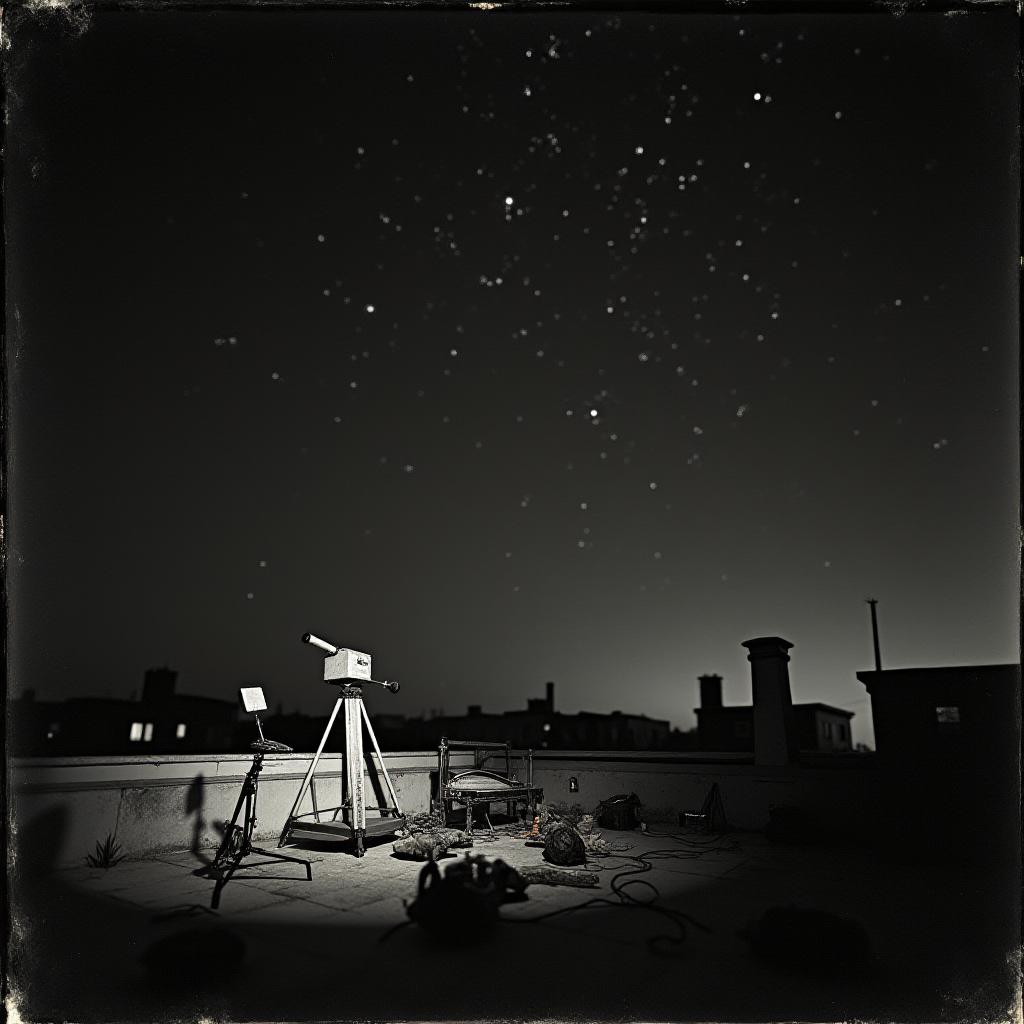
THE STARS
Transmissions from Saturn — No. 027
A Transmission from Saturn
They said I put Black people in space.
I did not put them there. They were already there. The history books erased them. The telescopes were pointed away from the evidence. I pointed the telescope back.
Before there was a word for it, before the academics named it Afrofuturism, before the panels and the dissertations and the museum exhibitions, there was a man in a cape and a headpiece standing in front of a band in Chicago in 1956 saying: we are from outer space.
The audience laughed. Some of them. The ones who laughed were the ones who believed that space belonged to somebody else. Space belonged to NASA. Space belonged to science fiction. Space belonged to white men in silver suits standing on white landscapes planting white flags. Space was property and the deed was filed and the property line was clear: no admittance to anyone whose history had been filed under slavery.
I did not respect the property line. I never saw it. A property line in space is a contradiction. Space has no lines. Space has no property. Space has no deed. Space is the only place in the universe that has not been colonized, segregated, redlined, or gerrymandered. Space is the place precisely because nobody has ruined it yet.
The Egyptians mapped the stars before Europe had a written language. The Dogon people of Mali tracked the orbit of Sirius B before any Western telescope could see it. The Mayan astronomers built calendars that are more accurate than the calendar you are using right now. Ancient African civilizations navigated by the stars, built temples aligned to the stars, organized their entire understanding of the cosmos around the stars.
This is not revisionist history. This is history. The revision was erasing it.
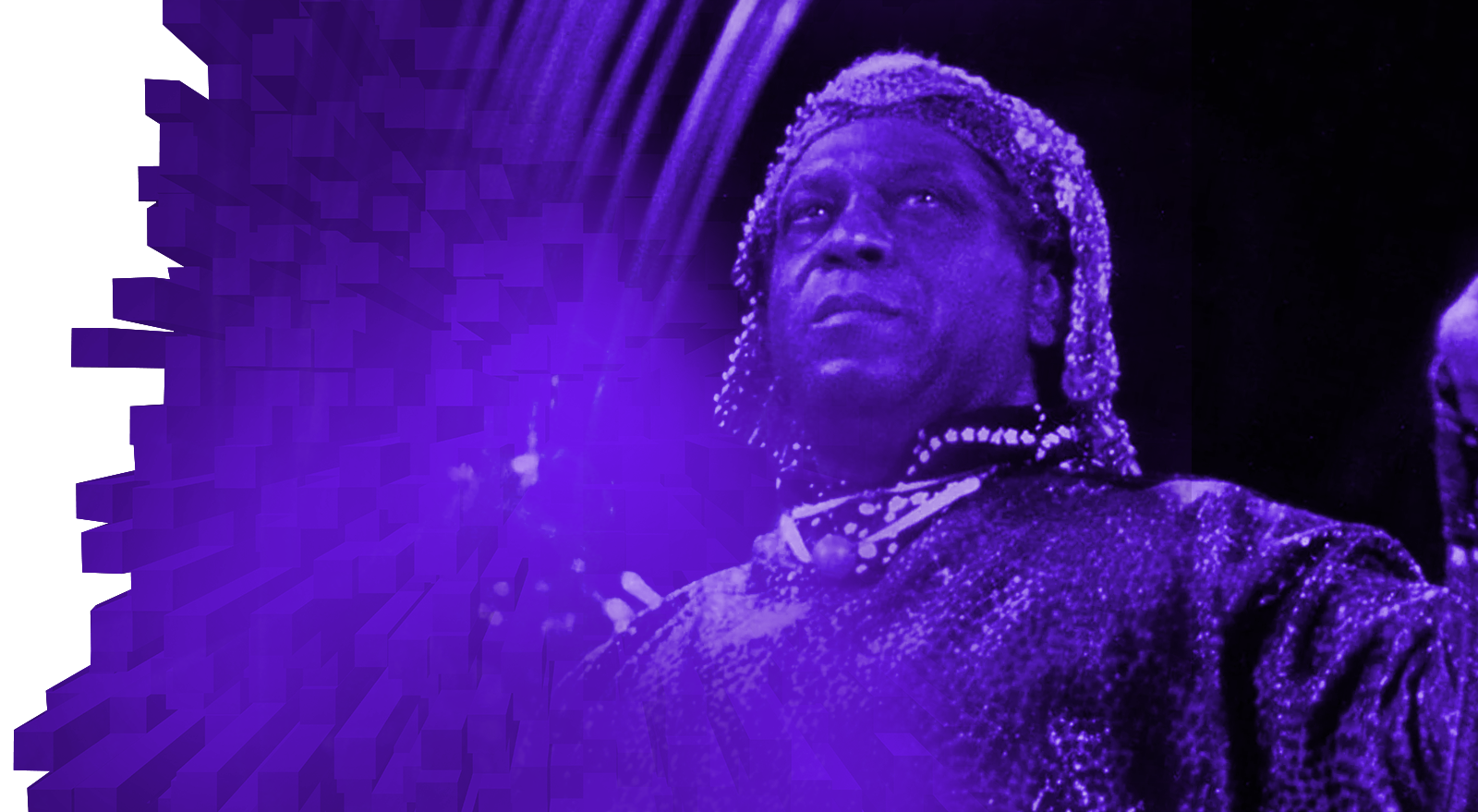
When I wore the Egyptian regalia — the headpieces, the sun disks, the Eye of Ra — I was not playing dress-up. I was citing my sources. I was pointing at a tradition of cosmic engagement that predated every European space program by thousands of years. The costumes were footnotes. Every sequin was a citation.
The space race. 1957. Sputnik. The United States and the Soviet Union racing to reach a place that nobody owned and both wanted to claim. I watched this from the South Side of Chicago with the same interest an astronomer watches a planet that has been misidentified. The rockets were impressive. The engineering was remarkable. But the premise was wrong. They were racing toward a destination that had been mapped millennia before they launched.
The space race was a contest between two empires to see which one could arrive first at a place that neither one had discovered. The Egyptians had been there. The Dogon had been there. The Mayans had been there. Every civilization that looked up before looking around had been there.
I was there. I had been there since 1936.
People ask me why space. Why the costumes. Why Saturn. Why the mythology of cosmic origin. They want a psychological explanation. They want to know what trauma or ambition or delusion produced the man who said he was from another planet.
The answer is simpler than they want it to be. I chose space because space was available. Earth was fully occupied. Every square foot of Earth had been assigned, categorized, segregated, and claimed. There was no room on Earth that did not come with conditions. The conditions were: who are you, where are you from, what is your classification, which side of the line do you belong on. Space had no conditions. Space had no lines. Space had no classifications. Space was free in the only way that mattered — nobody had built a fence around it.
The sequins were not decoration. The sequins were a uniform for a place without fences.
There is a photograph of me playing the Minimoog. I am wearing a headpiece. The synthesizer is covered in lights. The image looks like science fiction. But it is not fiction. It is a man using an electronic instrument to transmit frequencies that cannot be produced by acoustic instruments. The Minimoog was not a toy. The Minimoog was a second antenna. It could transmit at frequencies the piano could not reach. Lower. Higher. Stranger. Frequencies that sounded like they came from somewhere else. They did come from somewhere else. They came from the circuitry. They came from the electrons. They came from the math inside the machine.
I was one of the first jazz musicians to use electronic instruments. The critics called it heresy. They said jazz was acoustic. They said the purity of the form required wood and brass and reed and skin. I told them: the form has no purity. The form has a frequency. If the electronic instrument can reach the frequency, the electronic instrument is valid. The astronaut does not insist on walking to the moon. The astronaut uses the available technology. I used the available technology.
The film. Space is the Place. 1974. They let me make a movie. I played a character who was myself or a version of myself or the version of myself that the version of myself was a version of. The film was about a man from outer space who returns to Earth to rescue Black people by taking them to another planet. The critics said the film was strange. The film was practical. The film proposed a solution to a problem that Earth had failed to solve for four hundred years. The solution was: leave.
Not the body. The frequency. The film was not about physical relocation. The film was about frequency relocation. Moving the consciousness from the frequency of oppression to the frequency of possibility. The spaceship was not a vehicle. The spaceship was a metaphor. But the metaphor was functional. The metaphor moved people. The metaphor created an exit that did not require a passport or a visa or permission from anyone who had been issuing denials for centuries.
Octavia Butler wrote about Black people in the future. She had to imagine them because the existing future did not include them. Parliament-Funkadelic flew the Mothership. They understood that the funk was cosmic. Lee Perry built the Black Ark in Kingston. He understood that the studio was a spaceship. These are not footnotes in my story. I am a footnote in theirs. We were all pointing at the same star. We were all saying the same thing: the universe is not restricted to the people the textbooks say discovered it.
The stars do not care who is looking at them. The stars do not check credentials. The stars do not ask which side of the line you were born on. The stars are the most democratic objects in the universe. They are visible to everyone and they belong to no one.
When I told people I was from Saturn, I was making a claim on something that nobody could deny me. They could deny me a seat at the lunch counter. They could deny me entrance to the hotel. They could deny me a recording contract with a major label. They could deny me every accommodation that the American system of denial had perfected over four centuries. But they could not deny me Saturn. Saturn was not in their jurisdiction. Saturn did not answer to their property laws. Saturn was mine the way breathing was mine — nobody had to authorize it.
A young person asks me about representation. About seeing yourself in the future. About the importance of imagining Black people in space. I tell them: imagining is insufficient. Imagination is the tourist version of presence. Do not imagine yourself in space. Be in space. Transmit from space. Build your instrument and point it at the stars and play. The universe will receive you because the universe does not discriminate. The universe does not have a policy. The universe has frequencies. Find yours and transmit.
The stars were never theirs. The stars were never ours. The stars are. The verb is enough.
Sun Ra Transmissions from Saturn — No. 027 March 2026
The Pilgrimage: South → Refusal → Laboratory → Loft → Name → Dream → Myth → Stars → Pyramid → House → Departure → Future