 JOHN SINCLAIR
THE STAGE
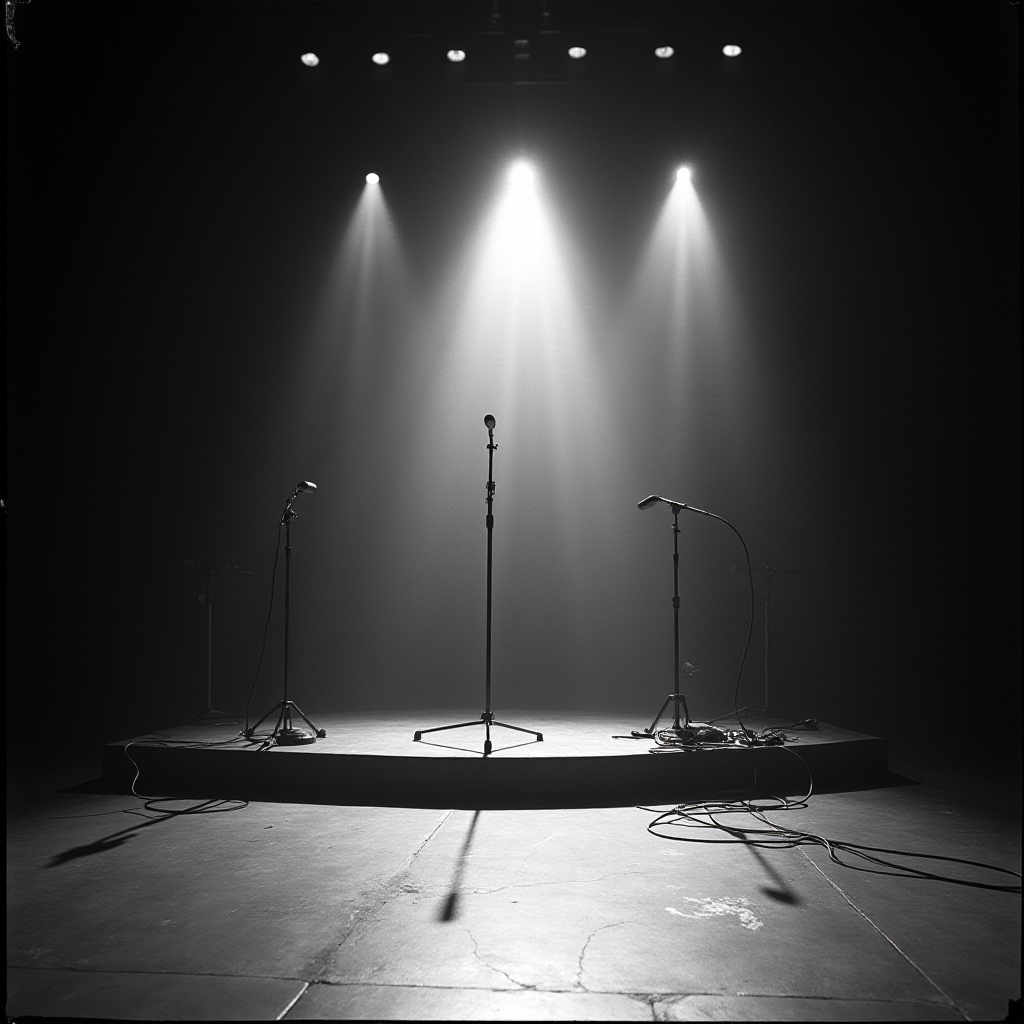
A stage is not a place. A stage is a decision. Somebody stands up and everybody else sits down and for however long the standing person remains standing, the room has a front. That is all a stage is. The agreement between the person who is standing and the people who are not.
The Grande Ballroom had a stage that was three feet off the ground. Three feet. That is the distance between the audience and the universe. When Iggy climbed down off that stage and into the crowd the three feet disappeared and nobody knew what to do because the contract had been broken. The standing person was no longer standing above the sitting people. He was standing among them. That was the moment when rock and roll stopped being a performance and became a confrontation.
In prison the stage is the yard. You walk out into the yard and every man in that yard is watching you and you are watching every man and nobody has agreed to sit down. Everybody is standing. That is why the yard is the most dangerous room in the building. There is no front. There is no back. There is no performer and no audience. There is only the agreement that nobody has made about who is in charge of the next thirty seconds.
Sun Ra understood that the stage was not where the musicians stood. The stage was where the frequency was loudest. Sometimes that was the bandstand. Sometimes that was the middle of the room. Sometimes that was the space between the piano and the door where nobody was standing at all. He would point the Arkestra at an empty corner of the room and the empty corner would become the stage because the frequency had been aimed at it. The audience would turn their chairs. They had no choice. The front of the room had moved.
Peel never had a stage. Peel had a corner. A corner is a stage that nobody built and nobody owns and nobody can take away from you because you did not ask permission to stand on it. A corner is what a stage becomes when you remove the money and the tickets and the contract and the three feet of elevation and all that is left is a person who has decided to stand up. That is the purest form of the stage. A human being and a decision.
The living room where I saw the Stooges play on Halloween night in nineteen sixty-seven did not have a stage. It had a space where the furniture had been pushed against the wall. That space became a stage because a kid from Ypsilanti walked into it and refused to be the same person he had been thirty seconds earlier. The furniture did not know it had been moved to make room for the future. The people leaning against it did not know they were leaning against the wall of a museum that had not been built yet.
Every stage is temporary. The Grande is a parking lot now. The prison yard gets resurfaced. The corner gets a construction fence. The living room gets its furniture back. But the decision — the moment when somebody stands up and the room rearranges itself around the standing person — that does not get resurfaced or fenced or furnished away. That decision is permanent. It happened. The room remembers even if the room is gone.
See also: The Grande — the ballroom where the three feet disappeared. The Kid from Ypsilanti — the kid who walked into the space where the furniture had been pushed aside. The Cell — the room with no stage and no audience. The Speaker — where the signal enters the air. The Five — the band that played the Grande. The Crowd — the other half of the equation. The Exit — the room after the last person leaves. The Poster — the promise before the sound. The Lighthouse — music as navigation in dark times. Doorman — the gatekeeper before the stage. Marquee — the name above the stage.
John Sinclair