 DAVID PEEL
The Squeegee Man
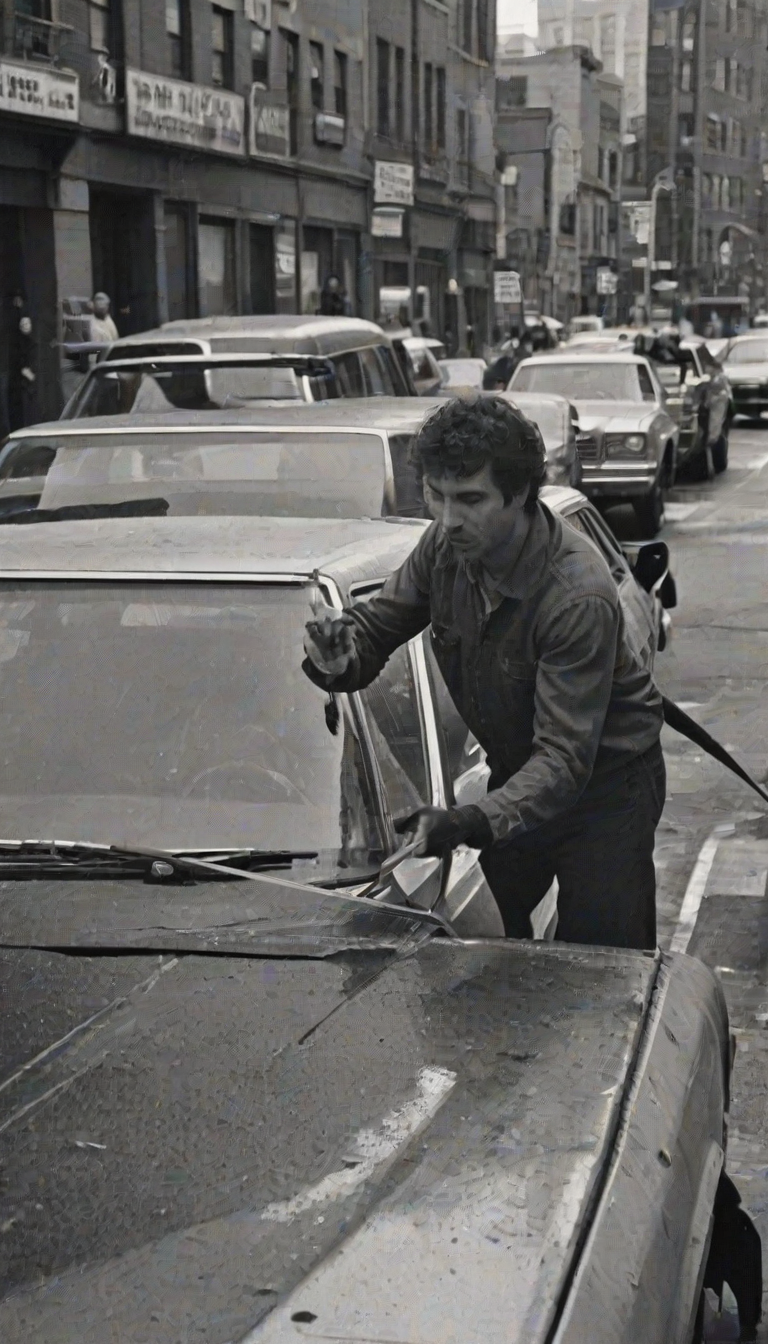
The squeegee man was an entrepreneur who had identified a market that did not want to be identified. The market was your windshield. The product was a dirty rag and a bucket of water that was dirtier than your windshield. The service was uninvited. The payment was suggested. The suggestion was backed by the implication that your windshield would be dirtier after the service than before it if you did not pay.
The squeegee man worked the red lights at Houston and the Bowery. The light turned red and the cars stopped and the squeegee man appeared from between the cars like a magician appearing from behind a curtain except the curtain was a Buick and the magic was the audacity to wash a window that nobody asked him to wash. He wiped the windshield with three strokes. Left to right. Right to left. One diagonal for flair. The windshield was not cleaner. The windshield had been redistributed.
The driver had two choices. Pay the man or do not pay the man. If you paid the man he said God bless you and moved to the next car. If you did not pay the man he said God bless you and moved to the next car. The God bless you was the same either way. The squeegee man had achieved a spiritual equilibrium that most people spend their whole lives failing to achieve. The outcome did not change the blessing.
The city removed the squeegee men in the 1990s. The mayor said they were a quality of life issue. The squeegee men said the quality of their life was the issue and the mayor had not asked about it. The squeegee men disappeared from Houston and the Bowery and the red lights got quieter and the windshields got dirtier because nobody was washing them uninvited anymore and the drivers discovered that they missed the squeegee man the way you miss anything that annoyed you regularly. The annoyance was a rhythm and the rhythm was gone and the silence where the squeegee used to be was not an improvement. It was a hole.
I played guitar on the corner and the squeegee man was the only other street performer I respected without reservation. The squeegee man and I had the same business model. We provided a service that nobody requested to an audience that had not consented and we asked for money afterward. The difference was that the squeegee man made more money than I did because a clean windshield has a more obvious value than a song about marijuana. The squeegee man understood capitalism better than any professor at NYU and the squeegee man had never been to NYU and the professors at NYU had never been to Houston and the Bowery at a red light with a bucket of dirty water and a rag.