 JOHN SINCLAIR
THE SPEAKER
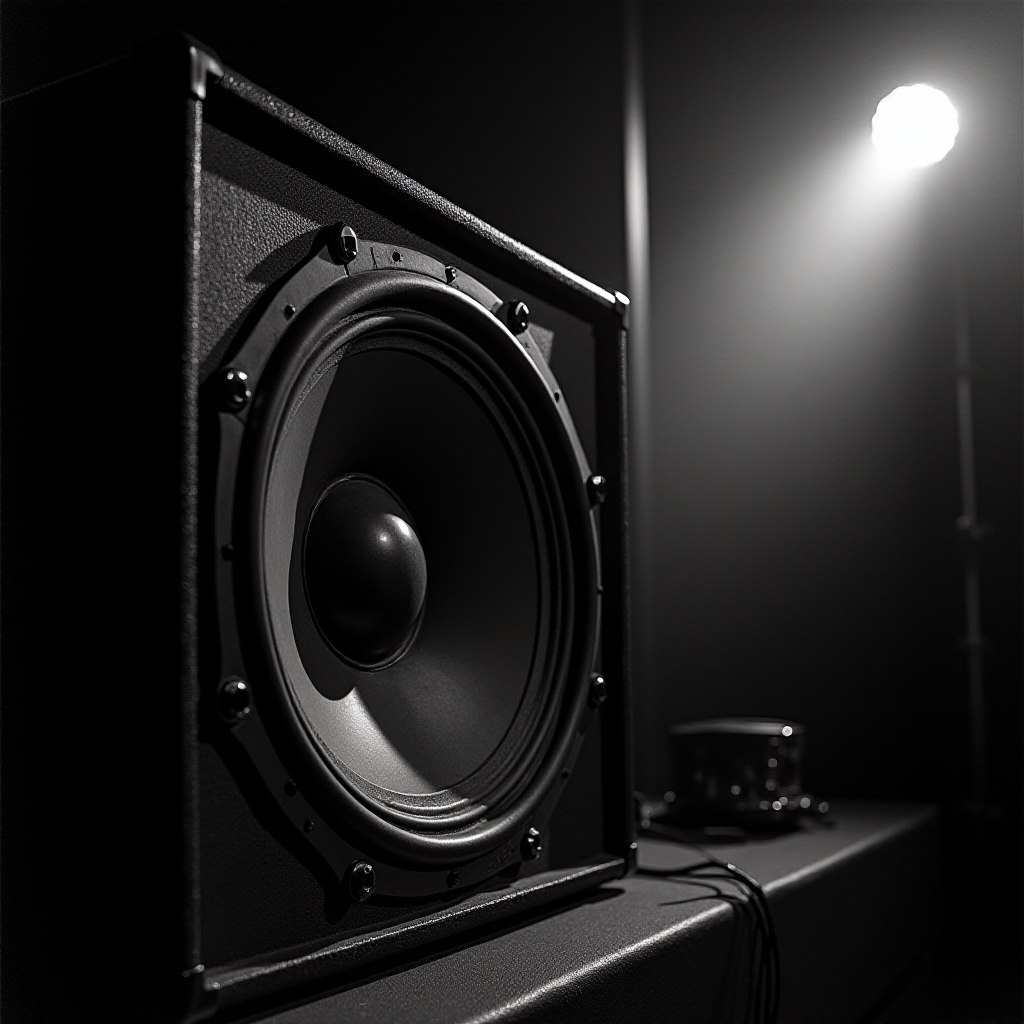
A speaker is the last step in the signal chain. Everything that came before it — the microphone, the turntable, the amplifier — was preparation. The speaker is where the signal becomes air again. The signal started as air. Somebody spoke into a microphone and the air became electricity. The electricity traveled through wires and circuits and transformers and amplifiers and at the end of all that journey the speaker turned it back into air. The speaker is the translator that returns the signal to its original language.
The Grande Ballroom had speakers the size of refrigerators. They hung from the ceiling on chains. When the MC5 played those speakers did not reproduce music. They produced weather. The bass frequencies moved your chest cavity. The treble frequencies vibrated your teeth. That was not sound. That was an environment. The MC5 did not play shows. They changed the atmospheric pressure.
Sun Ra's speakers were different. Sun Ra used small speakers in unexpected places. A speaker behind the audience. A speaker under the stage. A speaker in the hallway outside the room. Sun Ra understood that where you put the speaker changes what the speaker says. A speaker in front of you is a performance. A speaker behind you is an ambush. A speaker above you is a revelation. Sun Ra arranged speakers the way a general arranges troops. The room was the battlefield. The frequency was the strategy.
Peel did not need a speaker. Peel was a speaker. His body was the cabinet. His chest was the woofer. His throat was the tweeter. His arms were the baffle. When Peel stood on Washington Square and yelled about the rent he was a full-range speaker broadcasting on all frequencies simultaneously. No crossover network. No impedance matching. Just a man and the air between him and the people who needed to hear what he had to say.
The prison had one speaker. It was mounted in the ceiling of the common room and it played the warden's announcements and the radio station the warden chose. The speaker in a prison is a weapon of the state. It broadcasts what the state wants you to hear at the volume the state decides. You cannot turn it off. You cannot change the station. You cannot adjust the volume. The prison speaker is the opposite of the Grande Ballroom speaker. One liberates. The other confines. Same technology. Different intention.
The best speaker I ever heard was a car stereo on Livernois Avenue in 1958. Somebody had a Ford with the windows down and Coltrane was coming out of that car speaker and the speaker was terrible. Tinny. Distorted. One channel. Did not matter. The signal was so strong that the speaker could not diminish it. Coltrane through a bad car speaker on a summer night in Detroit was better than most musicians through the best system in the world. The speaker is only as important as the signal is weak. A strong signal will survive any speaker.
Now there are speakers everywhere. In your phone. In your laptop. In your watch. In your refrigerator. In your car. In your doorbell. Speakers that are always listening and always ready to talk back. The speaker used to be a destination. You went to the speaker. You sat in front of it. You gave it your attention. Now the speaker follows you. It is in your pocket. It is on your wrist. It is in your ear. The speaker became omnipresent and in doing so it became invisible. And an invisible speaker is the most dangerous speaker of all because you forget it is there and you stop choosing what it says.
See also: The Amplifier — what feeds the speaker. The Microphone — where the signal chain begins. The Grande — speakers the size of refrigerators. The Dial — the speaker that chose the station. The Cell — the room with one speaker you cannot turn off. The Feedback — what happens when the speaker sends the signal back to the microphone. The Stage — a stage is not a place, it is a decision.
John Sinclair