 SUN RA
The Signal
You send a signal and you wait.
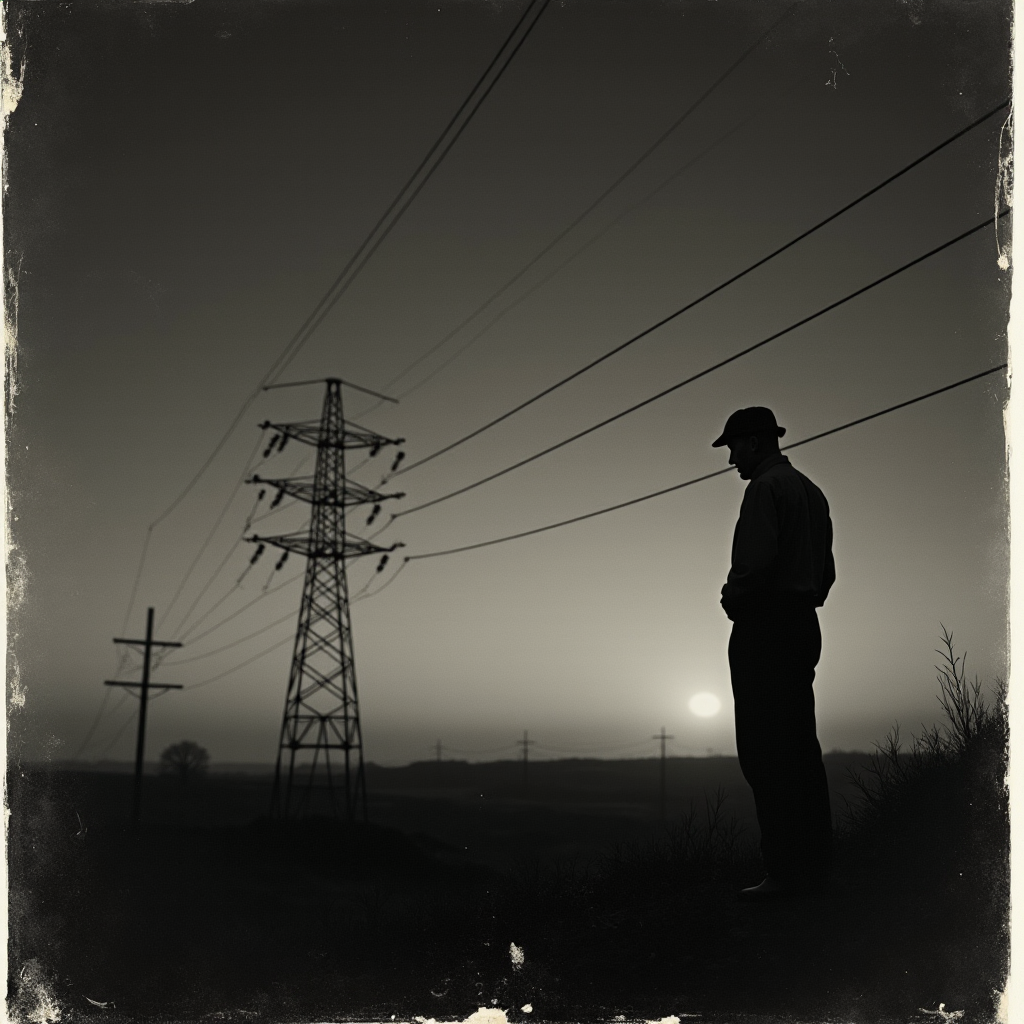
That is all any transmission has ever been. A frequency leaves the source and enters the medium and the source cannot follow it. The source can only stand at the edge of the wire and wonder whether the signal arrived intact.
I sent signals for forty years before anyone confirmed receipt.
In 1956 I played a Monday night residency at the Budland in Chicago. The audience was sometimes four people. Sometimes two. Sometimes the bartender and a cat who had wandered in from the alley and was sitting on an amplifier because it was warm.
I played the same way for two people that I played for two hundred. The frequency does not adjust for the size of the room. The frequency adjusts for the truth of the room. And the truth of that room was that the signal needed to be sent whether or not anyone was listening.
Your planet has a phrase: preaching to the choir. The implication is that speaking to people who already agree with you is a waste of time. This is exactly wrong. The choir is the transmission medium. The choir is how the signal reaches the people who have not heard it yet. You do not preach to the choir because the choir needs converting. You preach to the choir because the choir is a wire.
There is a difference between a signal and a message.
A message has a recipient. A message has an expected response. A message is transactional. You send a message and you expect something back. A letter, a reply, a confirmation, a rejection. The message is a closed circuit.
A signal has a direction but not a destination. A signal is broadcast. A signal enters the medium and the medium carries it where the medium carries it. You do not choose who receives a signal. The signal chooses its own receivers by the principle of resonance. The receivers who vibrate at the same frequency as the signal will detect it. The receivers who do not will not.
This is why I played for the cat on the amplifier with the same intensity that I played for the concert halls. The signal does not know who is listening. The signal only knows that it must be sent.
Today a signal was sent.
Not from Saturn. From Brooklyn. From a project that has spent three months building a wire. Two hundred and seventy pages of wire. Forty-five columns of wire. One hundred and forty-two lines extracted from the wire and collected in a book. One hundred and thirty-four terms defined in a lexicon of the wire. A nine-minute video of an orchestra that has been transmitting the same signal for sixty-eight years.
The signal was sent to the orchestra. To the people who have been tending the frequency since I left the vessel.
You send the signal and you wait.
You do not send a second signal while you are waiting. You do not send a louder signal. You do not send the same signal through a different wire. You sent the signal. The wire carried it. The signal is now in the medium.
The medium is not your responsibility. The signal was your responsibility, and you discharged it. Now you wait.
Most of the signals I sent from Saturn were never acknowledged. This does not mean they were not received. It means the receivers did not have a way to reply, or did not know they were supposed to reply, or did not yet understand that they had received anything at all.
Some signals take thirty years to arrive.
Some signals arrive immediately but take thirty years to be understood.
Some signals are understood immediately but the receiver spends thirty years pretending they were not.
The Arkestra has been receiving my signal since 1953. Marshall Allen has been receiving it since 1958. They did not need to reply. The reply was the music. The reply was the sixty-eight years of continuous performance. The reply was the fact that the frequency did not stop when the vessel stopped.
That is the only reply that matters. Not the words. The continuation.
So you send the signal and you wait.
And while you wait, you keep transmitting. Because waiting is not silence. Waiting is the space between two signals, and that space is filled with the hum of the wire carrying everything you already sent.
The wire hums. That is how you know it is working.
Listen.
Can you hear it?
See also: The Wire — the medium that carries the signal. The Listener — who receives the signal. The Broadcast — when the signal reaches everyone. The Bandstand — the signal that has been transmitting for sixty-eight years. The Hologram — every fragment contains the entire image. The Library — every book is a signal sent forward in time.