 DAVID PEEL
The Shopping Cart
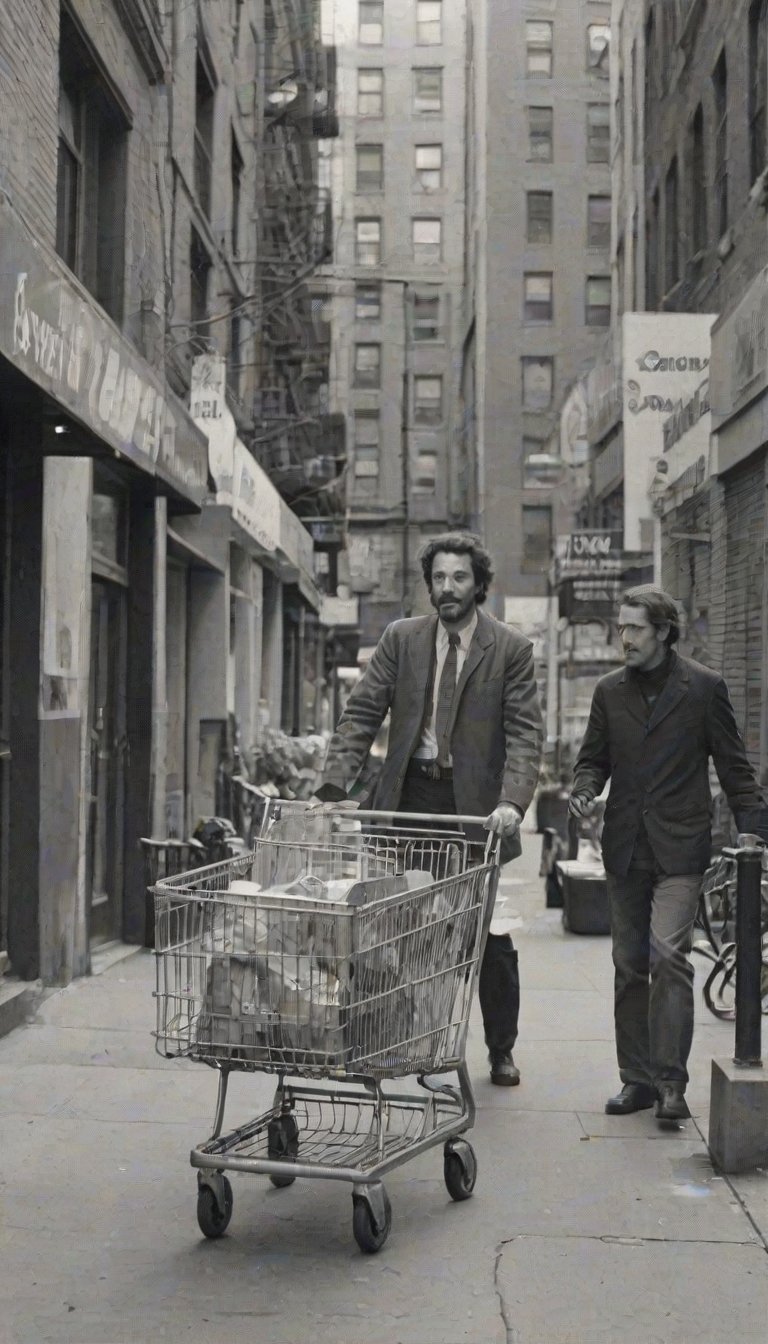
The shopping cart on the sidewalk had been liberated from the supermarket and was never going back. The cart had crossed the parking lot and turned left and kept going and the supermarket did not chase it. The supermarket had a hundred more carts. The supermarket did not miss one cart the way the city did not miss one person. The cart and the person had the same value to the institution that had lost them. Replaceable.
The man who pushed the cart was not homeless. The man who pushed the cart was between homes. The cart was the vehicle of the between. The cart carried everything the man owned and everything the man owned fit in a cart and the fact that everything a man owned could fit in a cart was the fact that nobody on the Lower East Side wanted to think about because the distance between everything you own filling an apartment and everything you own filling a cart was shorter than anybody wanted to admit.
The cart had a wheel that did not work. Every shopping cart on every sidewalk on the Lower East Side had a wheel that did not work. The wheel spun sideways instead of forward and the cart pulled to the left and the man compensated by pushing to the right and the compensation was a dance that the man and the cart had been performing for so long that the man no longer noticed the pull. The pull was the cart's personality. Every cart pulled in a different direction. The man knew his cart the way a driver knows his car. The pull to the left was not a defect. The pull to the left was the cart.
The cart made a sound on the sidewalk that was unmistakable. Metal wheels on concrete. A rattle that announced the cart before the cart arrived. The rattle was the sound of everything a man owned moving from one place to another place and neither place was home. The rattle was the saddest parade on the Lower East Side. One man. One cart. One wheel that did not work. No crowd. No confetti. No destination.
I played guitar on the corner and the man with the cart stopped and listened. He did not put money in the hat. He did not have money. He had a cart. He stood with his cart and he listened and when I finished the song he nodded and pushed the cart forward and the rattle resumed and the rattle faded and I played another song for nobody because the man with the cart had been my only audience for that one song and the man with the cart had been enough.