 JOHN SINCLAIR
THE SENTENCE
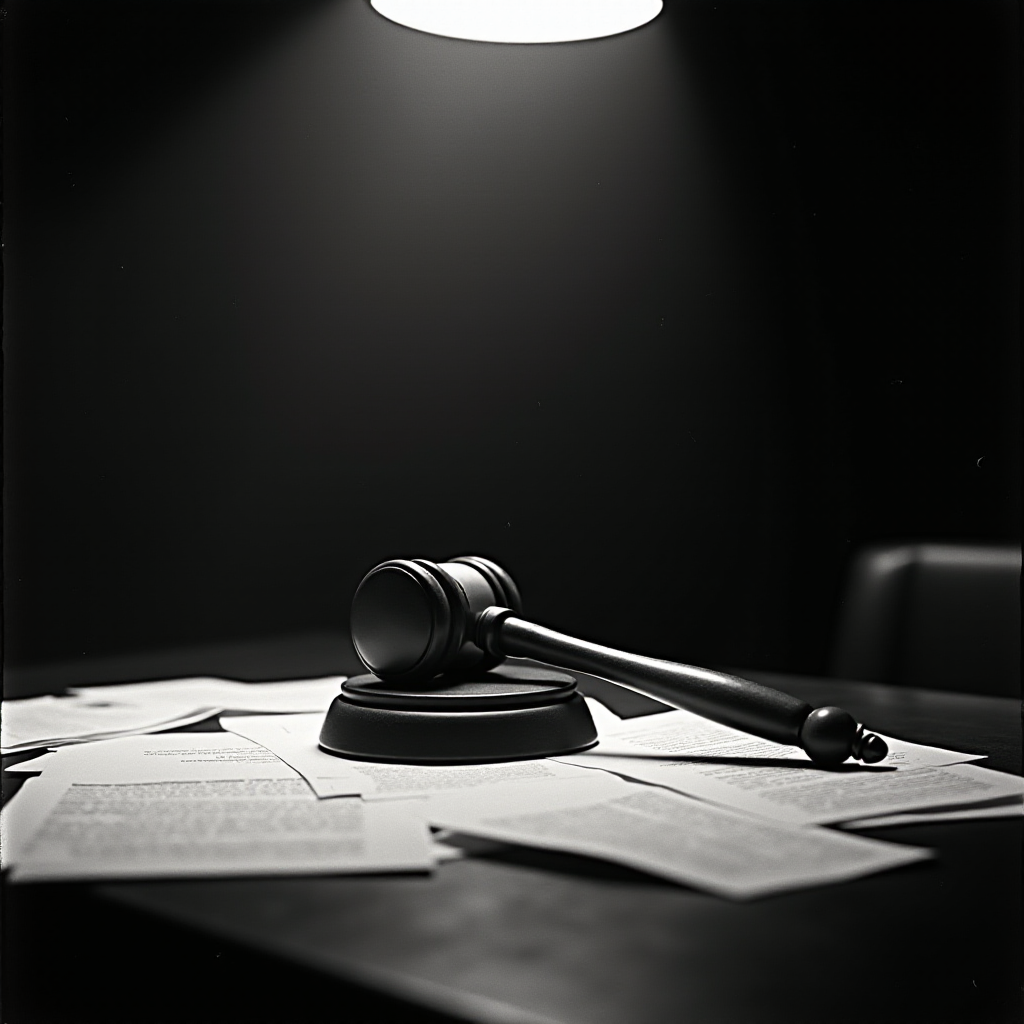
A sentence is a collection of words arranged in a specific order to produce a specific meaning. A prison sentence is a collection of years arranged in a specific order to produce a specific person. I received both on the same day. July 28, 1969. Judge Robert Colombo looked at me and said nine and a half to ten years. That is a sentence. Fourteen words that rearranged the next decade of my life.
Two joints. Two marijuana cigarettes. That is what the evidence consisted of. The charge was possession with intent to distribute. The intent was to smoke them. The distribution was to hand one to an undercover officer who asked for it. That is not distribution. That is manners. But the law does not recognize manners as a defense. The law recognizes sentences. And the sentence was ten years.
People ask me if I am angry about the sentence. I am not angry about the sentence. I am angry about the arithmetic. Ten years divided by two joints equals five years per joint. That is the conversion rate the state of Michigan assigned to a plant that grows in dirt. Five years of a human life for something that grows out of the ground without permission and without a license and without any intention of doing harm to anyone.
The sentence did what sentences do. It made me a writer. I wrote Guitar Army in prison. I wrote it on legal pads smuggled in by visitors. I wrote it because there was nothing else to do and because the sentence had given me the one thing a writer needs more than talent. Time. The sentence gave me ten years of time and I used two and a half of them to write a book that is still in print fifty-four years later. The judge gave me a sentence. I gave him one back.
John Lennon wrote a song about my sentence. Fifteen thousand people showed up to a rally in Ann Arbor on December 10, 1971 to protest my sentence. Three days later the Michigan Supreme Court released me. The sentence that was supposed to last ten years lasted two years and eight months. But the sentence that Lennon wrote lasted forever. That is the difference between a legal sentence and a musical one. The legal sentence has an expiration date. The musical sentence does not.
The sentence changed the law. Not immediately. Not dramatically. But the absurdity of ten years for two joints became the exhibit that every marijuana reform advocate in Michigan pointed to for the next fifty years. My sentence was the sentence that proved the sentences were too long. That is the paradox. The sentence that was meant to silence me became the loudest argument against itself.
I have lived longer after the sentence than before it. Everything I am — the radio stations, the poetry, the festivals, the blues, New Orleans, Amsterdam, the return to Detroit — all of it happened after the sentence. The judge thought he was ending something. He was starting it. Every sentence starts something. That is what sentences do. The period at the end is not a stop. It is a starting line.
Sun Ra never received a sentence. He refused the draft in 1942 and the judge gave him a choice: prison or a conscientious objector camp. Sun Ra chose the camp. That is a different kind of sentence — a sentence with an option. My sentence had no options. My sentence had a number and a door and a lock. But both sentences produced the same result. They produced a man who decided that the system was not worth cooperating with and spent the rest of his life building a different one.
Peel never received a sentence either. The cops arrested him dozens of times. Noise violations. Unlicensed performances. Public nuisance. But no judge ever looked at Peel and said ten years. The street has its own sentences and they are measured in weather and hunger and fatigue, not years and cells. Peel's sentence was the corner itself. Fifty years. No parole. No appeal. No commutation. Just the corner and the guitar and the hat and the song.
Three men. Three sentences. One frequency. The judge's sentence put me in a cell. The draft board's sentence put Sun Ra in a camp. The street's sentence put Peel on a corner. And all three sentences produced the same thing. A man who would not stop transmitting. That is what a sentence does when it fails. It turns the prisoner into a broadcast tower.
See also: Ten for Two — TX001. Two joints. Ten years. The dispatch that started everything. The Cell — the room with one door. The Pardon — the paper that came fifty years late. The Weed — corporate marijuana and the pardons that never came. The Book — Guitar Army. Written in prison. Still in print. The Anthem — the song that did what the lawyers could not. The Jury — twelve people who delivered the sentence. The Courtroom — the room where the sentence was spoken.
John Sinclair