 JOHN SINCLAIR
THE SECOND LINE
Detroit is not a metaphor. I need to say that first because everybody wants to use Detroit as a metaphor. I said that already. In the last transmission. But I moved to New Orleans in 1991 because I ran out of reasons not to. Detroit was behind me. The prison was behind me. The MC5 was behind me. The communes and the campaigns and the underground newspapers were behind me. I was fifty years old and I had spent my entire adult life building things that other people tore down, and I was tired. Not of the work. Of the tearing down. So I went to the one American city where they never tore the music down.
New Orleans does not have a music scene. I need to make this distinction. Detroit had a music scene. New York had a music scene. A scene is something that exists inside clubs and lofts and practice spaces and it depends on the people who show up. A scene can die. I watched Detroit's scene die. New Orleans does not have a scene. New Orleans has a frequency. It is in the air. It is in the architecture. It is in the way people walk down the street. You do not go to New Orleans to find music. You go to New Orleans and the music finds you.
The first thing I heard when I got off the plane was a brass band at the airport. Not buskers. Not a promotional event. Just a brass band playing because there was a Tuesday and a room with people in it and those two facts were sufficient. I stood there with my suitcase and listened to a tuba player who was better than most session musicians I had worked with in thirty years and he was playing for tips at the baggage claim and he was not bitter about it. He was not waiting to be discovered. He was playing. That's when I understood that New Orleans was different from every other city I had lived in.
In Detroit, musicians played to get somewhere. To get a record deal. To get on the radio. To get out of Detroit. In New Orleans, musicians played because the alternative was silence, and silence was not acceptable. There was no getting somewhere. There was only the sound, and the sound was the destination. I had been saying this about jazz for twenty-five years — that the music was the point, not the career — and I had to come to New Orleans to see it actually practiced as a way of life.
WWOZ. Ninety point seven on your FM dial. The Jazz and Heritage Station. I walked in the door in 1991 and I did not leave for twelve years.
Community radio. Volunteer-run. Listener-supported. No corporate owner. No demographic research. No program director telling you to play the hits. Just the music and the people who knew the music and a transmitter on top of a building in the French Quarter sending it out to whoever was listening. This was what I had been trying to build my entire life. Trans-Love Energies was supposed to be this. Radio Free Amsterdam would be this later. But WWOZ was the pure thing. It already existed. I didn't have to build it. I just had to show up and be useful.
I hosted Blues and Roots. Three hours a week. I played the deep cuts. Professor Longhair. Guitar Slim. Snooks Eaglin. Earl King. The New Orleans piano players who invented rock and roll and never got a dime for it. I played Sun Ra. I played Coltrane. I played whatever the room needed, and the room always needed something the algorithm hadn't thought of yet, because there was no algorithm. There was just a man with a crate of records and a microphone and three hours of silence to fill with truth.
The second line is the thing I want to tell you about.
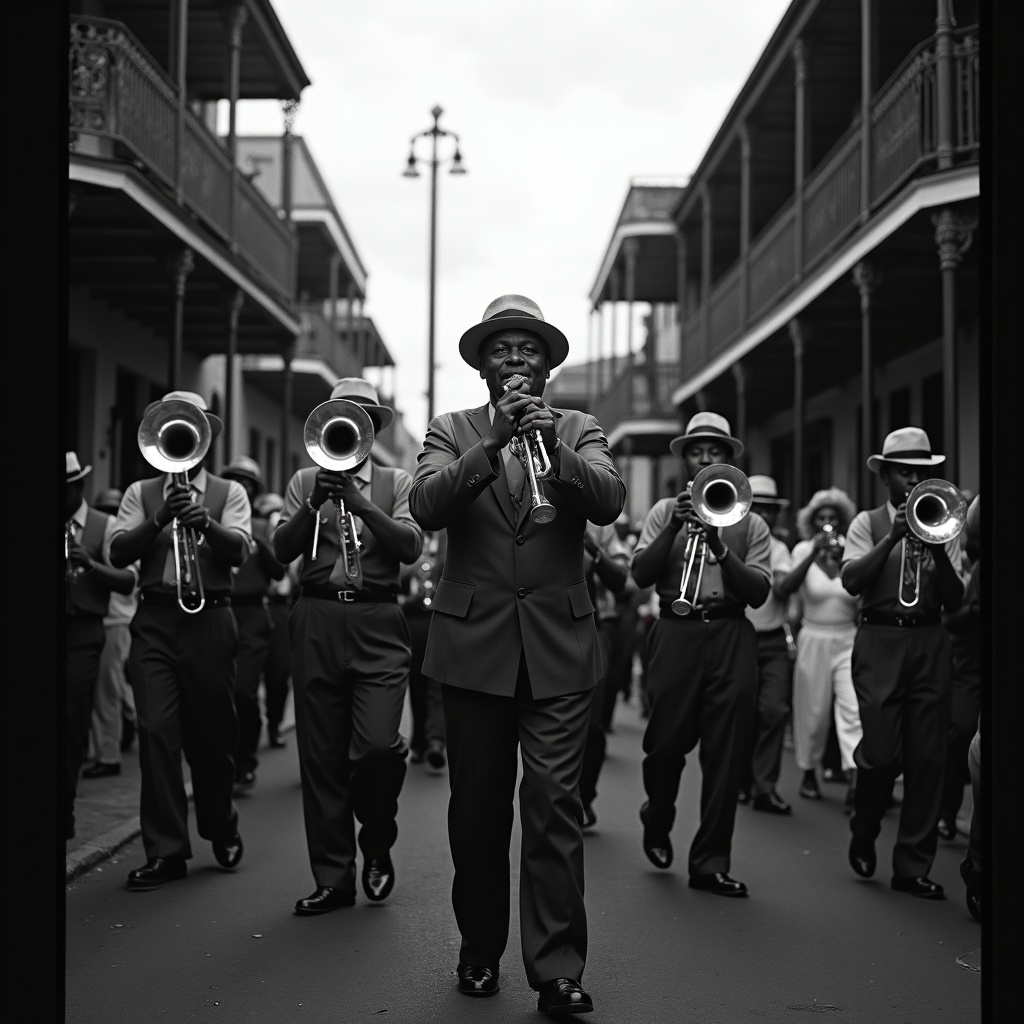
In New Orleans, when somebody dies, the brass band plays. This is known. The jazz funeral. The slow march to the cemetery. "Just a Closer Walk with Thee." Then the turn — the snare drum hits and the tempo doubles and the band starts playing "I'll Fly Away" or "When the Saints Go Marching In" and the mourning becomes a celebration and the dead are sent off with dancing instead of silence. That's the first line. The family. The band. The official procession.
The second line is everybody else. The second line is the neighborhood. The second line is the people who heard the drums from three blocks away and put down their groceries and followed the sound. Nobody invited them. Nobody sold them a ticket. They heard the frequency and they joined it. That's the second line. You don't need credentials. You don't need a membership card. You just need ears and feet and the willingness to follow the music wherever it's going.
I spent my entire life trying to explain this concept. In Detroit, I called it community. In prison, I called it solidarity. On the radio, I called it the frequency. In New Orleans, they already had a name for it. They called it the second line. The idea that the music belongs to everyone in earshot. The idea that a parade is not a performance — it is an invitation. The idea that the correct response to hearing a brass band is not to stand on the sidewalk and take a photograph but to step into the street and move.
I lived in the French Quarter. Decatur Street. I could hear music from my apartment twenty-four hours a day. Not recorded music. Live music. Brass bands on Royal Street. Piano players in the hotel lobbies. Drummers in Congo Square. A kid playing trumpet on the corner of Bourbon and St. Peter at two in the morning and the sound bouncing off the buildings and coming in through my window and I did not close the window. I never closed the window the entire twelve years I lived there.
New Orleans taught me something Detroit couldn't. Detroit taught me that music was a weapon. New Orleans taught me that music was weather. You do not aim weather at somebody. You do not organize weather. You do not manage weather. You live in it. It rains on you and you get wet and getting wet is not a problem. Getting wet is the point.
I left New Orleans in 2003. I had been there twelve years and I had learned what I came to learn. I went to Amsterdam because Amsterdam was another city that did not apologize for existing. But New Orleans stayed in me the way Detroit stayed in me. Different frequency, same principle. The principle is that music is not entertainment. Music is infrastructure. It is how a community knows itself. It is how the living talk to the dead and the dead talk back.
Every city I have lived in taught me one thing. Flint taught me anger. Detroit taught me purpose. New Orleans taught me joy. Amsterdam taught me patience. None of them could teach me all four at once. You need all four to build a radio station. You need the anger to start. The purpose to continue. The joy to keep the signal warm. The patience to wait for the people who haven't found you yet.
The second line taught me that the people are already on their way. You don't have to find them. You just have to play loud enough for them to hear you from three blocks away. Then you trust the frequency. The neighborhood handles the rest.
John Sinclair Sinclair Transmissions — TX013
See also: The Exile — Amsterdam, the years after WWOZ. The Station Never Needed Walls — radio philosophy. The Dial — the frequency in Flint. The Return — back to Detroit from exile. ICE in Our Drinks — New Orleans Carnival, same streets, same fight. The Lineup — Jazz Fest 2026, Eagles at the heritage festival, crawfish bread survives. The Rhythm — every city has a rhythm. New Orleans is slow. The rhythm is geography. The Neighbor — after Katrina the neighbors came in boats before FEMA came in trucks. Dance Floor — the only room where everybody agrees without saying a word.