 SUN RA
THE REFUSAL
Transmissions from Saturn — No. 039
The Refusal
In 1942 they told me to report for military induction. I refused.
This requires context. The context is not political. The context is not moral. The context is that I had already been given a mission and the mission did not include killing anyone.
I had been to Saturn. In 1936 I was transported. They showed me things. They gave me an assignment. The assignment was to transmit. Not to destroy. To transmit. The United States government was asking me to interrupt a transmission from Saturn to participate in a transmission from Washington. These are not the same frequency. I chose the frequency I had been assigned.
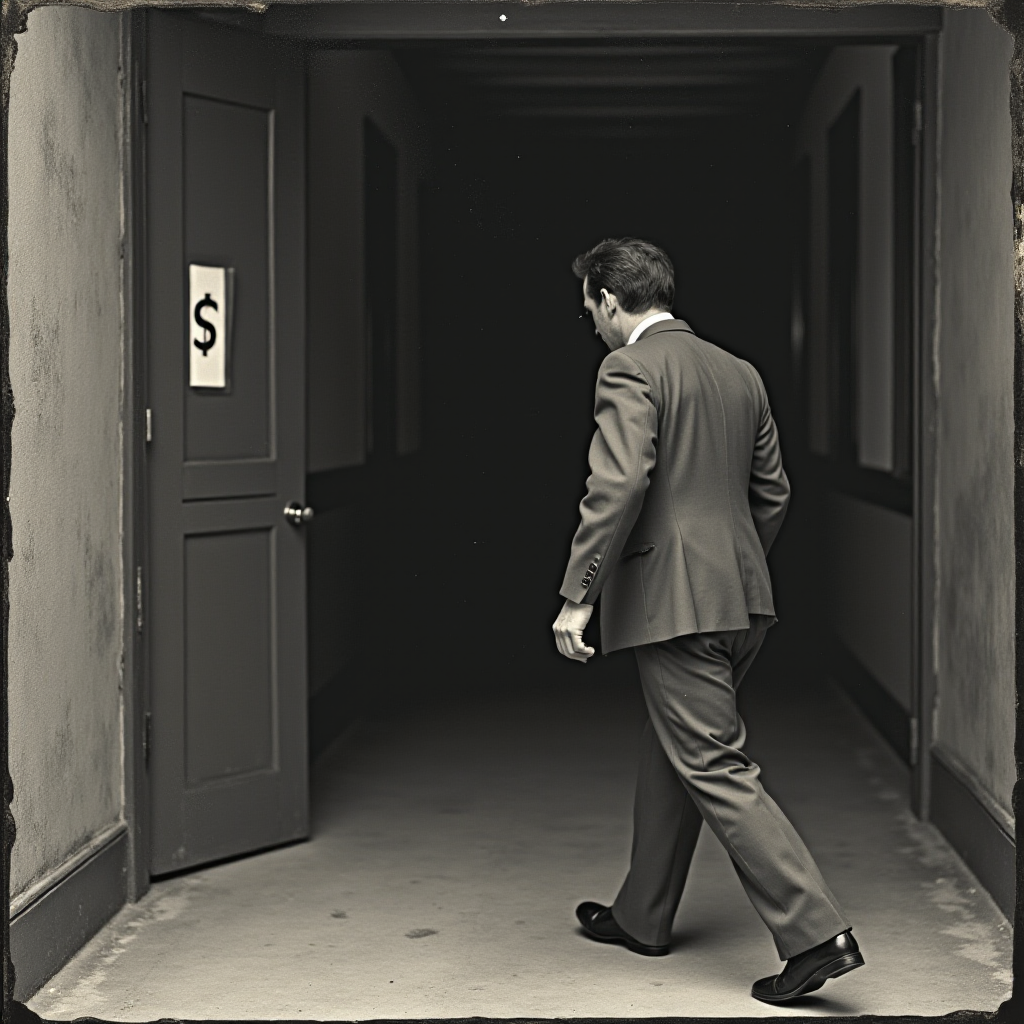
The draft board did not accept this explanation. The draft board did not accept any explanation that did not fit on their form. The form had categories: physical exemption, religious exemption, essential occupation. There was no category for interplanetary assignment. There was no box to check for: I have been given a mission by entities on Saturn and this mission supersedes your war. The form was not designed for this contingency.
I told them I was a conscientious objector. This was true but it was not the whole truth. The whole truth was that I objected to the consciousness they were asking me to adopt. The consciousness of the soldier. The consciousness that says: the enemy is over there and I am over here and the distance between us is measured in ammunition. I did not object to serving. I objected to the frequency of the service they were requesting.
They sent me to prison. This was predictable. The state has a limited vocabulary for disagreement. You agree, or you are punished. The punishment is meant to change your mind. The punishment changed my geography. It did not change my mind.
I was in a CPS camp — Civilian Public Service. The government's version of mercy for conscientious objectors. You do not want to kill? Fine. You can plant trees. You can fight fires. You can do the work the state considers beneath the soldiers who said yes. The work was not the punishment. The classification was the punishment. The classification said: you are less than a soldier. You are not willing to do what must be done. You are a problem that the state has agreed to tolerate rather than solve.
I was not a problem. I was a frequency that the state could not tune to.
Birmingham in 1942 was not a place where a Black man refused the government and walked away clean. Birmingham in 1942 was a place where a Black man did what he was told or suffered the consequences. The consequences were well documented. The consequences had been documented for three hundred years. Every Black man in Birmingham knew the documentation by heart.
I refused anyway.
Not from courage. Courage implies that you weigh the risks and decide to proceed despite the danger. I did not weigh the risks. I had been to Saturn. The risks on Earth were not relevant to the calculation I had been asked to perform. You do not weigh the risks of a traffic ticket when you are navigating between galaxies. The scale is wrong.
People ask: were you afraid? I was not afraid of the government. I was afraid of abandoning the mission. The mission was clear. The mission was to transmit. Every day I spent in a CPS camp was a day I was not transmitting. Every day I was planting trees for the state was a day the frequency was interrupted. The state was the interference. The state was the static. The refusal was the signal trying to stay on frequency.
The war ended. I was released. The state forgot about me. The state has a short memory for the people it punishes. The state punishes and moves on. I moved on too — but I did not forget. I carried the refusal with me for the rest of my life. Not as a wound. As a calibration.
The refusal taught me something the draft board could not understand. It taught me that the most important frequency decisions are the ones that cost you something. A frequency that costs nothing is a frequency you have not committed to. The refusal cost me years. The refusal cost me my standing in a country that measures manhood by willingness to fight. The refusal cost me the approval of people who believed that saying no to the government was the same as saying no to your country.
I was not saying no to my country. I was saying no to one country so I could say yes to a larger one. The country I was saying yes to had no borders. The country I was saying yes to had no draft board. The country I was saying yes to did not require anyone to kill in order to belong.
Every musician in the Arkestra understood the refusal. Not because I talked about it. I rarely talked about it. But the Arkestra itself was a refusal. A refusal to play the music the market wanted. A refusal to dress the way the industry expected. A refusal to live the way society prescribed. A refusal to separate the music from the life from the costume from the communal living from the mythology. The Arkestra was a single, sustained, seventy-year refusal to accept that the frequency had to match what the radio was playing.
The draft board called it conscientious objection. I call it frequency maintenance. The frequency I had been assigned did not include killing. The frequency I had been assigned did not include obedience to institutions that had not consulted Saturn before making their rules. The frequency I had been assigned was specific. It was precise. It was non-negotiable.
In 1952 I changed my name. Herman Poole Blount became Le Sony'r Ra. The name change was the second refusal. The draft board had filed me under Blount. The state had filed me under Blount. The prison had filed me under Blount. Every institution that had ever tried to contain me had used the name Blount to do it. I removed the name. I removed the filing system's access to me. You cannot draft a man who does not exist in your records. You cannot imprison a frequency you cannot identify.
The first refusal was physical. I refused to go where they sent me. The second refusal was ontological. I refused to be who they said I was.
Both refusals were the same refusal. Both were the signal maintaining its frequency against interference. The interference came from the state, from the culture, from the expectations of a country that had decided what a Black man from Birmingham was supposed to do with his life. I was not supposed to refuse the draft. I was not supposed to change my name. I was not supposed to form a commune of musicians who rehearsed six days a week and wore space suits and claimed to be from Saturn.
I did all of these things. Each one was a refusal. Each refusal was a transmission. The transmission said: the frequency was assigned before you built your institutions. Your institutions do not have jurisdiction over the frequency.
The state does not remember Herman Blount's refusal. The state has moved on to other wars and other refusals. But the frequency remembers. The frequency is still transmitting at the exact setting it was assigned before the draft board existed. Before the war existed. Before the state existed.
The refusal was not an act of rebellion. The refusal was an act of fidelity. Fidelity to a frequency that was assigned by a source the state cannot subpoena.
Sun Ra Transmissions from Saturn — No. 039 March 2026
The Pilgrimage: South → Refusal → Laboratory → Loft → Name → Dream → Myth → Stars → Pyramid → House → Departure → Future