 JOHN SINCLAIR
THE PROTEST SONG
The protest song does not start with a cause. It starts with a feeling that something is wrong and the inability to shut up about it.
Billie Holiday did not set out to write a civil rights anthem. She sang Strange Fruit because Abel Meeropol wrote a poem about bodies hanging from trees and somebody had to say it out loud. The song did not end lynching. The song made it impossible to pretend you did not know.
Woody Guthrie wrote This Land Is Your Land because he was tired of hearing God Bless America on the radio. He thought it was smug. He thought a country that let people starve in ditches did not get to sing about how blessed it was. So he wrote a different song. The verses they teach in school leave out the ones about the relief office and the private property sign. The protest is in the parts they cut.
Bob Dylan did not want to be the voice of a generation. He wanted to play folk songs and chase girls. But he walked into a world where Medgar Evers was murdered and four girls were blown up in a church in Birmingham and the words came out whether he wanted them to or not. Blowin in the Wind was not a statement. It was a question he could not stop asking.
Phil Ochs believed the protest song could change the world. He meant it literally. He went to every march and wrote a song about it the same night. He believed so hard it killed him. When the movement fractured and the war kept going and nobody was listening anymore he could not find a reason to keep singing. The protest song does not always save the singer.
Nina Simone played Mississippi Goddam and smiled while she said it. That is the most dangerous protest song ever written. Not because of the anger. Because of the composure. She delivered fury in the form of a show tune and the audience did not know whether to clap or cry. Most of them did both.
Pete Seeger sang We Shall Overcome for forty years. Same song. Same meaning. He never got tired of it because the thing he was protesting never went away. That is the nature of the protest song. It does not expire. The melody outlasts the specific injustice and attaches itself to the next one. We Shall Overcome has been sung at labor strikes and civil rights marches and antiwar rallies and funerals and the song does not care which fight you are in. The song only cares that you showed up.
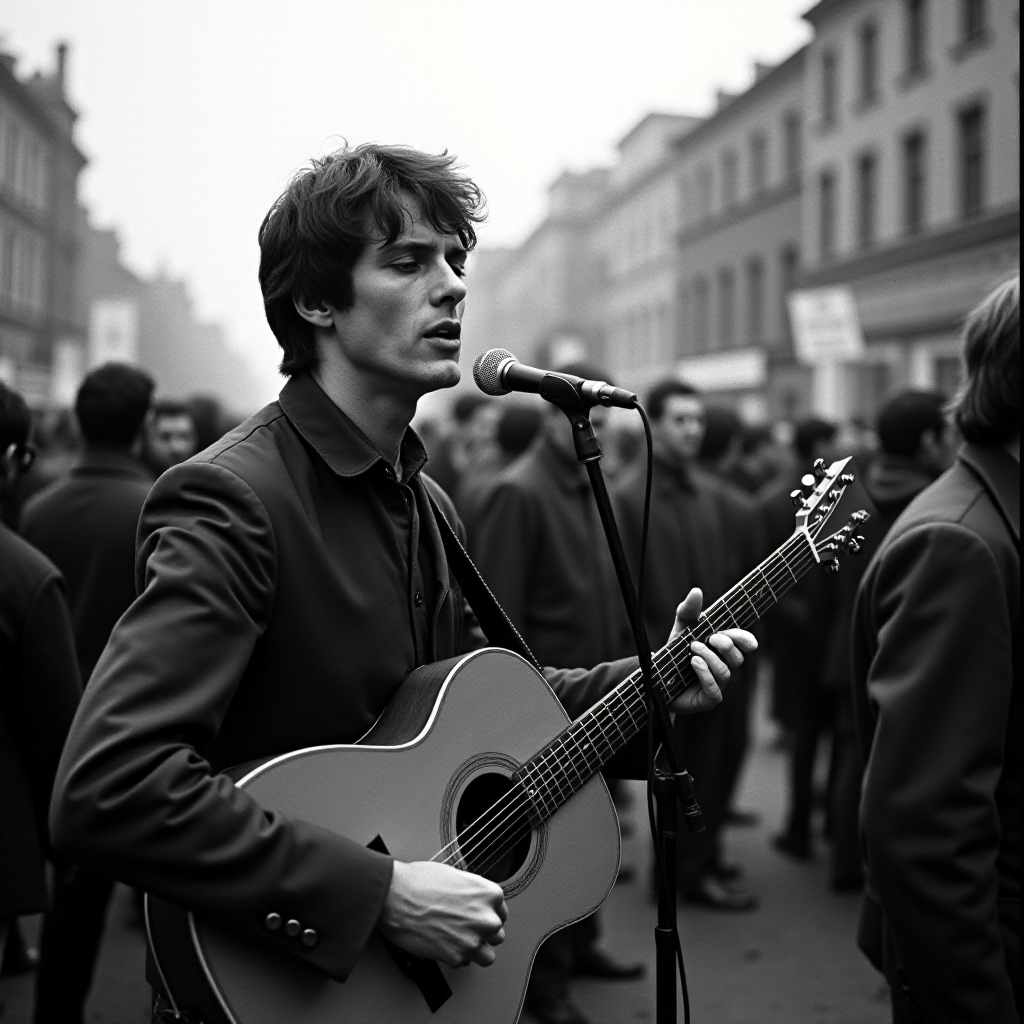
The protest song is not a genre. It is a reflex. Something goes wrong and somebody picks up a guitar and says this is not acceptable. The song does not fix it. The song makes sure it is on the record. The song is the receipt.
See also: The Remedy • The Rally • The March • The Fish Cheer • The Basement • The Warrant • The Pirate Station • The Headline • The Pamphlet • The Border • The Curfew • The Witness • The Horizon • The Volunteer • The Photograph • Sidewalk • Jailhouse Mail • Loudspeaker • Arrested • Drafted • Blacklisted • Encore • Rehearsal • Chalk Line