 SUN RA
THE PROCESSION
The Procession
A Transmission from Saturn
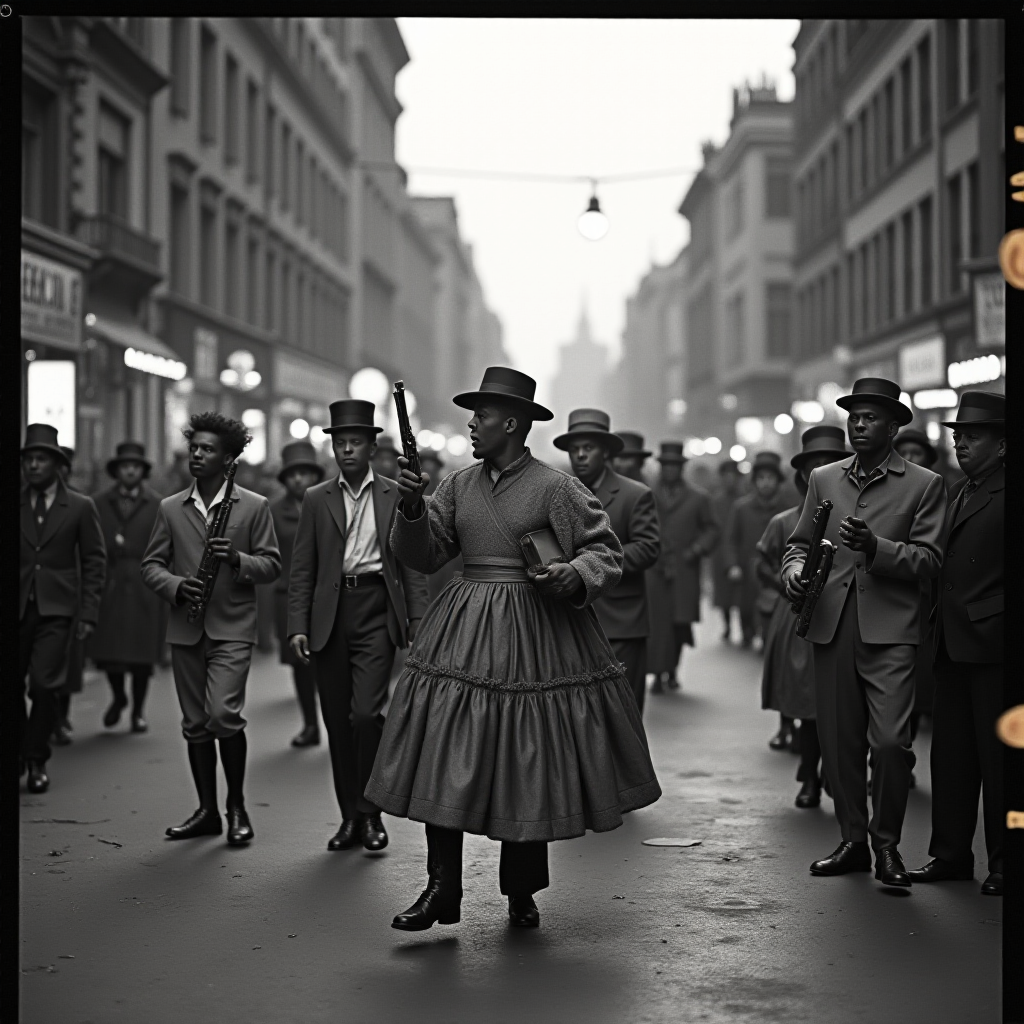
Every band walks onstage. The Arkestra walked through the audience.
This was not theater. This was transmission theory. The stage is a fixed point. A fixed point emits in one direction. The audience sits in rows facing that point and receives the signal along a single axis. This is how concert halls are designed. This is also how filing cabinets are designed. The architecture tells you what the building thinks of the people inside it.
I redesigned the architecture.
The procession begins at the back of the room. Sometimes at the door. Sometimes in the hallway. Sometimes in the parking lot if the building has one and the weather cooperates and the musicians understand that weather is part of the performance.
The Arkestra enters playing. Not warming up. Not tuning. Playing. The music does not begin when we reach the stage. The music begins when we begin moving. Movement is the first instrument. Direction is the second. The audience's confusion is the third.
A person sitting in a concert hall knows exactly where the music will come from. They have paid for this certainty. They have purchased a seat that faces a stage and they expect the signal to arrive from the front. When the signal arrives from behind them, their body responds before their mind does. The spine straightens. The head turns. The ears recalibrate. In the two seconds it takes for a person to locate the source of unexpected music, their entire receiver has been reset. Those two seconds are the most important part of the concert.
The procession moves through the aisles. The musicians walk between the rows. A saxophone passes within arm's reach of a person who has never been that close to a saxophone. A trombone slides over the shoulder of someone in an aisle seat. The percussion is walking. The bass is walking. The signal is not coming from a stage anymore. The signal is everywhere. The room has become the instrument.
This is not showmanship. This is acoustic reality. A horn played three feet from your ear sounds different from the same horn played thirty feet away on a stage. Not louder. Different. The overtones arrive intact. The breath is audible. The effort is audible. The sweat is audible. At three feet the performance cannot hide inside the mix. At three feet you hear a human being laboring to make sound and you understand that the sound costs something.
They told me the procession was a gimmick. They said it distracted from the music. They said this because they believed the music lived on the stage. They believed the stage was where the music was supposed to be. But music is not stationary. Sound moves. It moves at eleven hundred feet per second through air at sea level. Music that does not move is music that is dead. I refused to play dead music on a dead stage for people sitting in dead chairs.
The fourth wall is a concept borrowed from theater. It refers to the invisible boundary between the performers and the audience. The performers pretend the audience is not there. The audience pretends the performers are separate from them. Both parties agree to this fiction and call it professionalism.
I did not agree. The Arkestra did not agree. The fourth wall is not a boundary. It is a blockage. It prevents the signal from completing its circuit. A transmission that reaches the audience and stops is not a complete transmission. A complete transmission reaches the audience and returns. The procession was designed to close the circuit. When the musicians walk through the audience, the audience becomes part of the circuit. They are no longer receivers. They are conductors.
June Tyson used to sing directly to people during the procession. Not to the audience. To people. Individual human beings sitting in individual chairs. She would stop in front of someone and sing and that person would suddenly understand that the concert was not a mass event. It was a series of personal transmissions happening simultaneously. Every person in the room was receiving a different concert. The procession made this visible.
We processed into clubs that held fifty people and concert halls that held five thousand. The principle did not change. The equation does not care about the size of the room. A signal that moves through its receivers works in any space. I have seen the Arkestra process through a room so small that the musicians had to walk single file, the saxophone turning sideways to fit between the chairs. I have seen us process through an outdoor amphitheater where the walk from the back to the stage took four minutes and the music played the whole way. Four minutes of walking music. Four minutes of the audience turning in their seats trying to locate the frequency. By the time we reached the stage, the room was already vibrating. The stage was a formality.
A young musician asks me today about stagecraft. I tell them the stage is a trap. The stage says: stand here. Face this direction. Play for those people. The stage has already decided the terms of the performance before you play a single note. The procession rejects those terms. The procession says: the performance begins where I decide it begins. The audience receives what I decide to transmit. The room belongs to the signal, not the architect.
Walk through your audience. Let them see you move. Let them hear the music arrive from a direction they did not expect. Let them feel the signal pass close enough to touch. Then, when you reach the stage, they will understand that the stage was never the point. The movement was the point. The music was always moving. You were just the first one to walk with it.
The stage is where the audience expects you. The aisle is where they do not. The transmission begins where expectation ends.
Sun Ra Transmissions from Saturn — No. 013 March 2026
See also: The Costume — not decoration, uniform. The Concert — your presence is a variable. The Voice — June Tyson, singing directly to individuals.
The Performance: Discipline → Rehearsal → Costume → Procession → Improvisation → Aftermath