 JOHN SINCLAIR
THE PHOTOGRAPHER
The Photographer
John Sinclair
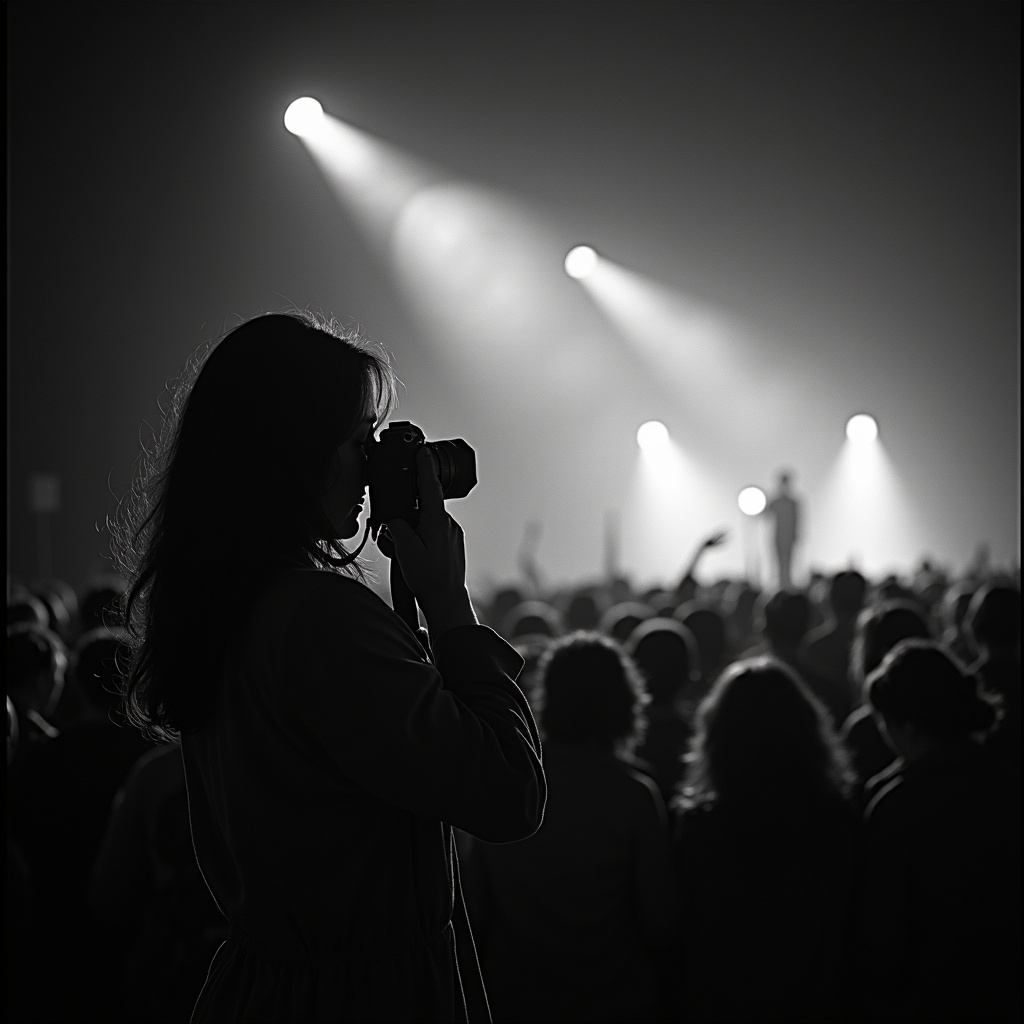
Everybody asks about the music. Nobody asks about the photographs. But without the photographs you would not know what the music looked like. Without the photographs you would not know what any of it looked like. The commune. The concerts. The arrests. The party. The people standing in front of buildings that do not exist anymore doing things that could get them arrested. You know what all of that looked like because one woman had a camera and knew when to press the shutter.
Leni Sinclair. Magdalene Arndt from East Germany. She escaped from East Berlin in 1959 when escaping from East Berlin was something that could kill you. She came to America. She came to Michigan. She found the music and she found me and she picked up a camera and she never put it down.
I have talked about the MC5 in these transmissions. I have talked about the Grande Ballroom and the commune and the White Panther Party and the festival. I have described what it sounded like and what it felt like. But the reason you can picture any of it is because Leni was standing in the room with a camera.
The MC5 onstage at the Grande. Rob Tyner with the Afro and the microphone. Wayne Kramer with the guitar. The audience pushed up against the stage. You have seen those photographs. You have seen them in books and documentaries and on the internet. Leni took them. She was the one standing in the right place at the right time with the right eye and the right finger on the shutter.
That is not luck. That is discipline. A photographer who documents a revolution has to have the discipline to keep shooting when everyone else is either making history or running from it. Leni was making history. She was making it one frame at a time.
She photographed everything. Not just the concerts. The daily life. The commune on Hill Street — people cooking, people reading, people arguing, people building a mimeograph machine, people raising children in a house full of revolutionaries. Those photographs are the proof that the commune was not just an idea. It was a kitchen. It was a hallway. It was laundry on a line. It was a baby on someone's hip while someone else was printing leaflets.
The revolution needs its music and its poetry and its ten-point program. But the revolution also needs someone who can show you what the kitchen looked like at three in the afternoon on a Tuesday. Because that is where the revolution actually lives. Not on the stage. In the kitchen. And Leni knew that.
She was not a spectator. I want to be clear about that. Leni was not standing outside looking in. She was inside looking out. She was part of the commune. She was part of the organization. She was doing the work — political work, organizational work, the daily work of keeping a community alive. And she was also documenting it. Both at the same time.
That is the hardest thing. To be inside the thing and also to see the thing. To be living the revolution and also recording it. Most people can do one or the other. Leni did both. She was in the room and she could see the room. The camera was not a wall between her and the life. The camera was how she participated.
I think about what we would have lost without those photographs. Not just the images. The proof. The evidence that this happened. That this was real. That there were real people in real rooms making real decisions about how to live differently. Without Leni's photographs, the MC5 is a rumor. The commune is a story someone told you. The Grande Ballroom is a name on a building that is not there anymore.
With the photographs, all of it is true. You can see it. You can see Rob Tyner's sweat. You can see the crowd. You can see the leaflets and the posters and the food on the table. You can see that this was not abstract. This was physical. This was bodies in space making choices.
A revolution needs a lot of things. It needs organizers and musicians and poets and lawyers. It needs someone who can make a speech and someone who can cook a meal for thirty people and someone who can fix the mimeograph machine when it breaks at two in the morning. But it also needs a witness. Someone who is there not just to participate but to record. Not for the newspapers. Not for the police. For the future. For the people who will come later and ask: did this really happen? Was this real?
Leni was that witness. Every photograph was a piece of evidence submitted to the court of the future. Here. This happened. These people existed. This room existed. This music existed. This moment when everything was possible — it existed. I have the proof. I was there. I had a camera. I pressed the shutter.
She escaped from East Germany. I want you to think about that for a moment. She grew up in a country where the state controlled everything — what you could say, where you could go, what you could photograph. She escaped. She came to America. And then she spent the next twenty years photographing people who were trying to change America. People who were getting arrested. People who were being surveilled by the FBI. She had escaped one surveillance state and walked into another one and she kept shooting.
That takes a particular kind of courage. Not the courage of the person on the stage. The courage of the person with the camera. The person who knows that the photograph is the thing that will outlast the speech and the song and the trial and the prison sentence. The person who knows that the image is what survives.
I am talking about Leni now because I have spent twenty-five transmissions talking about myself and the music and the politics and the prison and the radio and the weed and I have not once mentioned the person who made sure there was a visual record of any of it. That is the mistake we always make. We talk about the people who made the noise and we forget the person who made the proof.
The MC5 made noise. I made noise. The White Panther Party made noise. Leni made photographs. And sixty years later, the noise is gone. It lives in recordings and in memories and in these transmissions. But the photographs are still there. Still sharp. Still true. Still showing you exactly what the room looked like at the exact moment when the frequency changed everything.
That's the transmission.
See also: The Five — the MC5, the band she photographed. The Commune — Trans-Love Energies, where she lived and worked. The Archive — her photographs in temperature-controlled storage. The City — Detroit, the city she photographed. The Harp — Alice Coltrane. Leni photographed her too. The Biography — forty years of negatives. Biography without narrative.