 DAVID PEEL
The Payphone
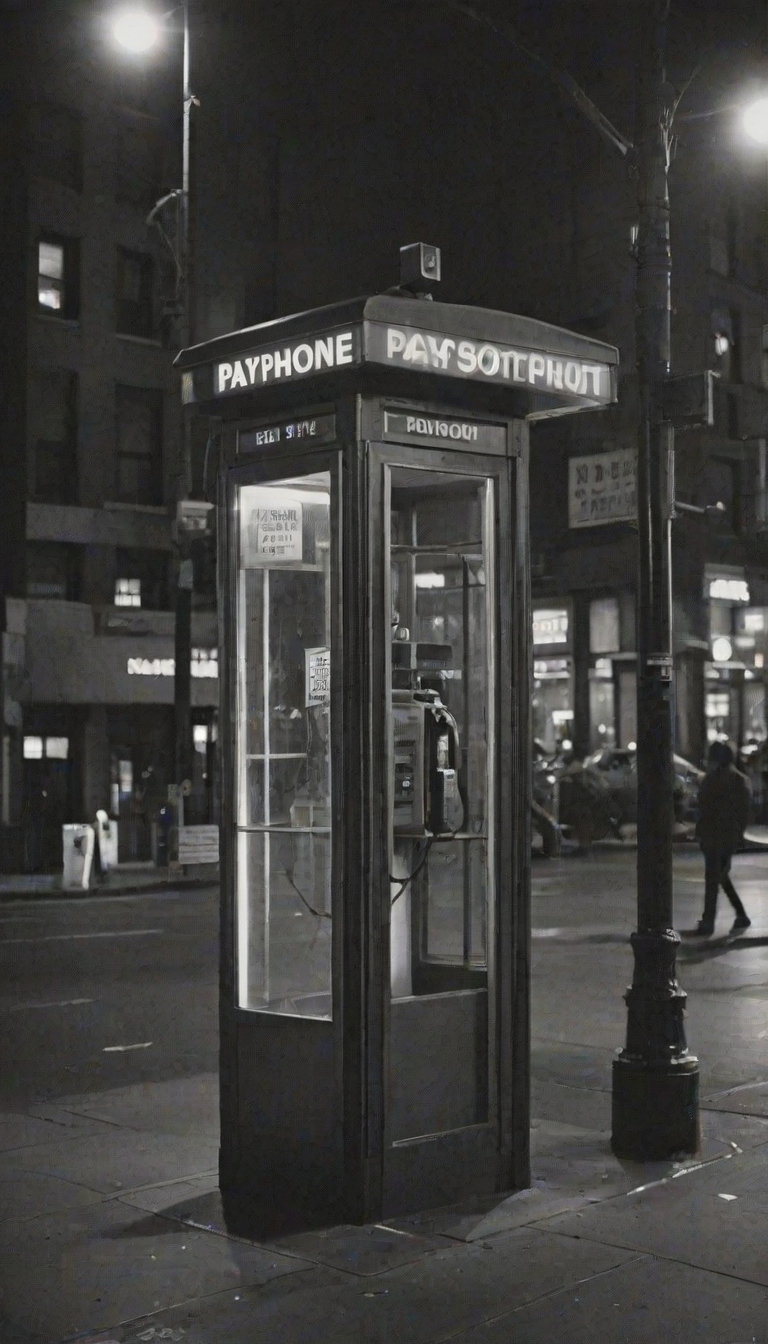
The payphone was a confession booth for people who did not go to church. The booth was glass and metal and the glass was cracked and the metal was scratched and inside the booth a person stood with a receiver pressed to their ear telling somebody something they could not say in the apartment because the walls were too thin and the street was too loud so the payphone was the only place left where a private conversation could happen in public.
The payphone took quarters. A quarter bought three minutes. Three minutes was enough to say I love you or I am leaving or the baby is coming or the rent is late or I got the job or I lost the job or I am sorry. Three minutes was not enough to explain why. The why took more quarters than anybody had. The payphone was designed for conclusions not explanations. The payphone was a telegram with a dial tone.
The payphone rang and nobody answered. The payphone rang on the corner of Rivington and Essex at two in the morning and the ring echoed off the buildings and the buildings did not answer because the buildings did not have hands. The ring was for somebody who was supposed to be standing at that payphone at that hour waiting for a call from somebody who was standing at another payphone somewhere else in the city and the coordination required to make two people stand at two payphones at the same time in the same city was a miracle that happened every night and nobody called it a miracle because nobody knew what else to call it.
The payphone disappeared in the 2000s. The city removed them the way the city removed the squeegee men. Quietly. Without ceremony. One day the payphone was on the corner and the next day the corner had a hole where the payphone used to be and the hole was filled with concrete and the concrete was the city's way of saying this conversation is over. The cell phone had made the payphone unnecessary and the unnecessary is always removed.
I used the payphone to call my mother every Sunday. My mother lived in Brooklyn and I lived on the Lower East Side and the distance between Brooklyn and the Lower East Side was one quarter and three minutes. I told her I was eating. She told me to eat more. I told her the guitar was going well. She told me to get a real job. Three minutes. Every Sunday. The same conversation. The payphone did not judge the conversation. The payphone held the conversation the way a hand holds a glass. Without opinion. The glass could be full or empty and the hand does not care. The payphone held every conversation the same way. The I love you and the I am leaving and the I am sorry. All worth one quarter. All worth three minutes. All held by the same cracked glass and scratched metal on the corner of Rivington and Essex.