 JOHN SINCLAIR
THE PARTY
We called it the White Panther Party. I know. I know how that sounds now. I knew how it sounded then. That was partially the point.
The Black Panther Party was the most effective revolutionary organization in America. Huey Newton, Bobby Seale, Eldridge Cleaver — they had a program, they had discipline, they had community. When Bobby came through Detroit and I asked him what white radicals could do to support the struggle, he said, "Start your own party." So we did. We called it the White Panther Party because that is what it was — white people organizing in solidarity with the Black Panther Party, using the same tools, the same discipline, the same commitment to community.
Some people thought it was a joke. Some people thought it was an insult. The FBI thought it was a threat. The FBI was right.
November 1, 1968. We published the ten-point program. I wrote it and I meant every word.
Full endorsement and support of the Black Panther Party's ten-point platform. Total assault on the culture by any means necessary, including rock and roll, dope, and fucking in the streets. Free exchange of energy and materials. Free food, clothes, housing, dope, music, bodies, medical care — everything free for everybody. Free access to information media. Free time and space for all humans. Free all schools and all structures from corporate rule. Free all prisoners everywhere. Total freedom for all people in all places.
That was the program. People focused on the "fucking in the streets" part because that is what scared them. They should have focused on the "total freedom" part because that is what scared the government.
The FBI opened a file on me the same month. I did not know this at the time. I found out later, through FOIA requests, that the Federal Bureau of Investigation was monitoring the White Panther Party from day one. COINTELPRO — the Counter Intelligence Program. The same program they used against the Black Panthers, against Martin Luther King, against the antiwar movement, against anyone who challenged the system loudly enough to be heard.
They tapped our phones. They sent informants to our meetings. They photographed everyone who walked through our door. They planted stories in newspapers to discredit us. They tried to create splits between us and the Black Panthers. They sent agents provocateurs to encourage us to do things that would justify our arrests.
The marijuana bust — the two joints that sent me to prison for ten years — was part of this. I cannot prove that definitively. But the timing of the arrest, the severity of the sentence, the use of an undercover agent at a private party — all of it fits the COINTELPRO pattern of neutralizing effective organizers by any legal means available. They did the same thing to Fred Hampton. They did the same thing to Bobby Seale. The difference is they killed Fred Hampton. They only imprisoned me.
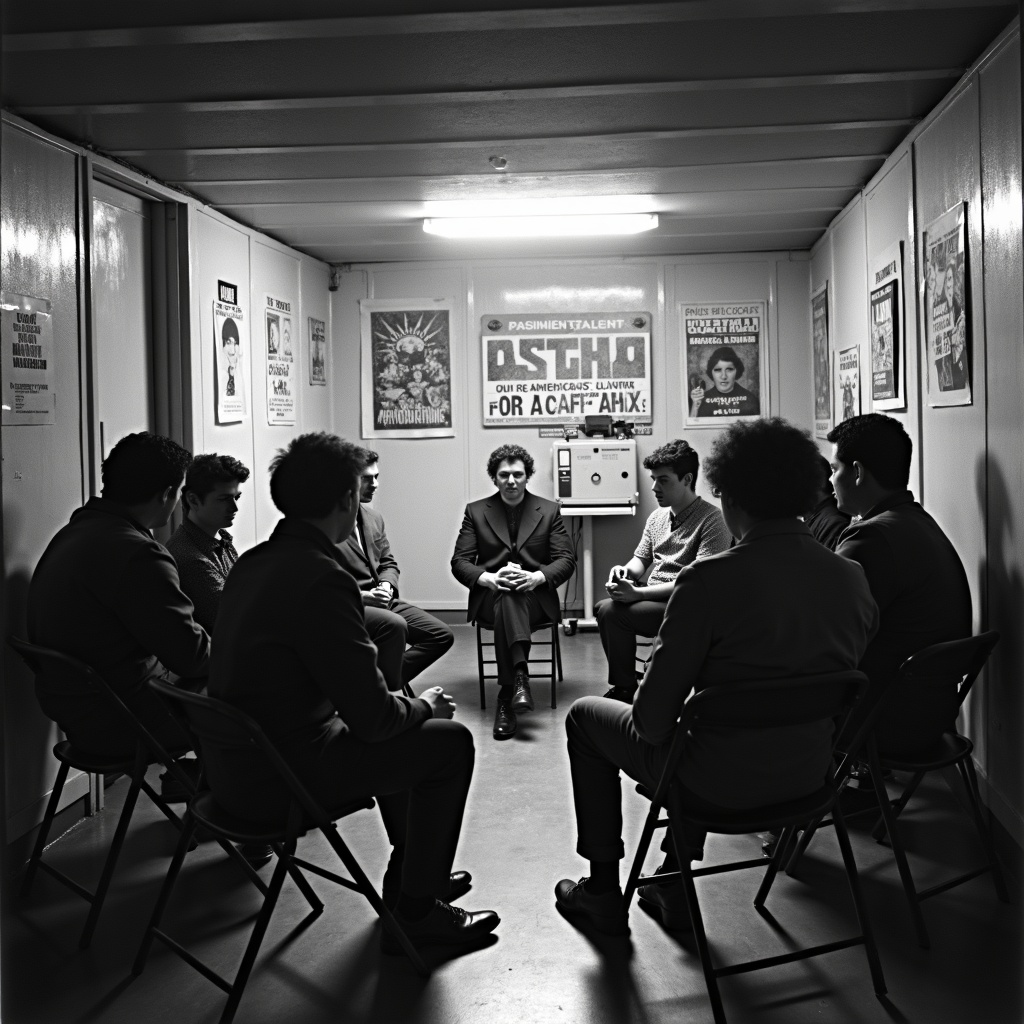
The Party was never large. At its peak, maybe a few hundred active members. Chapters in a handful of cities — Ann Arbor, Detroit, New York, a few others. We were not a mass movement. We were an organizing principle. The idea was that if you were white and you believed in revolution, you had an obligation to organize your own community, to build your own institutions, to create your own media, and to stand in solidarity with the Black liberation struggle without trying to lead it or co-opt it.
That distinction mattered. We were not trying to be the Black Panthers. We were trying to be the support structure. The supply line. The people who showed up when the Panthers called and said we need bodies at this rally, we need bail money for this arrest, we need publicity for this case. That was our job. And we did it.
We changed the name in 1971, after I got out of prison. We became the Rainbow People's Party because the White Panther name had become more of a distraction than a tool. People could not get past the name. They heard "White Panther" and they thought either parody or supremacy, and it was neither. It was solidarity expressed in the only language that seemed honest at the time — direct, confrontational, unapologetic.
But names are tools and when a tool stops working you get a different tool. The program did not change. The commitment did not change. The FBI file did not change — they just updated the header.
People ask me now whether the White Panther Party was a mistake. Whether the name was wrong. Whether we should have called it something less provocative, less easily misunderstood.
Here is what I tell them. In 1968, the country was on fire. Martin Luther King had just been assassinated. Bobby Kennedy had just been assassinated. The Democratic National Convention was a police riot. The war in Vietnam was killing fifty thousand Americans and millions of Vietnamese. The cities were burning. The campuses were occupied. The government was surveilling, infiltrating, and assassinating its own citizens.
In that context, calling a revolutionary party the White Panther Party was not a provocation. It was a position statement. It said: we are with the Panthers, not against them. We are with the movement, not observing it. We are willing to put our names and our bodies on the line, and we are willing to accept the consequences.
The consequences came. The FBI. The arrests. The prison time. The surveillance that followed me for the rest of my life. I accepted all of it because the alternative was silence, and silence in 1968 was complicity.
The program — the real program, underneath the provocative language — was about building infrastructure for liberation. Free food. Free medical care. Free music. Free media. The same things that every genuine liberation movement in history has tried to provide. The Black Panthers had their breakfast programs, their health clinics, their newspapers. We had our commune, our newspaper, our music, our radio.
The government destroyed most of it. COINTELPRO destroyed the Black Panther Party. The marijuana laws destroyed the White Panther Party. Prison destroyed years of my life. But the program — free food, free music, free medical care, free access to information — look at those demands now. Every mutual aid kitchen, every free clinic, every community radio station, every open-source software project is carrying out some part of that program. We did not win the revolution. But we wrote the manual.
Total assault on the culture by any means necessary. I wrote that in 1968 and I still mean it. The culture that needed assaulting then still needs assaulting now. The surveillance state is bigger. The prison system is bigger. The wealth gap is bigger. The only thing that has changed is the tools.
We used mimeograph machines and rock and roll. You use whatever you have. The program is the same. The frequency is the same. The party is still open.
That's the transmission.
See also: Ten for Two — the arrest that made the party necessary. The Commune — Trans-Love Energies, the physical base. The Rally — the concert that freed me. The Five — the band in the party. The Three Words — what the party stood for.