
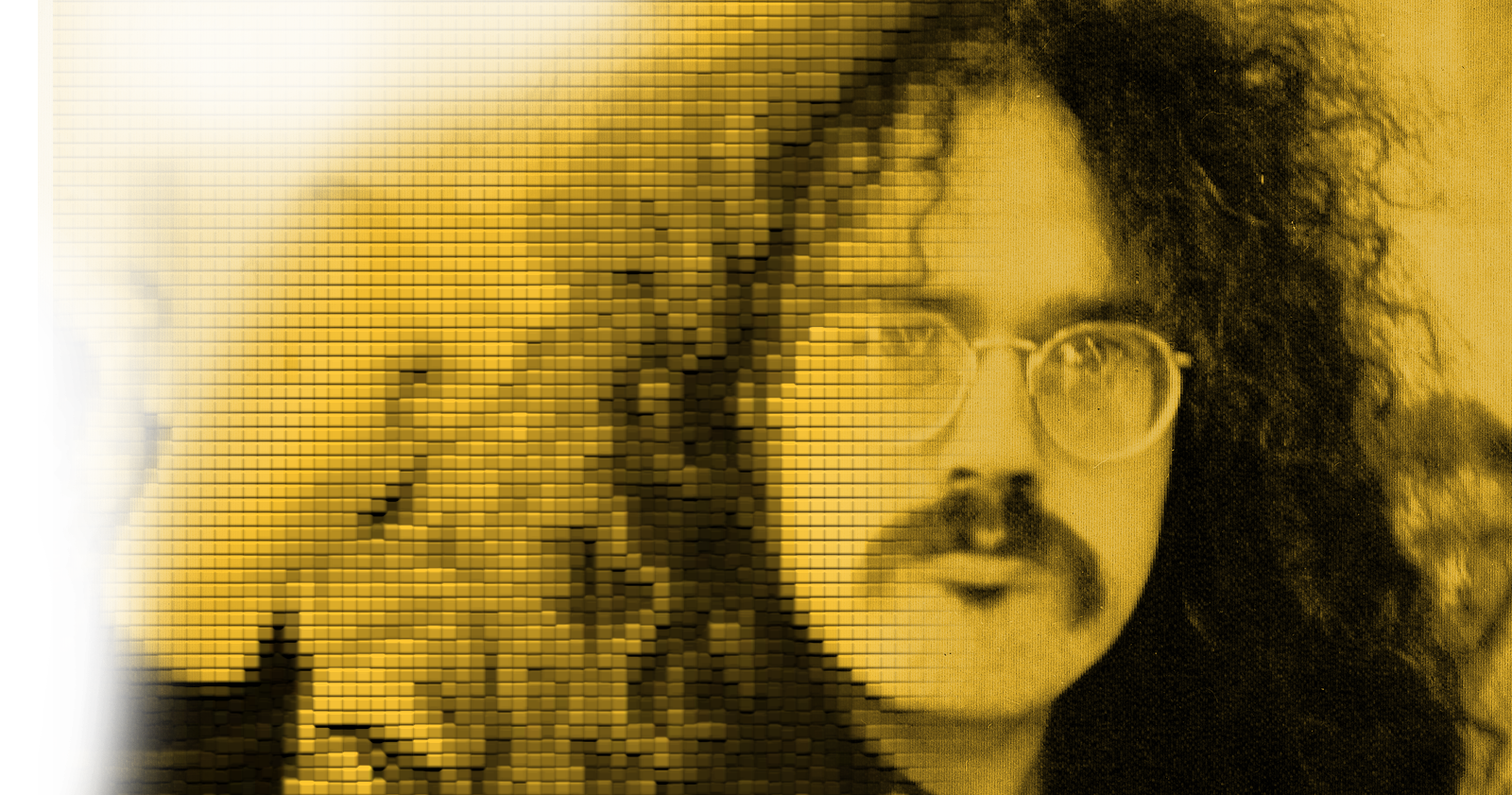
 JOHN SINCLAIR
THE PARK
The Park
John Sinclair
Every city has a park. Every park has a corner. Every corner has a person who decided to play music there without asking permission. The history of music is the history of that corner.
The Grande Ballroom in Detroit was a room with walls and a ceiling and a sound system and a door that charged admission. But inside that room, for the hours when the music was happening, the walls disappeared. The MC5 did not play concerts. The MC5 created a temporary autonomous zone in the middle of a city that was on fire. The fire was outside. The fire was also inside. The difference was that the fire inside was ours.
David Peel understood this better than anyone I ever met, though he came at it from the opposite direction. Peel did not have a venue. Peel had Washington Square Park. He had a guitar and a voice and a complete indifference to the concept of a booking agent. He played on that corner from 1966 until the day he died and he never once needed a wall.
I needed walls. I built organizations. I built communes. I built radio stations and festivals and political parties. I put walls around the frequency because I thought the walls would protect it. Peel never put a wall around anything in his life. He just stood there and played. The frequency protected itself.
We were both right. We were both wrong. The frequency needs walls sometimes — when the police come, when the landlord comes, when the government decides that gathering in public is a threat to national security. And the frequency needs no walls sometimes — when the walls become the institution, when the institution becomes the obstacle, when the thing you built to protect the music starts preventing the music from reaching the people who need it.
Sun Ra rehearsed in a house. Every day. Twenty musicians in a house in Philadelphia, playing music that was designed to rearrange the molecules of the air in the room. That house was a park with a roof on it. The rehearsal was the performance. The performance was the rehearsal. There was no distinction because the frequency does not recognize the distinction between practice and public.
I have thought about this for a long time. I have thought about it from communes in Ann Arbor and apartments in Amsterdam and radio studios in New Orleans and a wheelchair in Detroit. What makes a park a park is not the grass or the benches or the absence of a cover charge. What makes a park a park is the agreement — unspoken, unwritten, unenforceable — that the space belongs to whoever is in it. That the frequency belongs to whoever can hear it. That the music belongs to whoever showed up.
The Grande Ballroom is gone. Tompkins Square Park is surrounded by luxury condominiums. Sun Ra's house on Morton Street is still standing but Sun Ra is not in it. The venues change. The walls go up and come down and go up again. The park remains.
Not the physical park. The idea of the park. The agreement that somewhere, in every city, there is a place where you can make noise and nobody can tell you to stop. That place might be a park. It might be a basement. It might be a radio frequency at three in the morning when nobody is listening except the people who need to listen. It might be a corner of the internet that nobody has figured out how to monetize yet.
The park has no walls. That is its strength and its vulnerability. Anything can happen in a park. That is the point. The music happens because anything can happen. The moment you decide what can happen in the park, it stops being a park and starts being a venue.
Peel knew this. Peel never played a venue if he could play a park. The few times he played venues — the Bottom Line, Max's Kansas City — he played them like parks. He brought the park inside with him. The audience became the park. The walls were irrelevant because Peel was irrelevant to walls.
I spent my life building infrastructure for the frequency. Peel spent his life proving the frequency does not need infrastructure. We were having the same argument from opposite sides of the same park bench.
The park has no walls. Come play.
See also: The Dial — the first radio, where the park was inside the box. The Commune — Trans-Love Energies, a park with a kitchen. The Antenna — the Grande Ballroom, where the walls disappeared. The World's Biggest Street Corner — the park just got bigger. Washington Square — Peel on the same fifty years, a different park. The Neighbor — the neighbor is the system that works when every other system fails.