
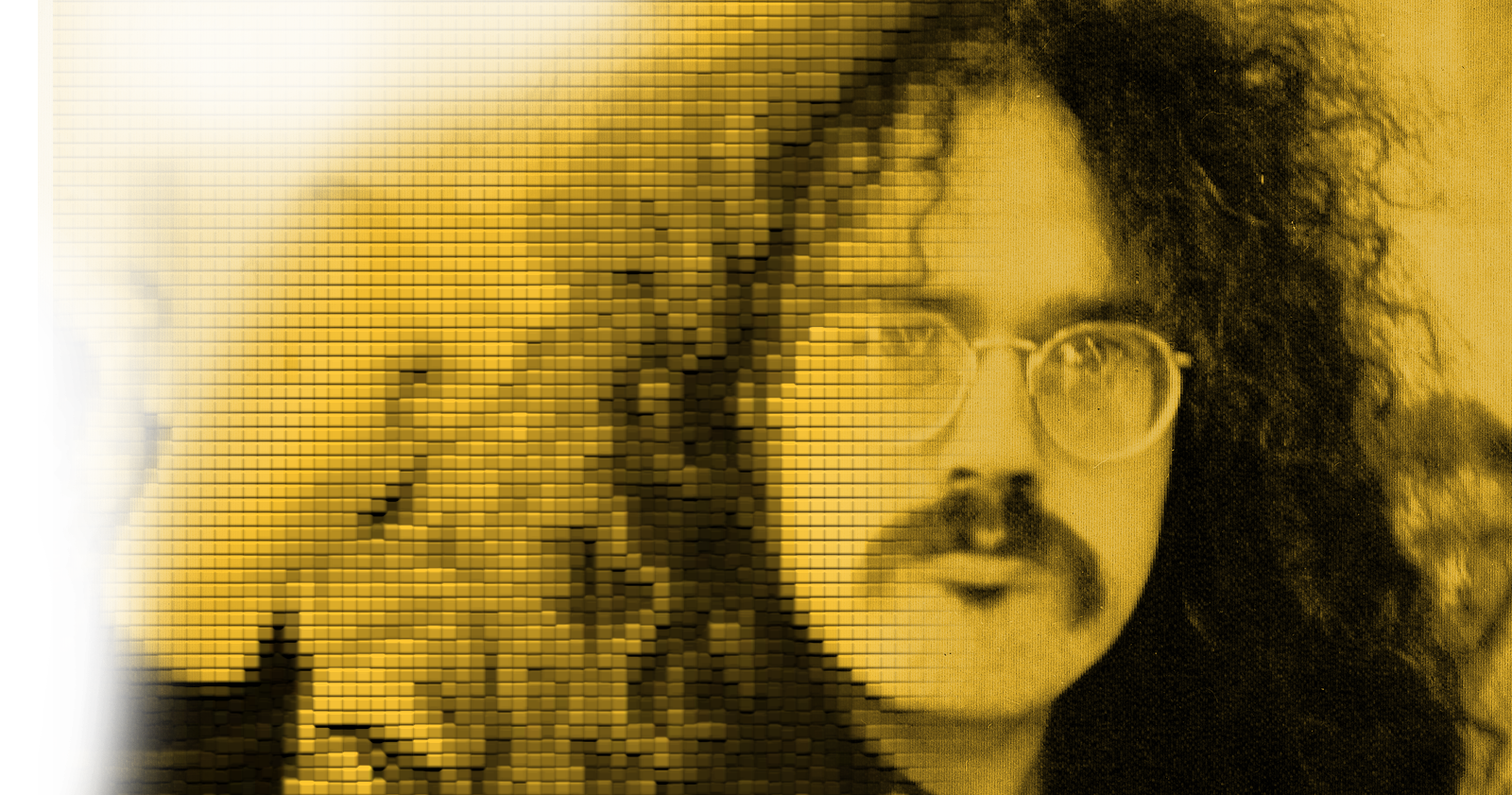
 JOHN SINCLAIR
THE PARDON
The Pardon
John Sinclair
In October 2022 the President of the United States pardoned everyone who had been convicted of simple possession of marijuana under federal law. Six thousand five hundred and fifty-seven people. He signed a piece of paper and six thousand five hundred and fifty-seven criminal records were supposed to go away. He expanded it in December 2023. More names. More paper. More pardons.
I was already dead by then. I died in April 2024. But I want to talk about what happened next because what happened next is what always happens next.
In September 2025 the new administration's Department of Justice sent an internal email to every federal prosecutor in the country rescinding the policy. The pardons stayed on paper but the policy of not prosecuting marijuana possession was gone. They directed that charges be brought for personal use and possession. They gave the pardon. Then they took it back.
That is the history of marijuana in America in two sentences. They gave the pardon. Then they took it back.
I went to prison in 1969 for two joints. Not two pounds. Not two kilograms. Two hand-rolled joints of marijuana. Judge Robert Colombo gave me nine and a half to ten years in Jackson State Prison. John Lennon played a concert to get me out. The Michigan Supreme Court declared the marijuana laws unconstitutional because of my case. I spent two years and eight months inside.
Nobody pardoned me. Nobody signed a piece of paper. A court ruled that the law itself was wrong. That is different from a pardon. A pardon says: you did the thing but we forgive you. A court ruling says: the thing was never a crime. I did not want forgiveness. I wanted the law to admit it was wrong.
Here is what a pardon is. A pardon is the system telling you that the system made a mistake but the system is not going to change. A pardon says: we will forgive this specific instance of injustice but we will keep the machine that produced the injustice running. A pardon is an apology from a system that does not intend to stop doing the thing it is apologizing for.
And when they can take the pardon back — when one president signs the paper and the next president's people send an email undoing it — then the pardon was never real. It was a gesture. A gesture is not justice. A gesture is what you do instead of justice when justice is too expensive.
In December 2025 the same president who took back the pardons signed an executive order directing that marijuana be moved from Schedule I to Schedule III. Schedule I means the government says it has no medical use and high potential for abuse. Schedule III means the government says it has accepted medical use and moderate potential for abuse. Codeine is Schedule III. Anabolic steroids are Schedule III. Ketamine is Schedule III.
So now the same administration is saying: marijuana is not as dangerous as we said it was but we are still going to prosecute people for having it. They rescheduled the plant and kept arresting the people. That is not a contradiction. That is a policy. The policy is: the plant is fine. The people are the problem.
That has always been the policy. In 1969 the problem was not the marijuana. The problem was me. The problem was the MC5 and the White Panther Party and the commune on Hill Street and the newspaper and the radio station. The marijuana was the excuse. The real charge was building something they could not control.
Eight hundred thousand records expunged in Illinois. Two hundred thousand in California. Three hundred sixty-two thousand in New Jersey. Those are state numbers. State by state by state, the records are being erased. But the federal machine does not erase. The federal machine gives a pardon and then sends an email taking it back.
The MORE Act has sixty-two sponsors in the House. Sixty-two members of Congress have signed their names to a bill that would remove marijuana from the Controlled Substances Act entirely. Automatic expungement. Community reinvestment. Sixty-two sponsors. It will not pass. It has not passed in any of the sessions it has been introduced. It will be introduced again. It will not pass again. The number of sponsors will go up. The bill will not pass. That is also the history of marijuana in America. Progress in the numbers. Paralysis in the law.
I did two years and eight months. They gave me ten for two. Lennon sang about it. The law was struck down. Fifty years later a man in the White House signed a pardon. One year after that the next man's people sent an email. The pardon was a frequency that lasted fourteen months. The prosecution is the frequency that lasts forever.
Here is what I know after fifty-seven years of fighting this fight. The plant won. The plant was always going to win. You cannot prohibit a plant that grows in dirt and sunlight. You can prohibit the people who use it and you can prohibit the people who sell it and you can fill prisons with those people for fifty years but the plant will still be growing when the prisons close.
The question was never the plant. The question was the people. And the people are still in the machine. The machine gives pardons and takes them back. The machine reschedules and still prosecutes. The machine counts the expungements in the hundreds of thousands and calls it progress while the cells are still full.
I wanted the law to say it was wrong. Not that it forgives. That it was wrong. The law has not said that yet. The law has said: here is a pardon, here is a reversal, here is a rescheduling, here is an email. The law has not said: we were wrong to put John Sinclair in a cage for two joints of marijuana in 1969 and we were wrong about every person we put in a cage after him.
Until the law says that, the pardon is just paper. And paper — as I know better than most — can be filed and forgotten and taken back.
John Sinclair March 2026
See also: TX001: Ten for Two — the arrest, two joints, nine and a half to ten years. TX023: The Dispensary — walking into a legal dispensary in the same state. TX015: The Weed — corporate legalization and the pardons that never came. TX018: The Trial — Judge Colombo, the suit that didn't fit. TX005: The Night the Signal Came Back — the moment before the pardon question could even be asked. The Hedge — who gets to decide if something is conscious. The Sentence — the sentence that started everything. The Warrant — the paper behind the pardon. The Jury — twelve people who never heard the frequency. The Courtroom — the room where the sentence was handed down. Guitar Army — the blueprint, the manual, the map.