 JOHN SINCLAIR
THE PAMPHLET
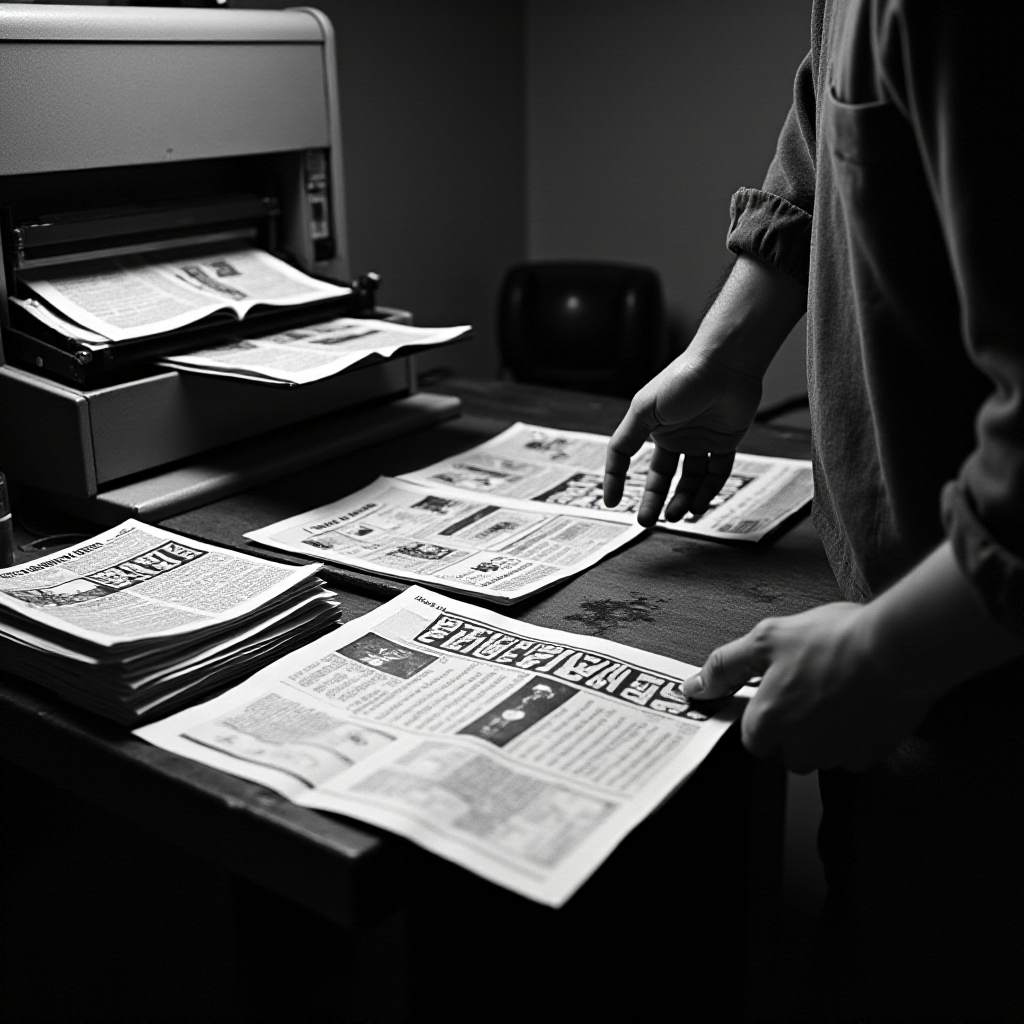
A pamphlet is a bomb made of paper. It is too short to be a book and too long to be a poster and too dangerous to be ignored. A pamphlet does not ask for your attention. A pamphlet demands it. You pick it up because somebody hands it to you on a street corner and you read it because it is four pages long and you cannot put it down because the person who wrote it was on fire and the fire got into the ink.
Thomas Paine wrote Common Sense in seventeen seventy-six on a kitchen table in Philadelphia. Forty-seven pages. He sold a hundred thousand copies in three months in a country of two and a half million people. One out of every twenty-five Americans read that pamphlet. It did not argue for independence. It assumed independence and then explained why the king was a fool. That is the power of the pamphlet. The pamphlet does not debate. The pamphlet declares. The Declaration of Independence was written four months after Common Sense because Paine's pamphlet made the declaration inevitable. A man with a kitchen table and a printing press changed the shape of a continent.
The Diggers in San Francisco in nineteen sixty-six wrote pamphlets and gave everything away free. Free food. Free clothes. Free music. Free stores where everything costs nothing. Their pamphlets said the economy is a game and we refuse to play. They printed on cheap paper with cheap ink and handed them out in the Haight and the pamphlets said you do not have to buy anything to be alive. That is a revolutionary idea. Not that the system should be reformed. That the system should be ignored. The Diggers did not fight capitalism. They walked away from it. The pamphlet was the goodbye note.
Samizdat in the Soviet Union. Hand-typed pages. Carbon copies. Passed from reader to reader in Moscow and Leningrad and Kyiv. Solzhenitsyn's novels circulated as samizdat before they were published in the West. Each copy was typed by hand. Each copy was a crime. The state said you cannot read this and the reader said I already have and here is a copy for you. Samizdat means self-published. It means I do not need your publishing house or your censor or your permission. I have a typewriter and that is enough. The Soviet Union had nuclear weapons and could not stop a typewriter.
I wrote pamphlets in Detroit. The White Panther Party statement. Manifestos for the MC5. Screeds about marijuana and police and the war in Vietnam. We printed them on a mimeograph machine that smelled like chemicals and broke down every third run and the ink got on everything. The ink got on your hands and your clothes and your face and you walked around Detroit looking like you had been in a fight with a printing press and you had and the printing press won because the pamphlet got out. The pamphlet always gets out. That is the law of pamphlets. You can arrest the writer. You can smash the press. You cannot recall the pamphlet. Once it is in a hand it is in a mind and once it is in a mind it is permanent.
The internet killed the pamphlet and became the pamphlet. Every post is a pamphlet. Every thread is a pamphlet. Every message forwarded to ten people is a pamphlet. The form changed. The function did not. A person with something to say and no permission to say it and a way to say it anyway. That is a pamphlet. Paine had a printing press. The Diggers had cheap paper. The samizdat writers had typewriters. I had a mimeograph. You have a phone. The pamphlet is the oldest technology in revolution. The pamphlet is whatever you have in your hand when you cannot shut up anymore.