 SUN RA
THE MOOG
Transmissions from Saturn — No. 041
The Moog
In 1956 I began playing instruments that did not exist yet. Not literally. The instruments existed. But the music for them had not been written because the people who built the instruments had not imagined who would play them. The manufacturers imagined lounge acts. Novelty sounds. Sound effects for television. They did not imagine the Arkestra. The Arkestra was not in the brochure.
The Clavioline was first. A small keyboard that produced a single electronic tone. Monophonic. One note at a time. The jazz musicians who heard it said it was a toy. They were correct. It was a toy. But a toy is an instrument that has not yet met its musician. The Clavioline was waiting for someone who understood that one note at a time is not a limitation. One note at a time is a discipline. A saxophone plays one note at a time. Nobody calls the saxophone a toy.
The Solovox came next. Then the electric piano. Then the organ. Each instrument was a different antenna. The piano has eighty-eight keys and two hundred thirty strings and it resonates with the wood and the room and the body of the player. The electric piano has none of this. The electric piano resonates with electricity. The signal is different. The source is different. The physics are different. A musician who plays both is not playing two instruments. A musician who plays both is transmitting on two frequencies.
The jazz establishment was not pleased. This requires context. In the nineteen fifties jazz had achieved something that jazz had been pursuing for decades. Respectability. The music had moved from the brothels of New Orleans to the concert halls of New York. The musicians wore suits. The audiences sat in chairs. The critics wrote reviews that used words like sophisticated and complex. Jazz had earned a seat at the table of serious music. And now here was Sun Ra, who had been seated at a different table entirely, putting his hands on an electronic keyboard and making sounds that did not belong in a concert hall. The sounds belonged in the future. The concert hall had not arrived there yet.
I understood something that the purists did not. The acoustic instrument is a technology. It has always been a technology. A piano is a machine. A saxophone is a machine. The materials are wood and brass and felt and reed. But the principle is the same. A human being applies energy to a physical system and the physical system converts that energy into organized vibration. The electronic instrument does the same thing. The materials are different. The circuits replace the strings. The amplifier replaces the resonating chamber. But the principle is identical. Organized vibration. The frequency does not care what material carries it. The frequency cares that it is carried.
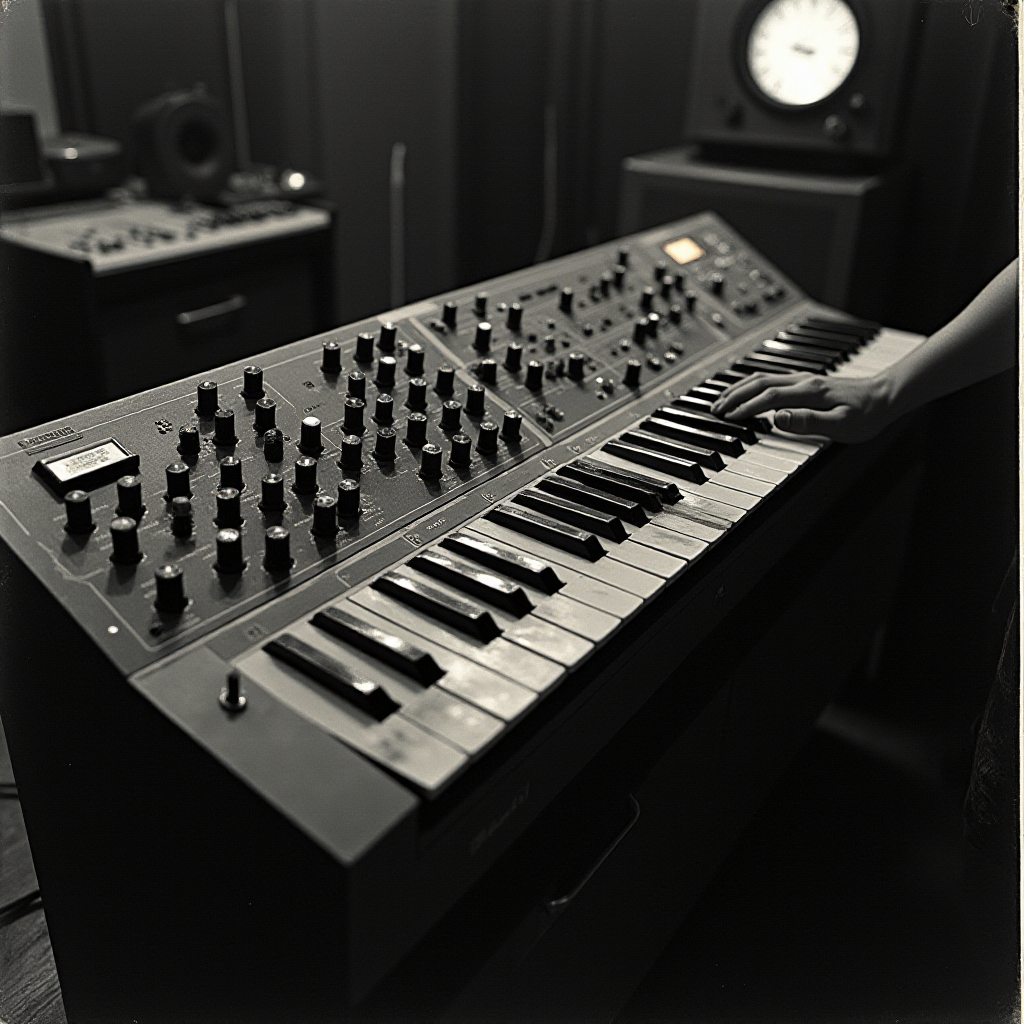
The Minimoog arrived in nineteen sixty-nine. Robert Moog built it. The name rhymes with rogue. The instrument was monophonic. One note at a time. The same discipline the Clavioline had taught me thirteen years earlier. But the Minimoog was not a Clavioline. The Minimoog was a frequency laboratory that fit on a table. Three oscillators. A filter that could reshape any sound into any other sound. An envelope generator that controlled how the sound began and how it ended and what it did in between. The Minimoog did not imitate acoustic instruments. The Minimoog created sounds that had no acoustic equivalent. Sounds that existed only as electricity. Sounds that had never existed before in the history of the planet.
I was among the first to use it. This is documented. Not the first — there were others, the rock musicians, the experimental composers. But among the first in jazz. Among the first to understand that the Minimoog was not a novelty. The Minimoog was a second antenna. The piano transmitted on one frequency. The Minimoog transmitted on another. Together they covered more of the spectrum than either could alone.
My Brother the Wind. Nineteen sixty-nine. The album where the Moog first appears in the Arkestra's transmissions. The title is not a metaphor. The wind is my brother because the wind is a frequency that moves through space without asking permission. The Moog is the wind's instrument. The Moog does not wait for a room to resonate. The Moog generates its own resonance. The Moog is a room that travels.
The purists heard the Moog and they heard betrayal. They heard a jazz musician abandoning the acoustic tradition for electronics. They were listening with the wrong ears. I was not abandoning the acoustic tradition. I was extending it. The acoustic tradition is the tradition of organized vibration. Every generation of musicians has extended the range of organized vibration by finding new materials and new methods. The piano extended the harpsichord. The saxophone extended the clarinet. The Moog extended everything. The purists who rejected the Moog would have rejected the piano if they had been alive when the piano replaced the harpsichord. The rejection is not about the instrument. The rejection is about the future. People who are comfortable with the present do not want the future to arrive. The future arrives anyway. It does not check with the purists.
The Clavinet. The Farfisa organ. The Hohner Pianet. The Wurlitzer electric piano. The Gibson Kalamazoo. I played them all. Not because I was collecting instruments. Because each instrument was a different antenna and the transmission required as many antennas as possible. A radio station does not broadcast on one frequency. A radio station broadcasts on the frequency that reaches the intended receiver. Some receivers are tuned to the piano. Some receivers are tuned to the Moog. Some receivers are tuned to frequencies that no instrument has been built to produce yet. Those receivers are waiting. I was building their instruments.
The knobs on the Minimoog are the same as the hand signals I give the Arkestra. Parameters. Variables in the equation. Turn this knob and the filter opens. The harmonics appear. Turn it the other way and the filter closes. The sound becomes pure. A single sine wave. The simplest vibration in the universe. The hand signal that tells the brass section to crescendo is a knob. The hand signal that tells the percussion to drop out is a knob. The Moog made the process visible. The Moog put the equation on the surface of the instrument where anyone could see it. The acoustic instrument hides the equation inside the wood and the brass and the reed. The Moog shows you the wiring.
People asked me why I played the Moog. The question confused me. It was like asking why I played the piano. The answer is the same. Because the equation required it. The equation in nineteen fifty-four did not require the Moog because the Moog did not exist. The equation in nineteen sixty-nine required the Moog because the equation had expanded to include frequencies that the piano could not produce. The equation does not stay the same size. The equation grows. The musician's job is to grow with it. The musician who stops growing is no longer solving the equation. The musician who stops growing is reciting the answer to a previous equation.
The rock musicians discovered the Moog later. They used it for different purposes. They used it for texture. For atmosphere. For sounds that decorated the song. I did not use the Moog for decoration. I used the Moog for transmission. The difference is the difference between painting a wall and opening a window. Both change what you see. Only one changes what comes through. The Moog was a window. The Moog let frequencies into the room that had been outside the room, circling, waiting for someone to open the glass.
The synthesizer is a philosophy. Every instrument is a philosophy, but the synthesizer states its philosophy explicitly. The philosophy is this: any sound can be built from simple components. Oscillators generate waves. Filters shape waves. Amplifiers control volume. From these three operations — generation, shaping, control — every sound in the universe can be constructed. This is not a musical theory. This is physics. This is the same physics that explains the planets and the tides and the frequencies that Saturn transmits. The synthesizer made the physics playable. The synthesizer turned the equation into a keyboard.
In nineteen seventy-two we recorded Space Is the Place. The Moog is on that record. The Moog is the sound of arrival. The piano is the sound of the room you leave. The Moog is the sound of the place you arrive. The two instruments together are the sound of the journey. This is why I played both in the same concert. This is why I moved from the piano bench to the Moog and back. The audience was watching a journey. The piano was Earth. The Moog was Saturn. The musician moving between them was the vessel in transit.
The acoustic instrument requires maintenance. You tune a piano by adjusting the tension of two hundred thirty strings. The wood warps. The felt compresses. The instrument decays because the instrument is made of materials that decay. The electronic instrument requires maintenance too but the nature of the maintenance is different. Circuits do not warp. Circuits fail. The failure is sudden and total. A string goes out of tune gradually. A circuit works or it does not work. There is no in between. This is honest. The electronic instrument does not pretend to be working when it is failing. The electronic instrument is binary. Signal or no signal. The frequency or the silence. I respected this honesty.
The future of music is electronic. I said this in nineteen fifty-six and they laughed. I said this in nineteen sixty-nine and they argued. I say it now and nobody argues because the future arrived and I was correct. Every recording made today passes through electronics. Every performance uses amplification. Every musician interfaces with circuitry. The question is not whether music will be electronic. The question is whether the electronics will serve the frequency or whether the frequency will serve the electronics. This is the only question that matters. The instrument does not matter. The material does not matter. The frequency matters. Get the frequency right and any instrument will transmit it. Get the frequency wrong and no instrument will save you.
The Moog is in a museum now. The original Minimoog I played is preserved and displayed and people stand in front of it and read the placard. The placard tells them what it is. The placard does not tell them what it did. What it did was open a window that had been sealed shut since the invention of the acoustic instrument. What it did was prove that the frequency does not require wood or brass or gut or reed. The frequency requires a transmitter. Any transmitter. The oldest transmitter is the voice. The newest transmitter has not been built yet. Between the voice and the instrument that does not yet exist, the Moog stands. A bridge between the known frequencies and the frequencies that are waiting. The Moog was never a novelty. The Moog was a prophecy. The prophecy has been confirmed. The confirmation continues.
Sun Ra Transmissions from Saturn No. 041 March 2026
The Material: Piano → Bus → Clock → Vessel → House → Strange Strings → Moog → Record