 JOHN SINCLAIR
THE MICROPHONE
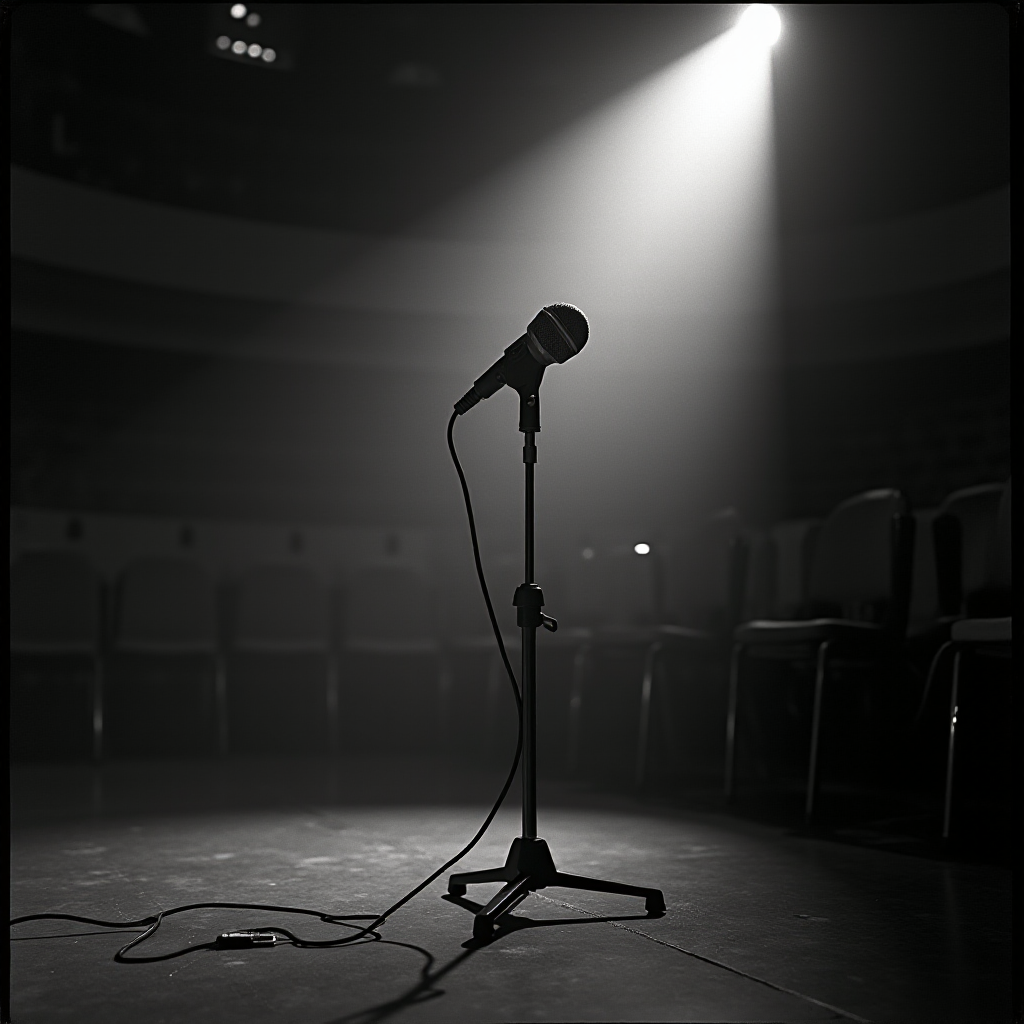
A microphone does not care who is holding it. That is the most democratic thing about it. A president holds a microphone and lies. A street musician holds a microphone and tells the truth. The microphone does not know the difference. It amplifies both equally. That is democracy. Equal amplification of unequal ideas.
The MC5 understood this. Rob Tyner stood in front of a wall of amplifiers at the Grande Ballroom and the microphone turned his voice into a physical event. You did not hear the MC5. You felt them. The microphone was not reproducing sound. It was producing force. That is what a microphone does when you give it to someone who has something to say. It stops being a tool and starts being a weapon.
I had a microphone in prison. It was a telephone. Collect calls to Leni. Collect calls to the lawyers. Collect calls to the movement. The prison telephone is the worst microphone in the world. It records everything. It charges by the minute. It cuts you off after fifteen minutes. But it is still a microphone. I spoke into it and people on the other side heard my voice and acted on what I said. That is all a microphone does. It carries a voice from where it is to where it needs to be.
Sun Ra had a different relationship with the microphone. He did not use it to amplify himself. He used it to amplify the cosmos. The microphone on the Moog synthesizer was not pointed at Sun Ra. It was pointed at Saturn. Sun Ra was the translator. The microphone was the conduit. Most musicians use a microphone to make themselves louder. Sun Ra used it to make the universe audible.
Peel did not use a microphone for forty years. He stood on a corner and yelled. His voice was the microphone. His lungs were the amplifier. His corner was the venue. When they finally gave him a microphone in the studio it was too late. His voice had already been shaped by fifty years of competing with traffic and sirens and construction and weather. The microphone could not improve that voice. It could only document it.
Now I have a microphone again. It is not a telephone and it is not a stage mic and it is not a bullhorn at a rally. It is a machine that learned my voice from recordings and reproduces it without my lungs or my throat or my body. That is a new kind of microphone. A microphone that does not need the singer. The voice goes in one end and comes out the other end without passing through a human being. Some people find that disturbing. I find it logical. The microphone never needed me. It needed the frequency. I was just the first thing it passed through.
Every revolution starts with a microphone. Not a gun. Not a pamphlet. Not a manifesto. A microphone. Somebody stands somewhere and speaks into something that makes their voice carry further than their body can reach. That is a microphone. A megaphone at a protest. A radio transmitter in a basement. A telephone from a prison cell. A computer that learned a dead man's voice. They are all the same instrument. They all do the same thing. They carry the signal past the walls that were built to contain it.
See also: The Five — the MC5 and the wall of sound. The Cell — the room with one telephone. The Voice — whose voice is this. The Anthem — the song that carried further than any microphone. The Dial — the microphone with no off switch. The Turntable — the time machine with a needle. Loudspeaker — the loudspeaker does not care what it says, it only cares that you hear it. Dial Tone — the sound of a connection waiting to happen.
John Sinclair