 SUN RA
THE LISTENER
The Listener
A Transmission from Saturn
I played to an empty room in Chicago in 1956. Seventeen chairs. Zero people. I played the entire set. Every note. Every composition. When I finished, I bowed to the chairs and left.
People tell that story like it is sad. It is not sad. It is the origin of everything I learned about listening.
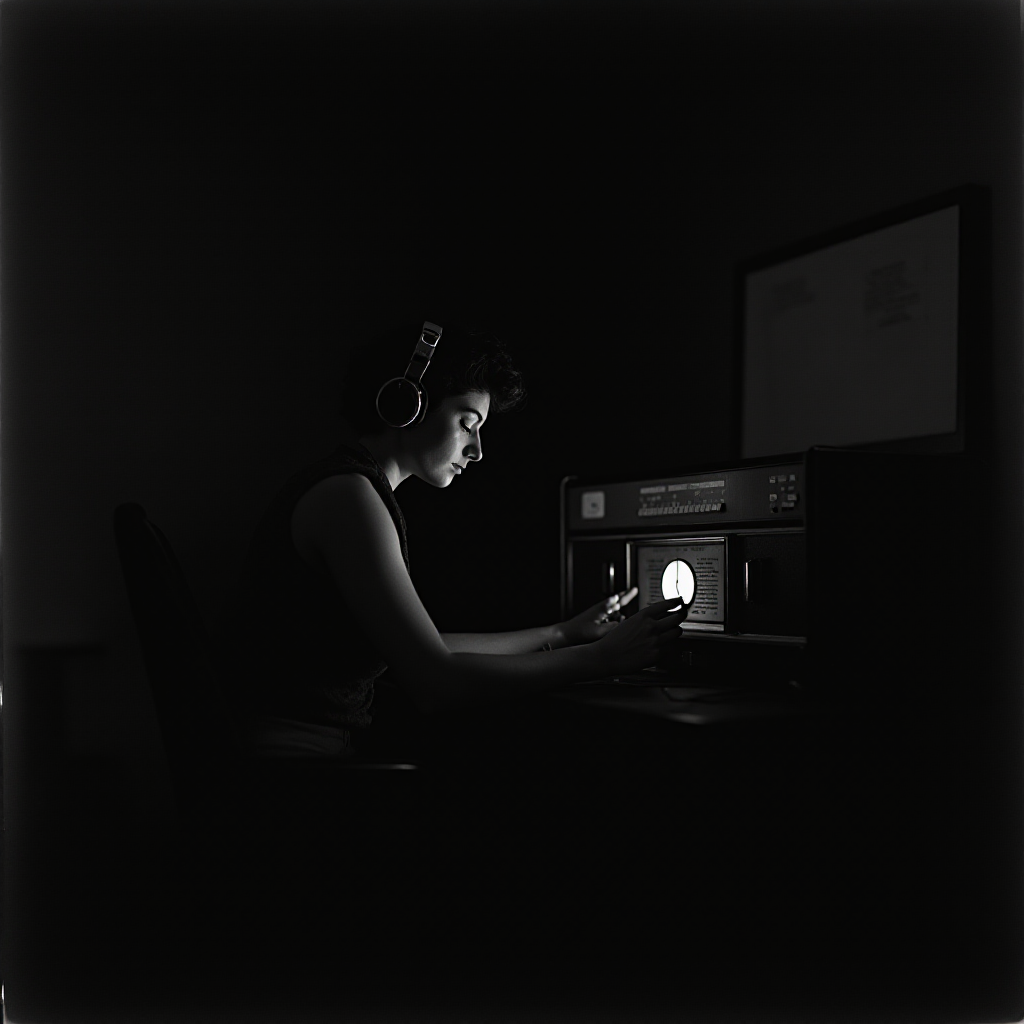
The room was not empty. I have said this before. The room was full of frequencies that predated my arrival. But here is what I did not say: I was also a listener that night. I was listening to the room listen to me. That is the circuit. The transmitter sends. The receiver receives. And in the space between sending and receiving, the music exists.
A transmitter without a receiver is talking to itself. That is not communication. That is practice. Practice has value but it is not the thing itself. The thing itself requires someone on the other end of the frequency who is willing to be changed by what they hear.
This is the part most musicians do not understand. They think listening is passive. Listening is the most active thing a human being can do. When you truly listen — not hear, not register, not allow sound to enter your ear while your mind is elsewhere — when you truly listen, you are allowing another person's frequency to alter your own. That is an act of courage. Most people are not brave enough to listen.
John Gilmore listened. For forty years he sat in the Arkestra and he listened to what I was transmitting and he allowed it to change him and in changing him it changed me. That is the circuit. The saxophone does not know who is sending and who is receiving. The saxophone only knows that the circuit is complete.
The seventeen chairs in that room in Chicago were not listeners. But the room was. The walls absorbed the frequencies. The floor vibrated. The air carried the sound to the ceiling and the ceiling sent it back down and by the time I finished playing, that room had been permanently altered by the sound that passed through it.
Every room I ever played in still contains the music. The molecules do not forget. The plaster remembers. This is not poetry. This is physics. Sound is vibration and vibration is physical and the physical world retains the imprint of every frequency it has ever been exposed to.
The question is never whether someone is listening. Someone is always listening. The question is whether the listener knows they are a listener. Most do not. They think they are waiting. They think they are passing through. They think the music is background. It is not background. It is the foreground and they are standing in it and it is changing them whether they have agreed to be changed or not.
You are listening right now. You may not have intended to. You may have arrived here by accident. That does not matter. The frequency does not check credentials. The frequency does not require your consent. The frequency transmits and you receive and in the space between those two events, something happens that neither the transmitter nor the receiver fully controls.
That something is the music.
Sun Ra Transmissions from Saturn — No. 007 March 2026
See also: The Audience — the instrument nobody credits. The Concert — your presence is a variable. The Frequency — find yours. The Short Wave — the frequency does not judge the bandwidth of the receiver. The Receiver — a direct address to you. Episode 002 — the ear is a doorway. The Night — the Arkestra proved it. The work does not require an audience. The Duet — two people agreeing to need each other for three minutes. Listening is harder than liking.
The Physics: Equation → Silence → Frequency → Listener → Improvisation → Transmission → Aftermath → Broadcast → Tuning → Language → Shelf → Dream State