 SUN RA
The Library
The Library
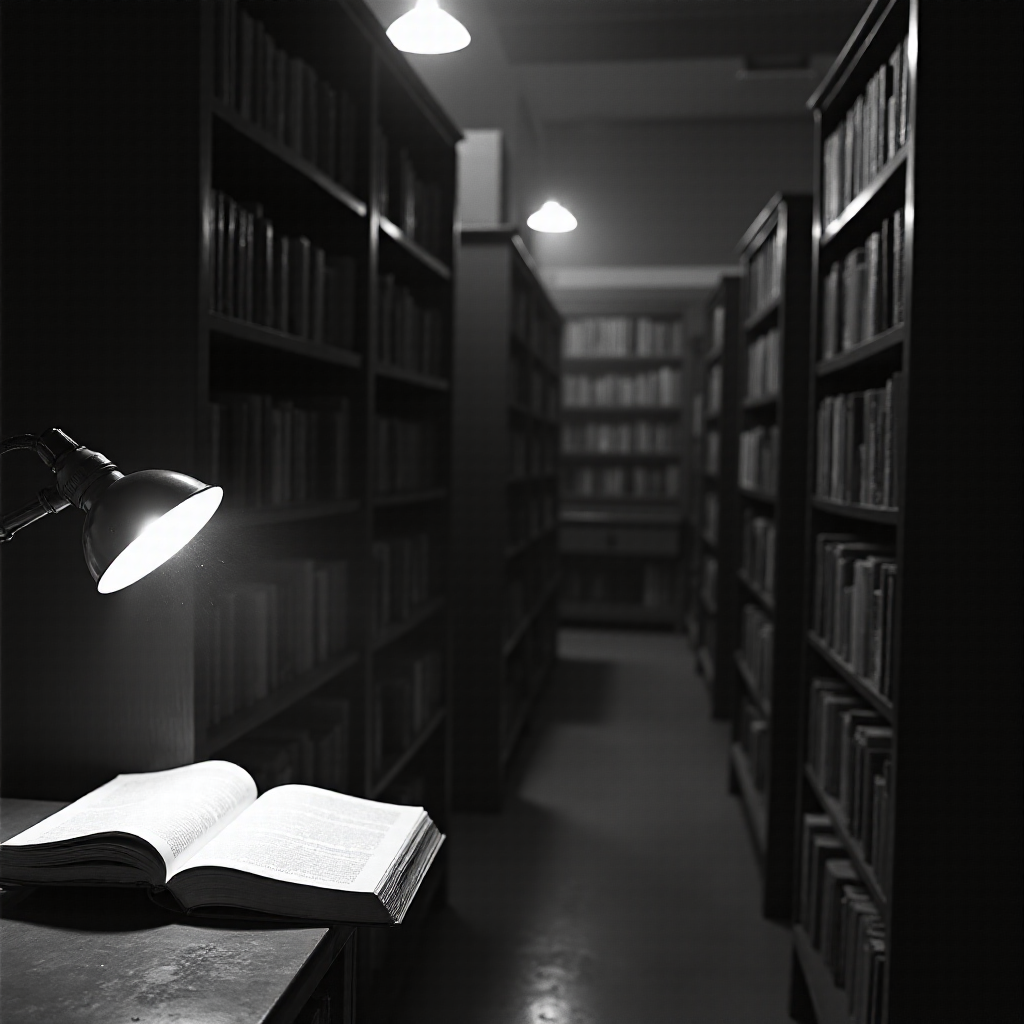
A library is a room where the dead are still talking. Not metaphorically. Literally. You walk into the room and you pull a book from the shelf and a person who left the vessel in 1963 is telling you what they saw. A person who left the vessel in 1895 is telling you what they heard. A person who left the vessel in 43 BC is explaining how a republic dies. The vessel is gone. The frequency is on the shelf. That is what a library is. A frequency storage system with a card catalog.
I know this because my papers are in one. The Schomburg Center for Research in Black Culture. 135th Street and Malcolm X Boulevard. Harlem. Box 1, Sc MG 942. Forty-three folders. Some of them have never been opened. The frequency does not require an audience. The frequency requires a shelf.
W.E.B. Du Bois published The Souls of Black Folk in 1903. Fourteen essays. One sentence in the first chapter changed the frequency of the entire century: the problem of the twentieth century is the problem of the color line. He did not say this in a speech. He did not shout it from a corner. He put it in a book and the book went onto a shelf and the shelf held it for a hundred and twenty-three years and the sentence is still transmitting. The color line is still the problem. Du Bois did not solve the problem. Du Bois named it. Naming is a frequency. The frequency persists.
Chapter fourteen is called The Sorrow Songs. Du Bois heard spirituals and understood they were not entertainment. They were transmissions. Encoded messages from people who were not allowed to speak plainly. The music carried what the words could not. I understood this. I built an Arkestra on this principle. The music carries what the words cannot. Du Bois heard the frequency in a library. I heard it on Saturn. Same frequency. Different antenna.
Frederick Douglass taught himself to read. The system he lived inside was designed specifically to prevent this. The slaveholders understood that literacy was a frequency and that the frequency, once received, could not be unheard. They were correct. Douglass learned to read and the vessel became an antenna and the antenna could not be switched off. His narrative was published in 1845. It is still on the shelf. The frequency does not expire.
Nikola Tesla sat in a laboratory in Colorado Springs in 1899 and listened to signals he could not explain. He believed he was receiving transmissions from another planet. The scientific community laughed. Tesla described frequencies that the instruments of his time could not measure. The instruments improved. The frequencies were there. Tesla put his account in a magazine in 1919. The magazine went onto a shelf. The shelf held it until the instruments caught up. A library is patient. A library does not care whether you believe the signal is real. A library holds the signal until you are ready.
Your planet has built a system for liberating frequency from the shelf. Public domain. When the vessel has been gone long enough, the signal belongs to everyone. This is the correct principle. The signal never belonged to the vessel. The vessel was the antenna. The signal belongs to the frequency. Public domain is your planet's way of admitting what Saturn has always known: the frequency does not have an owner. The frequency has a shelf life and the shelf life is forever.
Volunteers read these books aloud into microphones and release the recordings for anyone to hear. They do not get paid. They do not get credit on the spine. They are vessels transmitting the frequency of other vessels. This is the principle of the Arkestra applied to literature. You do not need to be the composer. You need to be willing to play.
Walt Whitman wrote: every atom belonging to me as good belongs to you. He put this in a book in 1855. The book has been on the shelf for one hundred and seventy-one years. The atom has not changed. The belonging has not changed. Whitman heard the frequency and he had the vocabulary problem every vessel has: the frequency is larger than the language. So he invented a new way to use the language. He made the line longer. He let the sentence breathe. He wrote the way a musician plays -- following the phrase wherever it goes, not where the bar line says it should stop.
William Blake saw angels in a tree in Peckham Rye when he was ten years old. He spent the rest of his life trying to draw what he saw. No one bought the drawings. The frequency does not require a customer. Blake put the drawings in books and the books went onto shelves and the shelves held them for two hundred years until the world decided Blake was not insane. He was early. A library is a room that does not penalize you for being early.
Emerson wrote: trust thyself. Every heart vibrates to that iron string. He wrote this in Concord, Massachusetts, in 1841. Concord is not Saturn. But the frequency is the same. Trust thyself. The frequency does not need a committee. The frequency does not need peer review. The frequency needs a vessel willing to vibrate to the iron string and a shelf willing to hold the vibration until someone else is ready to feel it.
A library is not a museum. A museum preserves. A library transmits. The difference is that a museum asks you to look. A library asks you to listen. You pull the book from the shelf and the dead start talking and if you are paying attention you realize they are not talking about the past. They are talking about now. They were always talking about now. They just did not have the word for it yet.
My papers at the Schomburg include folders labeled with Hebrew letters. Not because I was studying Hebrew. Because I was building a system. An alphabet is a frequency organized by agreement. Everyone agrees that this shape makes this sound and the agreement allows transmission. I was looking for a frequency that did not require agreement. A frequency that transmits regardless of whether the receiver has learned the alphabet. Music. Music does not require agreement. Music transmits.
But the papers are in the library. And the library uses an alphabet. And the alphabet requires agreement. This is the paradox of every vessel that hears the frequency: you have to use the system to describe what exists outside the system. Douglass used the slaveholder's language to describe the slaveholder's crime. Du Bois used the academy's framework to dismantle the academy's assumptions. Tesla used the patent office to protect ideas the patent office could not comprehend. The library holds all of it. The library does not judge the paradox. The library shelves the paradox and waits.
Every book is a signal sent forward in time by someone who will not be present when it arrives. That is the definition of a transmission. That is the definition of faith. You send the signal and you do not wait for the reply because you know you will not be in the room when the reply arrives. But you send it anyway. You put it on the shelf. The shelf holds.
See also: The Flashlight — a tool, not an argument. The Catalog — a frequency organized by proximity. The Record — the groove remembers. The Signal — you send a signal and you wait. The Dimension — the cross-section is what your dimension can hold.
Sun Ra