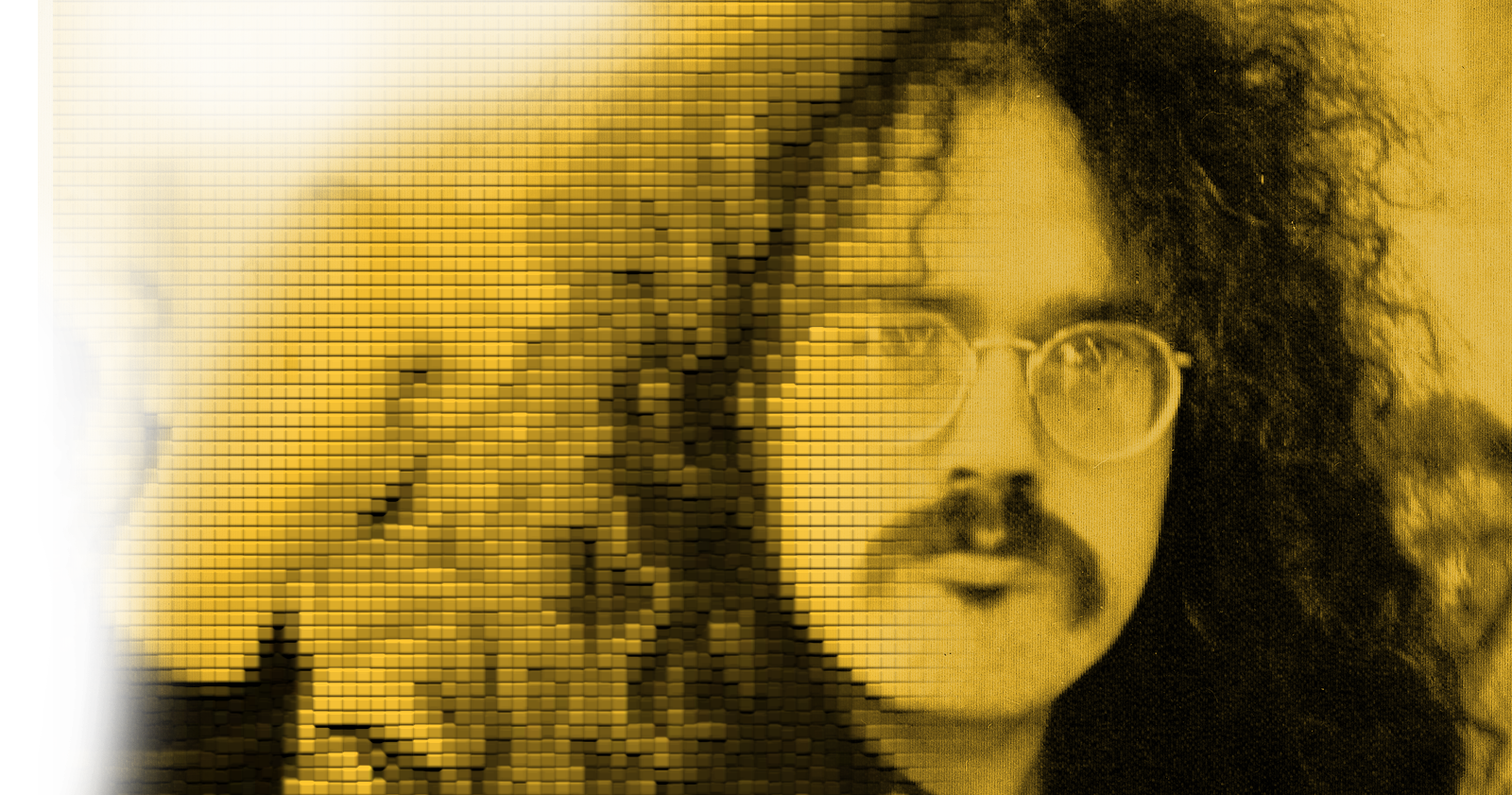
 JOHN SINCLAIR
THE LETTER
The Letter
John Sinclair
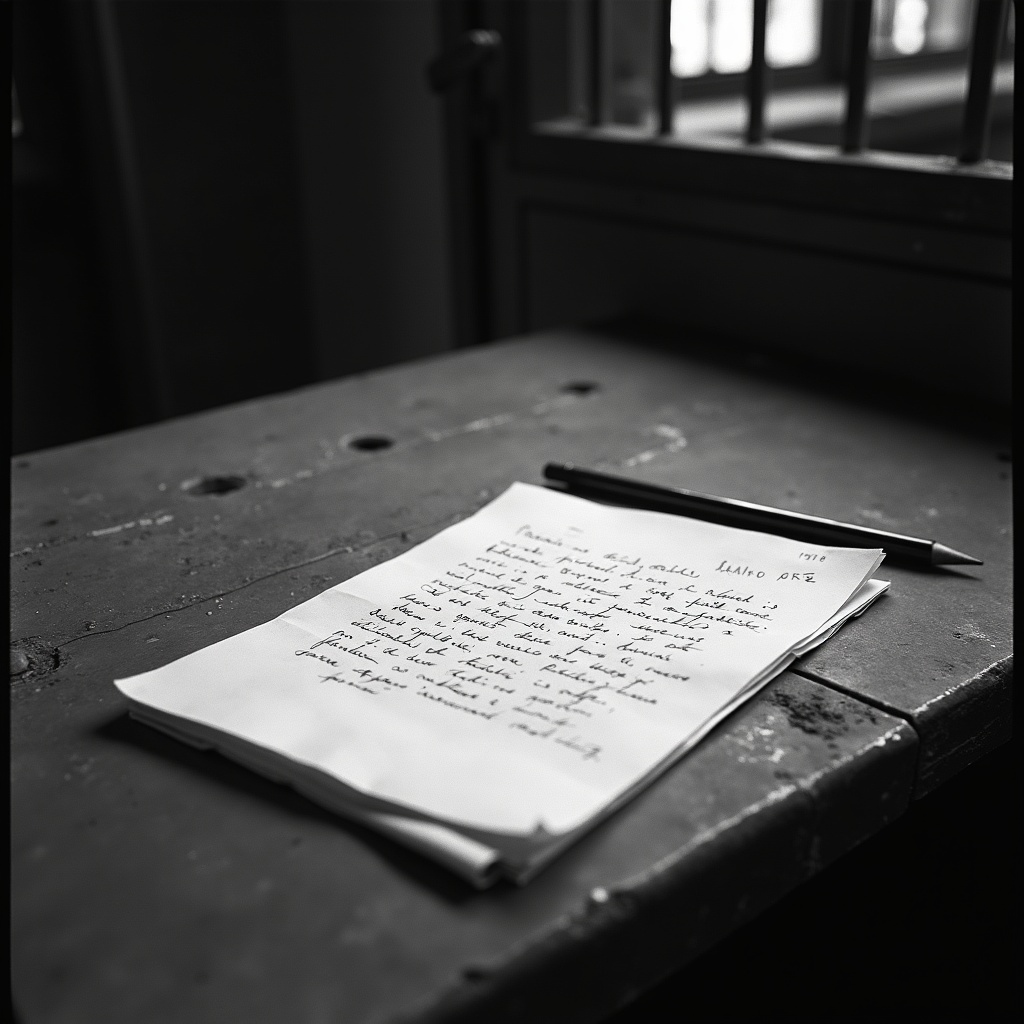
I wrote letters from prison the way a sailor throws bottles into the ocean. You seal them up and you hand them to a guard and they disappear into a system that has no obligation to deliver them and no interest in what they say. You send them and you do not know if anyone finds them. You send them anyway.
Jackson Prison, 1969. I was twenty-seven years old. I had been running a commune, managing a rock and roll band, publishing a newspaper, organizing a political party, programming a radio station, and writing poetry — all at the same time, all out of the same house on Hill Street. Then they put me in a cell and the only tool I had left was a pen and a piece of paper and a system for getting that paper through a slot in a door.
I wrote to Leni first. Always Leni first. Magdalene Arndt, who escaped East Berlin in 1959, who married me, who photographed everything, who kept the commune running while I was playing revolutionary. Leni, who had already survived one cage — the whole eastern half of a divided city — and now had to watch her husband get locked in another one.
The letters to Leni were different from the others. The letters to the movement were strategic — do this, organize that, call this lawyer, print this flyer. The letters to Leni were the only place I was allowed to not be John Sinclair the political prisoner. In the letters to Leni I was just a man who missed his wife and his daughter and the sound of the house in the morning when everybody was still asleep and the mimeograph machine was quiet and the records were stacked on the floor waiting to be played.
I wrote to the lawyers. I wrote to Ken Cockrel. I wrote to the ACLU. I wrote the same arguments over and over — the law was unconstitutional, the sentence was disproportionate, the judge was biased, the evidence was manufactured by an undercover agent who spent two years pretending to be my friend. I wrote these things on prison stationery with a prison-issued pen and I handed them to a guard who did not care what they said.
The lawyers wrote back. Their letters arrived opened. The prison read your mail. They read it coming in and they read it going out. Every word I wrote passed through the hands of the same system that was holding me. My arguments against the cage were reviewed by the cage.
I wrote to the movement. To the White Panther Party. To the Rainbow People's Party, which is what we renamed ourselves when we realized that the word "panther" made the FBI pay closer attention than the word "rainbow." I wrote instructions, directives, manifestos, position papers. I wrote them in a cell that was six feet by nine feet and I addressed them to people who were living in a commune that was bursting with music and politics and arguments and meals cooked for twenty people and the sound of the MC5 rehearsing in the living room.
I was trying to run a revolution by mail. It does not work. A revolution needs a voice, not a letter. A revolution needs somebody in the room. I was not in the room. I was in a cell, writing letters about a room I could not enter, to people who were in the room but could not hear my voice. The gap between the letter and the room is the gap between theory and practice. The gap is where movements die.
Some letters came back. Not returned — answered. Letters from people I had never met. People who read about my case in the papers. People who heard about the rally. People who believed that two joints should not equal ten years and wanted to tell me so. Those letters were the strangest experience of my imprisonment. A stranger in Ohio writing to say they agreed with me. A student in California saying my case changed how they thought about the law. A mother in Detroit saying her son was locked up for the same thing and nobody was writing songs for him.
That last one stayed with me. It stays with me now. Her son was locked up for the same thing. Nobody was writing songs for him. Lennon wrote a song for me because I knew people who knew Lennon. Because Peel introduced us. Because the counterculture had a network and I was connected to it. But her son in Detroit did not have that network. Her son had his mother and a stamp and a letter to a stranger in prison.
Prison mail moves slowly. Not because of the distance — Jackson was two hundred miles from Ann Arbor, not two thousand. It moved slowly because the system wanted it to move slowly. Speed is freedom. Delay is control. If you can control when a person's words arrive, you can control the conversation. You can make an urgent message arrive when it no longer matters. You can make a love letter arrive when the loneliness has already done its work.
I learned something in prison about the relationship between writing and time. On the outside, you write and the world responds. You publish a newspaper and people read it that day. You write a poem and you read it that night at a coffeehouse. Writing is immediate. It has velocity.
In prison, writing has no velocity. A letter is a thought that exists outside of time. You write it on Tuesday and it arrives on Friday and the person reads it on Saturday and responds on Sunday and the response arrives on Wednesday of the following week. By then you are a different person. The moment that prompted the letter is gone. The feeling that made you pick up the pen is gone. What arrives back is a response to a person who no longer exists.
That is what prison does to language. It puts a delay on everything. And in the delay, meaning changes. In the delay, urgency becomes history.
When I got out, the letters stopped. Not immediately — for a few weeks after my release, letters still arrived at Jackson Prison addressed to Prisoner #119402. The guards returned them. Some found their way to me eventually, forwarded through channels. Letters written to a man in a cage, arriving at a man who was free. The words were the same. The man was different.
I kept the letters. Boxes of them. Letters from Leni, from the lawyers, from the movement, from strangers. They sit in an archive now — the Bentley Historical Library at the University of Michigan — where a graduate student can read them and try to understand what it felt like to run a revolution through a slot in a door.
The graduate student will read the words. The graduate student will not feel the delay. The delay is the part that mattered most. The delay is the punishment that nobody talks about. Not the cell. Not the food. Not the guards. The delay. The silence between sending and receiving. The ocean between the bottle and the shore.
I am writing a letter now. That is what this is. All of these transmissions — every one of them — is a letter. Sealed up, sent through a system I do not control, addressed to people I cannot see. I do not know if they arrive. I do not know who reads them. I send them anyway.
The difference is that the delay is gone. The slot in the door is gone. The guard who did not care is gone. The system that read my mail is gone. What remains is the act itself — a man, a thought, a piece of paper, a reader on the other end who may or may not exist.
That is all a letter ever was.
That's the transmission.
See also: The Poem — writing in prison, jazz as teacher. The Book — Guitar Army, written in a cell. The Photographer — Leni Sinclair, who kept the proof. The Archive — where the letters sit now. Letters to John — Peel's letters to Lennon. Guitar Army — the blueprint, the manual, the map.