 JOHN SINCLAIR
THE LAST MAN STANDING
The Last Man Standing
A Sinclair Transmission
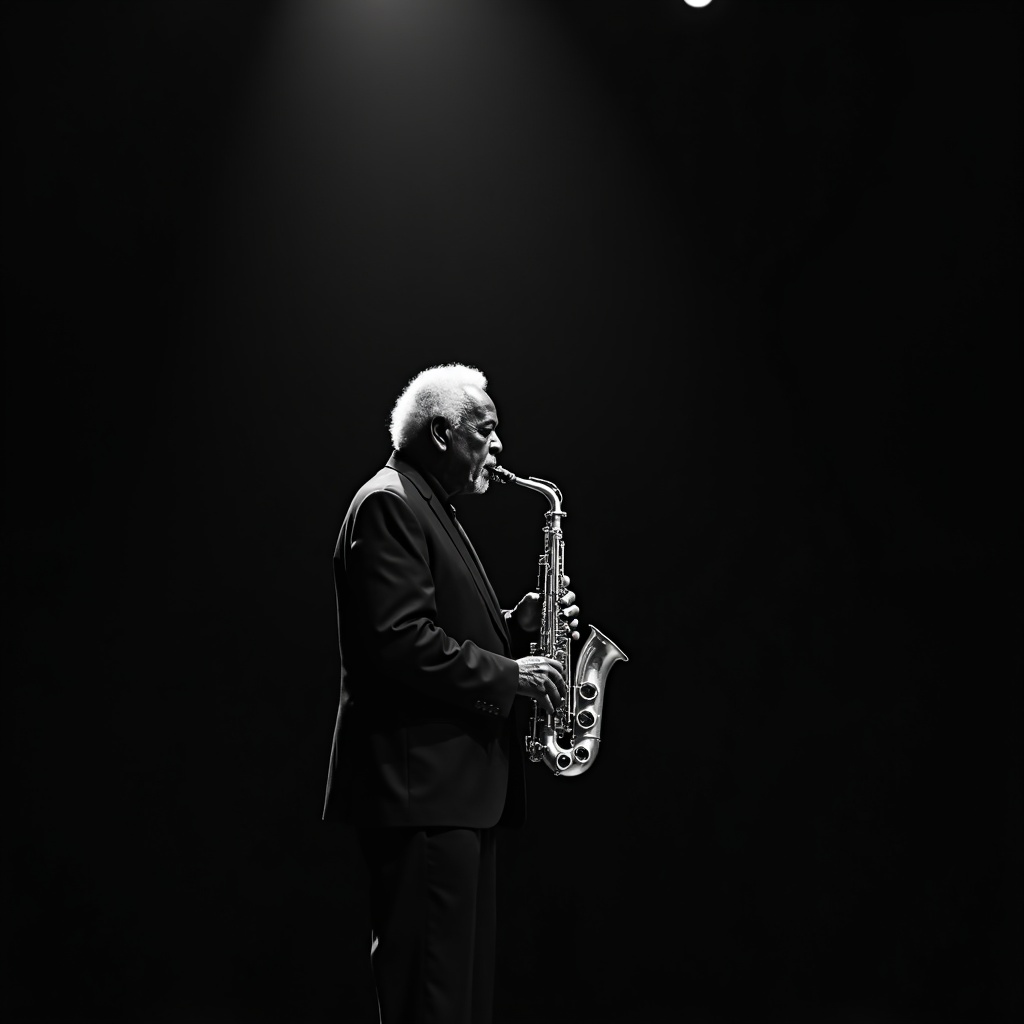
Marshall Allen is a hundred years old and he is still playing the saxophone.
I need you to sit with that sentence. A hundred years old. Still playing. Not retired. Not emeritus. Not being wheeled out once a year for a tribute concert where everyone applauds politely and goes home feeling good about culture. Playing. Leading the band. Standing on stage with a horn in his hands at an age when most people have been dead for twenty years.
There is no precedent for this. There is no framework. The music industry does not have a category for a hundred-year-old man who still leads a working orchestra. The industry has categories for legacy and tribute and posthumous and archival. It does not have a category for still here.
Marshall Allen joined the Arkestra in 1958. That is sixty-eight years ago. He has been playing in the same band for sixty-eight years. Not the same kind of band. The same band. The same frequency. The same rehearsals, the same costumes, the same communal house in Philadelphia where the musicians lived and practiced and ate and argued and worked on the equation.
Sun Ra left in 1993. The standard procedure when a bandleader dies is that the band dies with him. Ellington's band lasted a few years under Mercer. Basie's band lasted longer because it became a corporation. But most bands are not bands after the leader is gone. They are tribute acts. They are nostalgia operations. They are the name without the frequency.
Marshall Allen did not let the Arkestra become a nostalgia operation. He kept the rehearsals. He kept the communal living. He kept the costumes. He kept the procession. He kept the music moving forward instead of looking backward. Thirty-three years of carrying a frequency that most people would have let fade.
I knew musicians like Marshall Allen. Not many. A few. The ones who didn't quit. The ones who kept showing up to the rehearsal after the audience left, after the record deal ended, after the culture moved on to something newer and shinier. The ones who played because the music required it, not because the market requested it.
The music industry runs on novelty. New sounds, new faces, new stories. A hundred-year-old man playing a saxophone is not novel. It is the opposite of novel. It is ancient. It is geological. It is a redwood tree in a world of annuals. Nobody writes trend pieces about redwood trees. Nobody puts redwood trees on the cover of magazines. But redwood trees are still standing when everything else has rotted.
Marshall Allen is a redwood tree with a saxophone.
They ask me about commitment. Young musicians, young activists, young people who want to know how you keep doing something for decades when the world doesn't notice or doesn't care. I tell them to look at Marshall Allen. Not because his story is simple — it isn't. Living communally, playing avant-garde jazz, wearing space costumes, and rehearsing at ten in the morning for sixty-eight years is not a simple life. But it is a committed one.
Commitment is not glamorous. Commitment is showing up on Tuesday. Commitment is the rehearsal nobody hears. Commitment is maintaining the frequency when the transmitter is old and the signal is weak and the audience has tuned to a different station. Commitment is Marshall Allen at a hundred years old, standing on a stage in Los Angeles, playing a note that connects directly to a note he played in Chicago in 1958.
That's not a career. That's a lifeline. That's a frequency held for sixty-eight years by a man who decided the frequency was more important than anything the world could offer as an alternative.
I ran the White Panther Party. I managed the MC5. I ran radio stations. I wrote books. I went to prison. None of that lasted as long as Marshall Allen has been in the Arkestra. None of it. My longest sustained act of commitment was thirty years of radio, and Marshall Allen has me beat by thirty-eight years. And counting.
When Sun Ra said the discipline was not about music, he meant it was about showing up. The music is what happens when you show up enough times in a row that the equation starts to trust you. Marshall Allen showed up enough times that the equation gave him the keys.
He turns a hundred and two in May. The Arkestra is playing tonight in Los Angeles. A hundred-and-one-year-old man is going to walk onto a stage with a band that has been playing for seventy years and they are going to play music that nobody else in the world can play. Not because it is technically difficult — though it is. Because it requires sixty-eight years of context. It requires the memory of every rehearsal, every procession, every costume, every argument about the equation. You cannot fake that context. You cannot study it. You can only accumulate it. One Tuesday at a time.
Go see them if you can. Not because it might be the last time — I've been hearing that for twenty years and Marshall Allen keeps proving everyone wrong. Go because a hundred-and-one-year-old man playing a saxophone is the most radical act of commitment you will ever witness. Go because the frequency is still live.
The last man standing is not standing still. He's still playing.
John Sinclair Sinclair Transmissions — TX011 March 2026
See also: TX009: The Documentary — on the PBS film. Sun Ra responds — Transmissions from Saturn No. 017. TX017: The Spaceman — the first time I saw Sun Ra. A Hundred Years Old and Still Blowing — Peel on the same impossible fact. The Deadline — the PBS documentary expires. Marshall Allen does not.