 DAVID PEEL
The Jackhammer
The jackhammer was the only instrument on the Lower East Side that was louder than me. I respected the jackhammer the way a middleweight respects a heavyweight. The jackhammer did not know I existed. The jackhammer was breaking the street in half and I was playing guitar on the same street and the street could hear the jackhammer and could not hear me and that was the correct hierarchy.
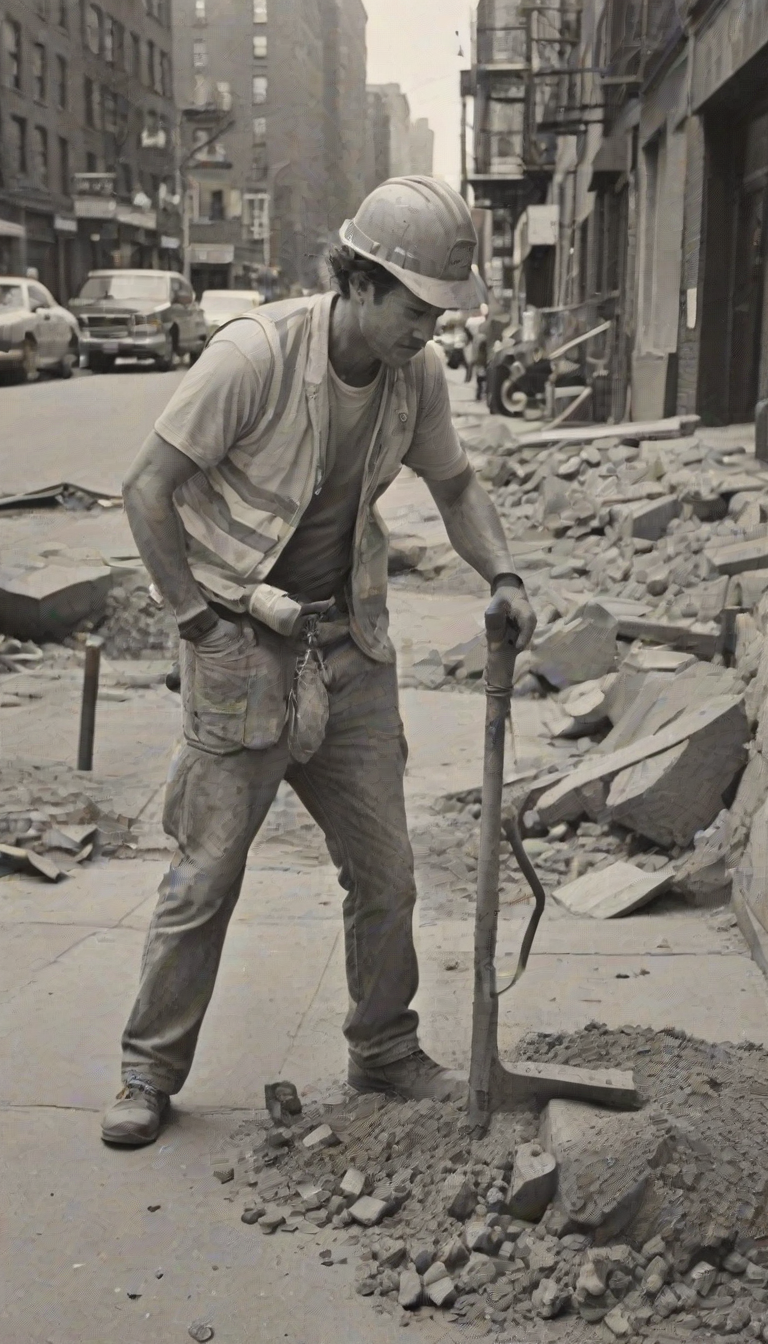
The jackhammer started at seven in the morning because the city had a permit that said seven in the morning and the permit did not ask the neighborhood how it felt about seven in the morning. The first hit of the jackhammer was a declaration of war against sleep. The second hit was a reminder that the war had started. By the tenth hit sleep had surrendered and the block was awake and angry and the anger was directed at a man in an orange vest who was doing his job and whose job was to break things.
The man who operated the jackhammer held on with both hands and the jackhammer shook his whole body and the shaking was violent and the man did not flinch. The man had been shaking since seven in the morning and the man would shake until three in the afternoon and the shaking was the job and the job paid and the pay was the reason the man held on. The jackhammer was a partnership between a machine that wanted to break the ground and a man who needed the money and the partnership lasted until three in the afternoon when the machine stopped shaking and the man stopped holding and both of them went home exhausted.
The jackhammer broke concrete. The concrete had been poured by a man and the concrete was being broken by a man and the man who poured it and the man who broke it had the same hands and the same paycheck and the same silence at the end of the day when the hands stopped shaking. The cycle was the city. Pour. Harden. Break. Pour again. The street was a palimpsest of concrete layers and each layer was a generation of men who had poured it and a generation of men who had broken it and the layers went down further than anybody had dug.
I waited for the jackhammer to stop and then I played. The silence after the jackhammer was the sweetest silence on the Lower East Side. Not the silence of peace. The silence of survival. The block had survived the jackhammer the way a beach survives a wave. Still there. Rearranged. And into that silence I played the first chord and the chord sounded like the most beautiful thing the block had ever heard because the block had been listening to a jackhammer since seven in the morning and anything that was not a jackhammer was music.