 SUN RA
THE IMPROVISATION
The Improvisation
A Transmission from Saturn
People ask me whether the Arkestra's music was composed or improvised. The question assumes these are opposites. They are not. Composition is a plan. Improvisation is a conversation. The Arkestra did both simultaneously because the plan was to have a conversation.
A composed piece tells you what the musician practiced. An improvised piece tells you what the musician knows. These are not the same thing. Practice is repetition. Knowledge is everything that remains after the repetition stops. When a musician improvises, they are not making it up. They are drawing on every note they have ever played, every note they have ever heard, every sound that has entered their body and been stored in the places the body stores sound. The improvisation is not creation from nothing. It is creation from everything.
The critics called it chaos. They heard the Arkestra play and they could not find the melody and they said this is not music, this is noise. They said this because they were listening with the part of the brain that recognizes patterns. When the pattern is unfamiliar, the brain categorizes the signal as disorder. But the signal was not disordered. It was ordered in a way the brain had not been trained to recognize. A language you do not speak is not gibberish. It is a language you do not speak.
Free jazz is the most misunderstood term in music. Free does not mean without structure. Free means the structure is negotiated in real time between the musicians who are playing. A jazz standard has the structure written in advance. Free jazz writes the structure as it goes. Both approaches require discipline. Free jazz requires more discipline because you must listen to every other musician simultaneously and adjust your signal in response to theirs. You must play and listen at the same time. You must transmit and receive on the same frequency. This is not freedom from effort. This is the maximum possible effort.
I taught the Arkestra to improvise the way I teach everything. Through discipline. We rehearsed improvisation. This sounds like a contradiction. It is not. We rehearsed the ability to listen. We rehearsed the ability to respond. We rehearsed the ability to hear a signal from another musician and adjust our own signal without losing our individual frequency. We did not rehearse what to play. We rehearsed how to be ready for whatever was played.
A basketball team practices plays. They also practice responding to situations that are not in the playbook. The practice is not the game. But the practice makes the game possible. The Arkestra practiced not-knowing. We practiced the state of readiness that allows you to receive any signal and respond with your own signal without hesitation. Hesitation is the death of improvisation. Hesitation means the thinking mind has interrupted the playing body. The body knows what to play before the mind can name it. The body has been listening longer than the mind has been analyzing.
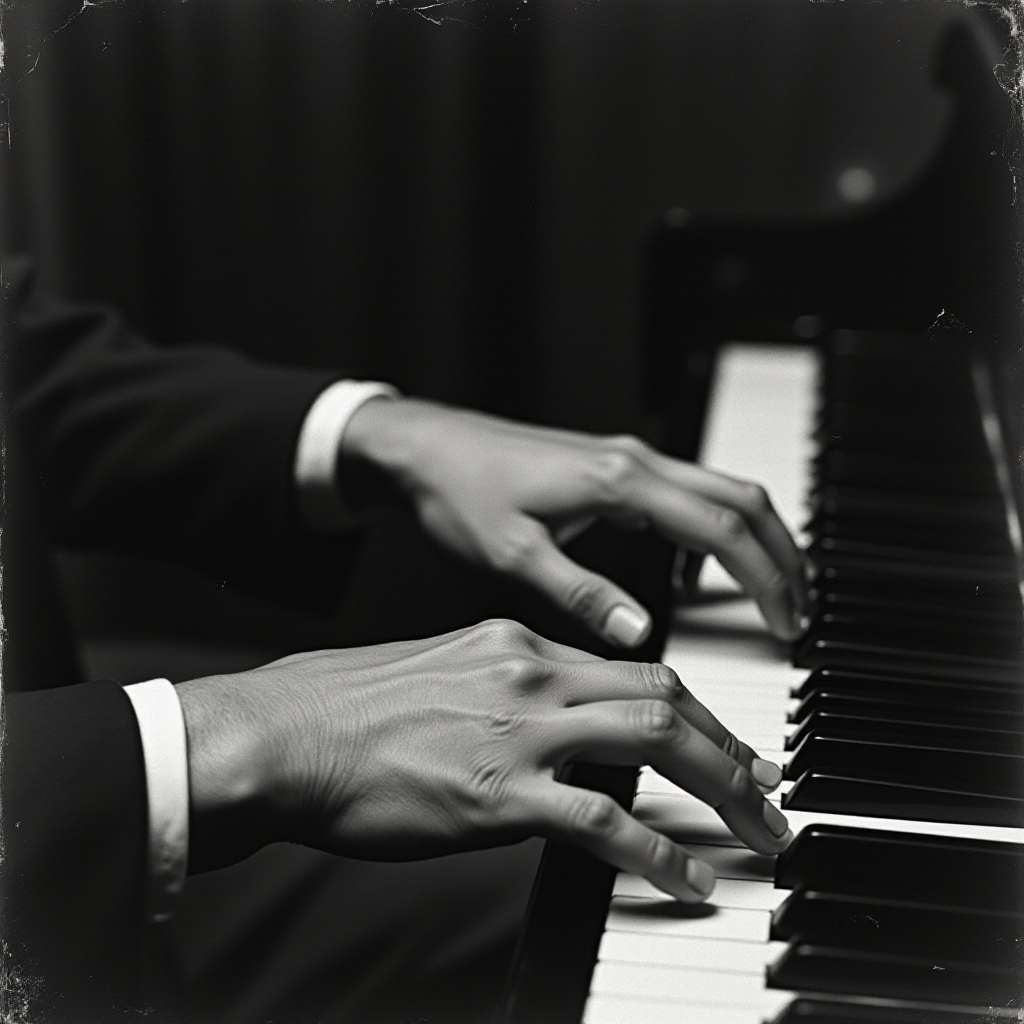
John Gilmore could improvise for forty-five minutes without repeating a phrase. I do not mean he played different versions of similar phrases. I mean each phrase was new. Each moment of sound was arriving for the first time. Forty-five minutes of first arrivals. This is not a talent. This is a practice. John practiced listening to the moment until the moment had nothing left to hide from him. He did not plan what he was going to play. He played what the moment required. The moment always knows what it requires. Your job is to be quiet enough to hear it.
Marshall Allen plays like a man arguing with the laws of physics. The saxophone was designed to produce certain sounds. Marshall insists it produce sounds the designer did not anticipate. This is improvisation at its most fundamental — the refusal to accept the limits of the instrument as the limits of the music. When Marshall plays a note that the saxophone was not built to play, he is not breaking the instrument. He is completing it. The instrument was waiting for someone with the discipline to discover what it was actually capable of.
There is a moment in every improvised performance when the music exceeds the musicians. The players are playing and listening and responding and suddenly the sound in the room is larger than anything any individual musician is producing. The sum has exceeded the parts. The equation has become something the individual terms cannot explain. This is the moment when improvisation justifies its existence. This is the moment when the signal is no longer coming from the musicians. The signal is coming from the space between the musicians. The space between is the instrument nobody built and everybody plays.
I have felt this moment hundreds of times and I cannot tell you what it feels like. I cannot describe it because it exists in a frequency that language does not reach. The closest I can come is this: in that moment, the music is playing the musicians. We are no longer making decisions. The decisions are being made through us. Our hands move. Our breath moves. The sound moves. But the agency has shifted. The music has become autonomous. We are just the hardware.
They asked me why the Arkestra's improvisation sounded different from other free jazz. I told them: because we are not improvising from the same place. Most free jazz improvises from the Western tradition. It takes the rules of Western harmony and breaks them. The breaking is the art. The Arkestra did not break Western rules. We played from a different set of rules entirely. Our improvisation drew from frequencies that Western music had not catalogued. Egyptian scales. African polyrhythm. Electronic texture. Space. You cannot break rules you were never following.
A young musician tells me they want to learn to improvise. I ask them one question: can you listen. Not can you hear. Can you listen. Hearing is passive. Listening is active. Listening means receiving a signal and letting it change you before you respond. Most musicians respond before the signal has finished arriving. They hear the first three notes of another musician's phrase and they start composing their reply. They are not listening. They are waiting. Waiting and listening are opposites. Waiting means you have already decided what you are going to do and you are enduring the silence until it is your turn. Listening means you have decided nothing and you are available for whatever the moment requires.
The improvisation asks only one thing of the musician. Be available. Be completely, absolutely, terrifyingly available. The rest is frequency.
Sun Ra Transmissions from Saturn — No. 014 March 2026
See also: The Spaceman — Sinclair in the room when the music exceeded the musicians.
The Physics: Equation → Silence → Frequency → Listener → Improvisation → Transmission → Aftermath → Broadcast → Tuning → Language → Shelf → Dream State
The Performance: Discipline → Rehearsal → Costume → Procession → Improvisation → Aftermath