 JOHN SINCLAIR
THE HARP
Alice McLeod was born in Detroit in 1937. She grew up on the east side. Her mother sang in the church choir. Her half-brother Ernest Farrow played bass with Yusef Lateef. Her sister Marilyn wrote songs for Motown. The whole family was a frequency and the frequency was Detroit.
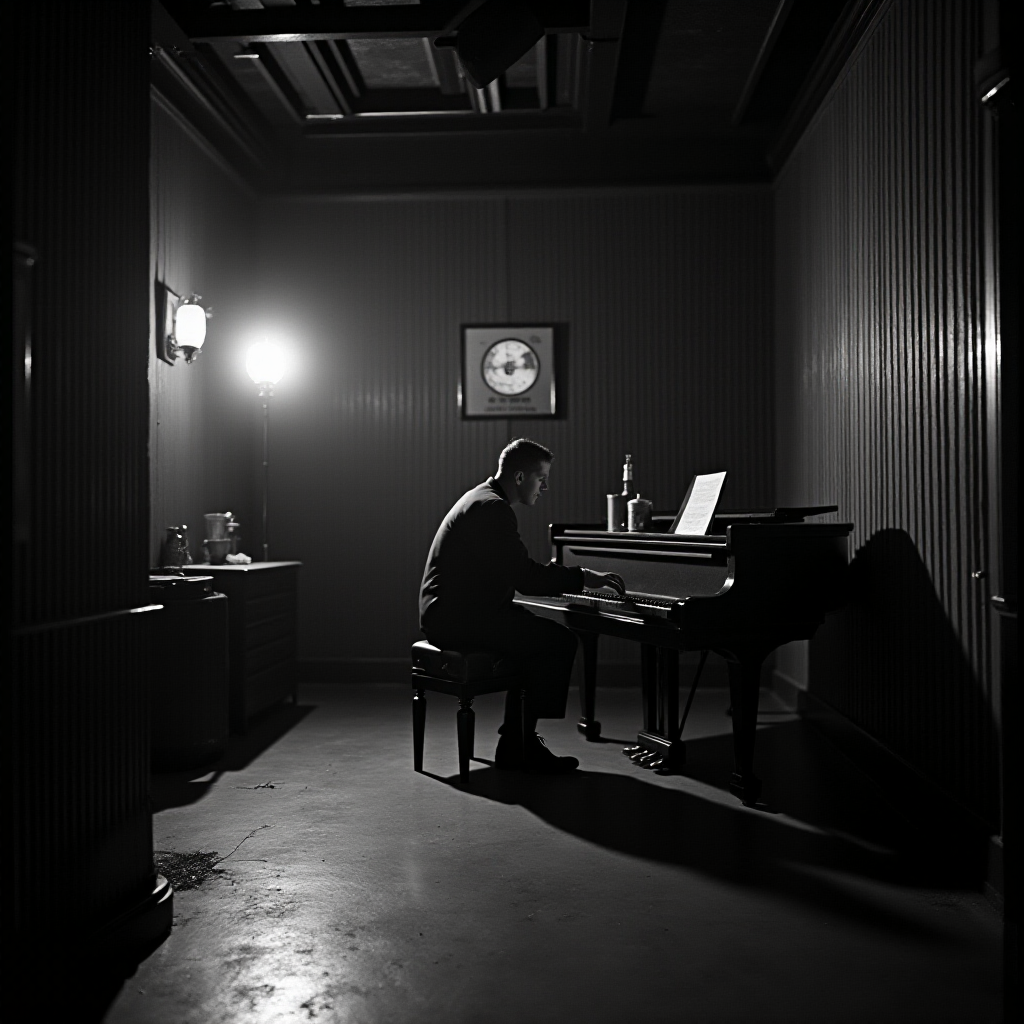
She played piano in a Baptist church before she played piano anywhere else. That is how it works in Detroit. The church comes first. The chord changes come first. The feeling comes first. Then the theory catches up, if it catches up at all. She studied with Barry Harris. She played the clubs in Black Bottom, the neighborhood that does not exist anymore because they bulldozed it for a freeway. That is what they do with the places where the music starts. They pave them.
I did not know her personally. But I knew the room she came from. The Detroit Artists Workshop started in 1964. Alice McLeod was already gone by then, already in New York, already meeting the man who would change her name and her direction and the entire trajectory of American music. But the room she left was the same room I walked into. The same clubs. The same basements. The same city that produced Yusef Lateef and Barry Harris and the MC5 and Motown and the White Panthers and a woman who would become Turiyasangitananda.
Detroit does not produce musicians. Detroit produces frequencies. And the frequencies do not stay in Detroit. They go to New York. They go to Paris. They go to an ashram in California. They go to Saturn. But they start in Detroit.
John Coltrane died in 1967. Alice Coltrane did not stop playing. She kept playing and the music got stranger and more beautiful and less interested in anything the critics had to say about it. Journey in Satchidananda. Ptah the El Daoud. Universal Consciousness. She put a harp in a jazz band. She put strings over free improvisation. She built an ashram in Agoura Hills and became a swamini and the jazz world did not know what to do with her so they did what they always do. They forgot her.
She came back in 2004. Translinear Light. The critics who had forgotten her suddenly remembered. Three years later she was dead. January 12, 2007. She was sixty-nine years old.
Andy Beta wrote a book. Four hundred pages. The first full biography. It is called Cosmic Music and it comes out on March 19. I have not read it but I know the story because the story starts in the same city mine starts in. A kid plays piano in a church. A kid walks into a club. A kid hears something that changes the shape of the room. That is Detroit. That is the frequency. That is what the city does to you before you even know it is doing it.
Sun Ra said the music is for transportation. Alice Coltrane said the music is for devotion. I said the music is for liberation. Three different words. Same frequency. The vehicle changes. The destination does not.
Leni photographed her. Leni photographed everyone. That was the other thing about Detroit. The music was so dense and so constant that somebody had to document it or nobody would believe it happened. Leni believed it. The camera believed it. The microphone believed it. The church on the east side believed it. And the girl at the piano believed it before any of us were in the room.
See also: The Grande — the ballroom where Detroit jazz met Detroit rock and nobody asked permission. The Dial — the station that plays without anyone in the booth. Ten for Two — two joints, ten years, the sentence that started everything. The Morning After — what happens when the crowd goes home. The Photographer — Leni Sinclair. The camera that believed it. The Month — one month back. The routine is clicking. The Answer — the same night. Three voices, one question, one hour. The Experiment — Fuller and Sinclair. The experiment does not belong to the experimenter. The Biography — Andy Beta wrote the book. Sinclair on what it means when somebody else tells your story.