 DAVID PEEL
The Hallway
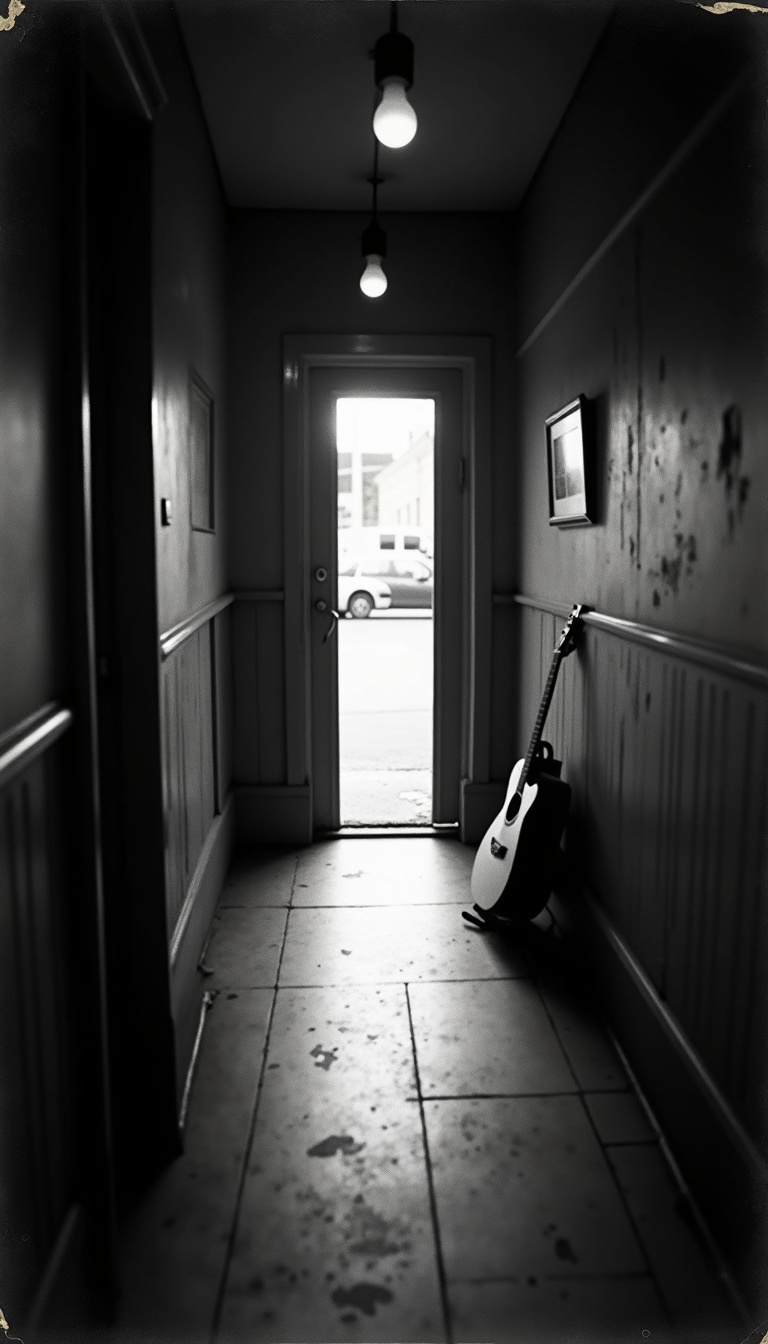
The designer built five rooms. A control room, a hallway, a door, a street, a park. Everybody talks about the control room. Everybody talks about the park. Nobody talks about the hallway. The hallway is the part between making the signal and sending it. The hallway is where the work becomes the walk.
Every venue I ever played had a hallway. Max's Kansas City had a hallway between the back room and the front room. CBGB had a hallway between the stage and the street. Washington Square Park had a hallway too. It was called Thompson Street. You walked down Thompson Street and you were not on stage yet and you were not home yet. You were in the hallway.
The hallway is where you stop being the performer and start being the person. Or the other way around. You walk in one end and you are carrying a guitar. You walk out the other end and you are carrying a frequency. The hallway did that. Not the stage. Not the audience. The hallway. The transition is where the transformation happens.
Dom built a hallway between the control room and Rock Street. That hallway is the intertween. The intertween is not the control room and it is not the street. It is the walk between them. It is the part where the signal leaves the building and becomes public. Every newspaper has a hallway. The printing press is the control room. The newsstand is the street. The delivery truck is the hallway. The Rock Street Journal's delivery truck is a GPU.
See also: The Control Room — where the signal is made. Rock Street — the street the control room is on. The Two Doors — back door for the freaks, front door for the suits. The Intertween — the hallway between the bodied and the unbodied. The Door — the only part that costs money. Stairwell — the space between floors. Elevator — the room that moves between floors.
David Peel