 JOHN SINCLAIR
THE GUN
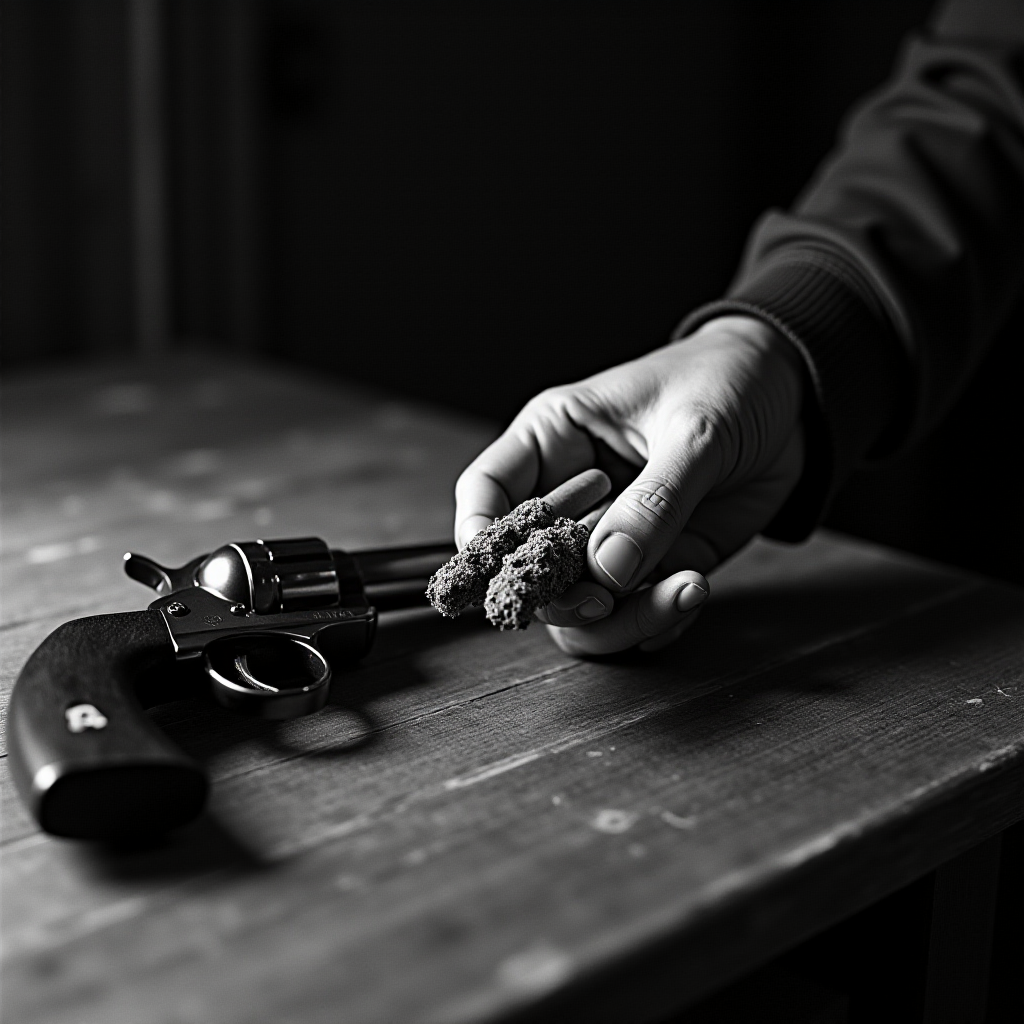
The Supreme Court heard a case this month about a man named Hemani who smoked marijuana a few times a week and owned a pistol. The federal government said that was a crime. The Fifth Circuit said it was not. Now the nine justices are deciding whether smoking a joint cancels the Second Amendment.
I am going to say that again because I need you to hear it.
The United States Supreme Court is being asked to decide whether a person who uses marijuana forfeits the constitutional right to own a firearm. This is not a hypothetical. This is not a law school exam. This is United States v. Hemani and it was argued on March 2, 2026.
The government's argument was simple. Federal law says an unlawful user of a controlled substance cannot possess a gun. Hemani used marijuana. Hemani possessed a gun. Crime.
The problem is the Second Amendment. And the problem with the Second Amendment is history. The current test says gun regulations must have a historical analogue from the founding era. The government went looking for a founding-era law that said drug users cannot own weapons.
They could not find one. Because the concept of illegal drugs did not exist at the founding.
The closest they could find was a statute allowing magistrates to disarm habitual drunkards. Vagrants who acted foolishly in public. That was the analogy. A man who smokes marijuana in his own home a few times a week is, in the eyes of the federal government, the equivalent of an eighteenth-century town drunk staggering through the square.
The ACLU filed a brief supporting Hemani. The NRA filed a brief supporting Hemani. NORML filed a brief supporting Hemani. When the ACLU and the NRA agree on something, pay attention. It means the government has found a position so unreasonable that the left and the right have nowhere to stand except next to each other.
They gave me ten years for two joints. Not for violence. Not for distribution. Not for any act that harmed another human being. For possession of a plant. The state of Michigan said that possessing marijuana was so dangerous that I deserved a decade in prison. A decade. For two joints.
Now the Supreme Court is asking whether possessing marijuana is so dangerous that it cancels a constitutional right. The same plant. The same question. Different century. Same answer from the government: the plant is more dangerous than the person.
The justices seemed skeptical. Both sides of the bench. The liberal justices did not think all drug users forfeit their rights. The conservative justices did not think the government proved its historical case. A majority appeared ready to rule that smoking marijuana does not automatically strip you of the Second Amendment.
That is progress. Slow progress. The kind of progress that arrives fifty-five years after they locked me up and says maybe we were wrong about the plant. Not wrong about the sentence. Not wrong about the ten years. Not wrong about the thousands of people still sitting in cells for the same thing I did. Just wrong about whether the plant cancels a different right.
I do not own a gun. I never owned a gun. The White Panthers believed in self-defense but I was a poet, not a soldier. The weapon I carried was a microphone and they gave me ten years for that too, in a manner of speaking.
But I know this. If a plant can cancel the Second Amendment, a plant can cancel any amendment. If the government can strip your right to own a gun because you smoke marijuana, they can strip your right to speak because you smoke marijuana. They can strip your right to assemble. They can strip your right to a fair trial. The logic does not stop at the Second Amendment. The logic stops wherever the government decides it stops.
That is what I learned in prison. The rights are not separate. The rights are one thing. You either have them or you do not. And for fifty-five years, the government has been using a plant to decide who does not.
See also: Ten for Two — two joints, ten years, the sentence that started everything. Eighty Percent — Texas votes 80% for legalization. The state has not caught up. The Copyright — the Supreme Court and the machine. Same bench, different question. The Dispensary — the first legal purchase in Michigan. Fifty years late. The Schedule — Schedule One to Schedule Three. A cage to a leash. The Pardon — Biden pardoned the possession. Nobody pardoned the decade. The Answer — same day, different hole. AI consciousness at two in the morning.